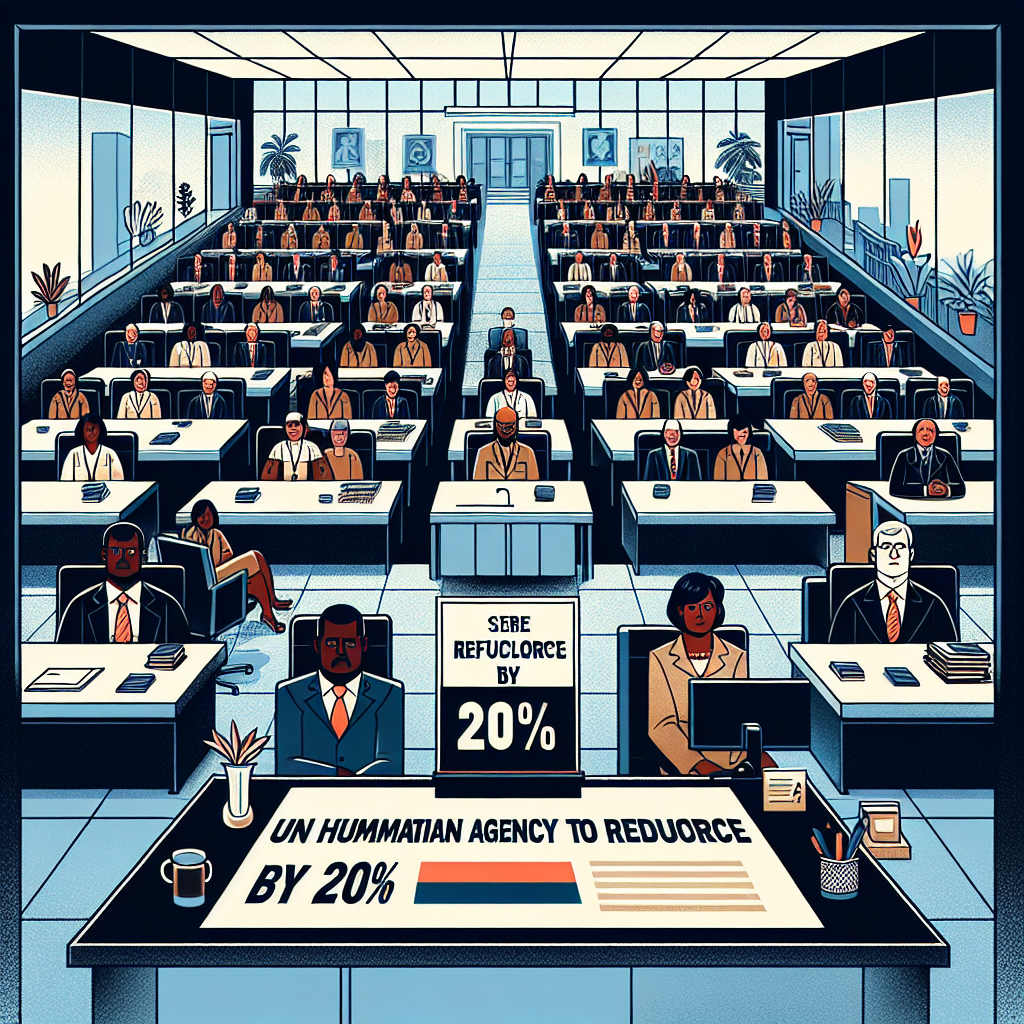
UN Humanitarian Agency to Reduce Workforce by 20% Amid Severe Funding Cuts
UN Humanitarian Agency Faces Workforce Reduction
Severe Funding Cuts Prompt Action
The United Nations Humanitarian Agency is set to reduce its workforce by 20% due to significant funding shortfalls. This decision comes as the agency grapples with a challenging financial landscape, impacting its ability to deliver critical services worldwide.

Key Factors Leading to Workforce Reduction
- Funding Shortfalls: The agency is experiencing a severe reduction in financial contributions from member states and donors.
- Global Economic Challenges: Economic downturns and competing priorities have led to decreased funding for humanitarian efforts.
- Operational Adjustments: The agency is compelled to streamline operations to maintain essential services.
Impact on Humanitarian Efforts
The workforce reduction is expected to have significant implications for the agency’s ability to respond to global crises. Key areas likely to be affected include:

- Emergency Response: Reduced capacity to respond swiftly to natural disasters and conflicts.
- Program Implementation: Potential delays and scaling back of ongoing humanitarian programs.
- Field Operations: Decreased presence in critical regions requiring humanitarian assistance.
Looking Ahead
The UN Humanitarian Agency is actively seeking alternative funding sources and exploring partnerships to mitigate the impact of workforce reductions. Efforts are underway to prioritize essential services and maintain support for the most vulnerable populations.

Conclusion
The UN Humanitarian Agency’s decision to cut its workforce by 20% underscores the severe financial challenges it faces. While this move aims to ensure the sustainability of its operations, it also highlights the urgent need for increased global support to continue vital humanitarian work. The agency’s ability to adapt and find innovative solutions will be crucial in navigating this difficult period.