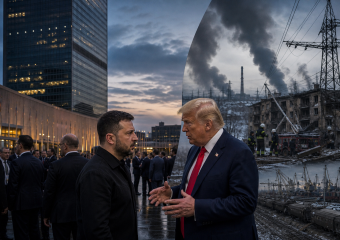
Confronting Chaos: Russian Roulette in Post-Assad Syria
Confronting Chaos: Russian Roulette in Post-Assad Syria
Introduction
The geopolitical landscape of Syria is undergoing a seismic shift as the Assad regime’s grip loosens. This transition period is marked by uncertainty and strategic maneuvering, with Russia playing a pivotal role in shaping the future of the region. The situation is akin to a high-stakes game of Russian roulette, where the outcomes are unpredictable and potentially explosive.

Key Players and Interests
Several key players are vying for influence in post-Assad Syria, each with distinct objectives:

- Russia: Aims to maintain its strategic foothold in the Middle East and safeguard its military and economic interests.
- United States: Seeks to counterbalance Russian influence and support democratic transitions.
- Regional Powers: Countries like Iran, Turkey, and Saudi Arabia are pursuing their own agendas, often conflicting with one another.
Challenges and Uncertainties
The path to stability in Syria is fraught with challenges:

- Fragmented Opposition: The lack of a unified opposition makes it difficult to establish a cohesive government.
- Humanitarian Crisis: Millions of Syrians remain displaced, requiring urgent international aid and reconstruction efforts.
- Extremist Threats: The power vacuum could be exploited by extremist groups, further destabilizing the region.
Russia’s Strategic Calculations
Russia’s involvement in Syria is driven by several strategic calculations:
- Military Presence: Maintaining military bases in Syria ensures Russia’s influence in the Mediterranean.
- Diplomatic Leverage: Russia positions itself as a key broker in peace negotiations, enhancing its global standing.
- Economic Interests: Securing reconstruction contracts and energy deals is crucial for Russia’s economic ambitions.
Conclusion
The future of Syria remains uncertain as various powers engage in a complex geopolitical dance. Russia’s role is central, but the outcome of this high-stakes game is far from clear. The international community must navigate this chaos carefully to avoid further destabilization and ensure a peaceful transition. The stakes are high, and the consequences of missteps could reverberate far beyond Syria’s borders.