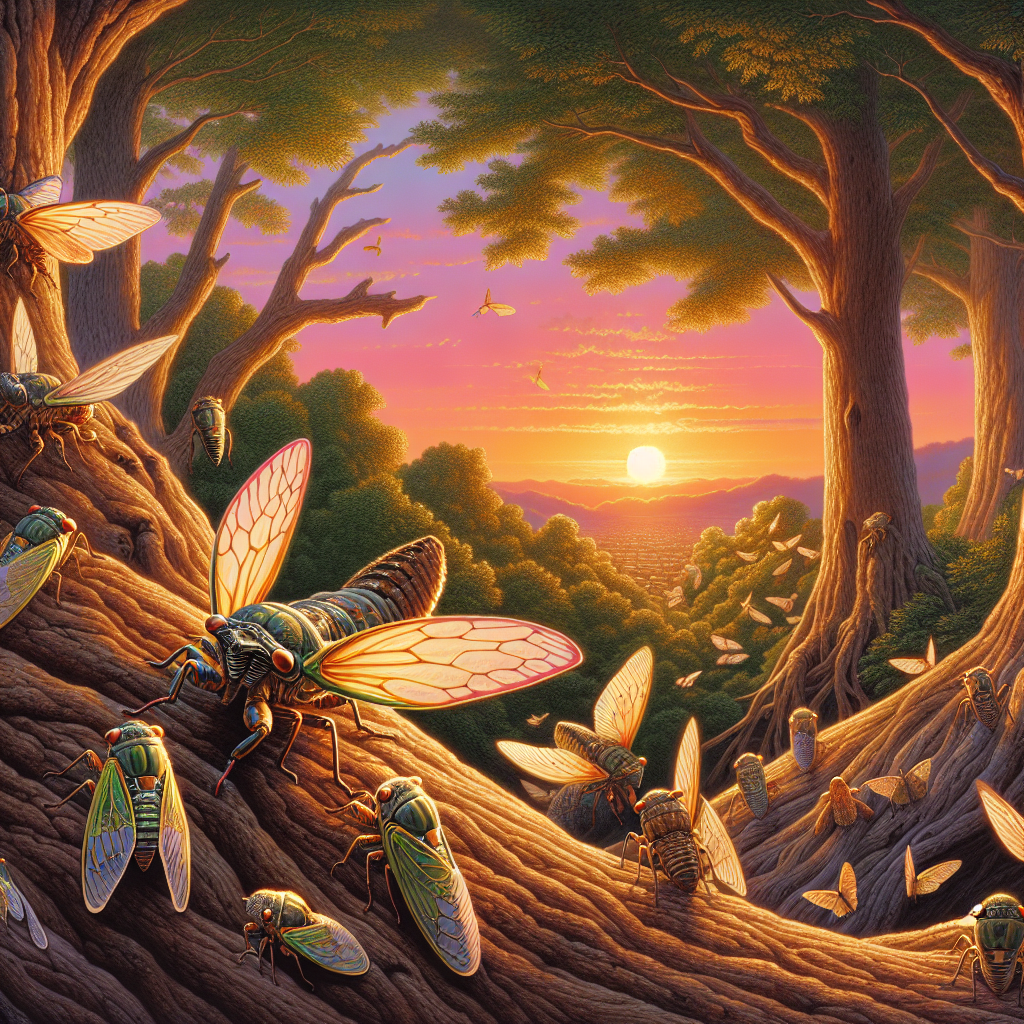
“Historic Emergence: Cicada Brood XIV Returns After 17 Years”
Historic Emergence: Cicada Brood XIV Returns After 17 Years
Introduction to Brood XIV
After a 17-year subterranean hiatus, Brood XIV of the periodical cicadas has emerged, captivating entomologists and nature enthusiasts alike. This rare event is a spectacle of nature, offering a unique opportunity to observe these fascinating insects in their natural habitat.

Key Characteristics of Brood XIV
- Species: Brood XIV consists of three species of periodical cicadas: Magicicada septendecim, Magicicada cassini, and Magicicada septendecula.
- Life Cycle: These cicadas spend 17 years underground as nymphs, feeding on tree root fluids before emerging en masse to mate and lay eggs.
- Geographic Range: This brood is primarily found in parts of the eastern United States, including states like Tennessee, Kentucky, and Indiana.
Ecological Impact and Significance
The emergence of Brood XIV plays a crucial role in the ecosystem. Here are some of the impacts:

- Food Source: The cicadas provide a significant food source for a variety of predators, including birds, mammals, and other insects.
- Soil Aeration: As they emerge, cicadas aerate the soil, which can benefit plant growth.
- Tree Pruning: The egg-laying process can naturally prune trees, promoting new growth.
Human Interaction and Cultural Significance
The emergence of Brood XIV is not only an ecological event but also a cultural phenomenon:

- Public Interest: The event draws significant public interest, with many people participating in cicada-watching activities.
- Scientific Research: Researchers take advantage of this period to study cicada behavior, genetics, and their impact on the environment.
- Cultural Celebrations: Some communities hold festivals and events to celebrate the cicadas’ return.
Conclusion
The return of Brood XIV is a remarkable natural event that highlights the intricate cycles of life and the interconnectedness of ecosystems. This emergence not only enriches our understanding of periodical cicadas but also underscores the importance of preserving natural habitats to ensure such phenomena continue to occur. As these cicadas fill the air with their distinctive songs, they remind us of the wonders of nature and the passage of time.