How Digital Twins Are Transforming Industry, Cities, and Decision-Making
Digital twins are virtual representations of physical objects, systems, or processes that use real-world data to monitor conditions, test scenarios, and support decision-making. They combine information from sensors, connected devices, software, simulation tools, and artificial intelligence.
Applications include equipment monitoring and design testing in manufacturing, urban planning, infrastructure management, energy analysis, and logistics. Adoption remains constrained by cost, data quality, cybersecurity, and technical complexity, but advances in AI, sensors, and computing may broaden their use.
Overview
Digital twin technology is changing how businesses and organizations understand the physical world. A digital twin is a virtual representation of a real-world object, system, or process that uses data to reflect its condition and performance. By connecting digital models with real-world information, organizations can explore possibilities, identify problems, and make more informed decisions.

How Digital Twins Work
Digital twins combine data from sensors, connected devices, software systems, and other sources to create a digital view of physical operations. Unlike ordinary 3D models, they can be updated with changing information. When combined with simulation tools and artificial intelligence, digital twins can help users understand current conditions and evaluate possible future scenarios.

Transforming Manufacturing and Industry
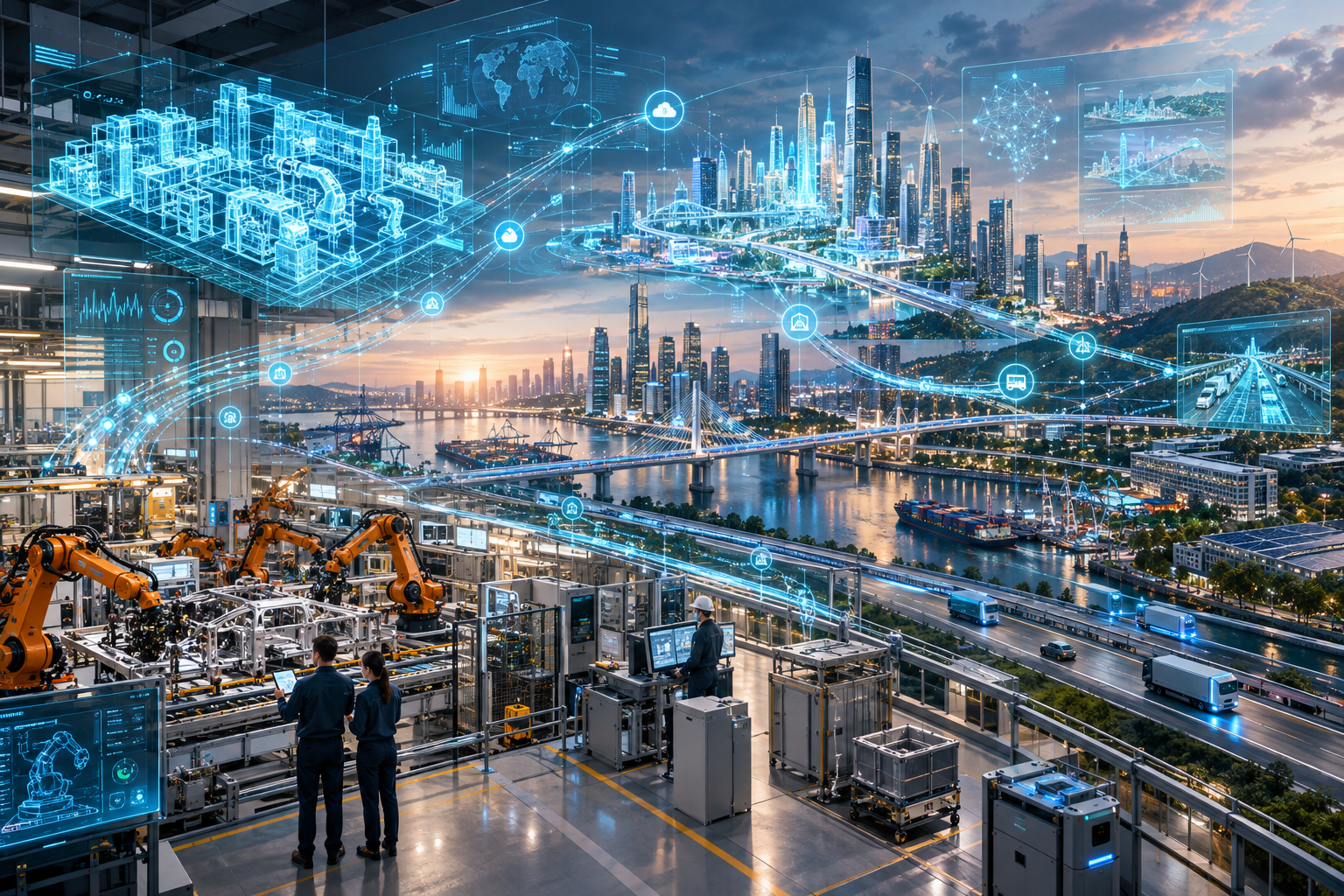
In manufacturing, digital twins help engineers monitor equipment, analyze performance, and identify potential maintenance needs. Companies can also test product designs and production processes virtually before making expensive physical changes. These capabilities can reduce certain operational risks, improve efficiency, and support better planning.

Building Smarter Cities
Digital twins are also being explored in urban planning and infrastructure management. City planners can use virtual models to study traffic, building energy use, and transportation systems. Infrastructure operators may also use them to monitor assets such as bridges and water networks, helping identify potential problems that require attention.
The Role of Artificial Intelligence
Artificial intelligence can make digital twins more powerful by analyzing large amounts of data, recognizing patterns, and supporting simulations. For example, energy companies can examine changing electricity demand, while logistics businesses can evaluate delivery routes and warehouse operations. However, predictions depend on data quality and should be reviewed carefully before important decisions are made.
Challenges and Future Opportunities
Despite their potential, digital twins face challenges involving implementation costs, data accuracy, cybersecurity, and technical complexity. Protecting sensitive information and ensuring reliable results are essential. As AI, sensors, and computing technology advance, digital twins could become more accessible to businesses and public organizations across a wider range of industries.
Digital twins are creating new ways to connect virtual models with real-world decisions. From factories and smart cities to infrastructure and healthcare research, they offer opportunities to understand complex systems and evaluate possible solutions. Although challenges remain, continued technological development could make digital twins an increasingly valuable tool for building more efficient, informed, and resilient organizations.