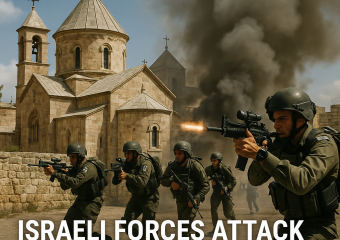
Israel Intensifies Gaza City Attacks, Forcing Palestinians to Flee
Understanding the Escalating Violence: Israel’s Intensified Attacks on Gaza City
In recent days, Israel has escalated its military actions in Gaza City, resulting in a humanitarian crisis as many Palestinians are being forced to flee their homes. This ongoing conflict underscores the complexities at the heart of the Israeli-Palestinian confrontation and highlights the dire implications for civilians caught in the line of fire.

The Current Situation in Gaza
Reports indicate that the Israeli military has been launching intensified airstrikes across Gaza City, targeting what they describe as militant installations linked to Hamas. According to Al Jazeera, the bombardment has led to the displacement of thousands, exacerbating an already critical humanitarian situation where food and medical supplies are dwindling. Many families, fearing for their lives, have had little choice but to leave their homes, seeking safety amidst ongoing violence.

Contrastingly, RT offers a perspective emphasizing that these military actions are retaliation against rocket attacks emanating from Gaza. The Israeli government insists that its objective is to protect its citizens from the threats posed by Hamas, arguing that military operations are necessary despite their toll on innocent lives.

The Human Cost of the Conflict
The civilian toll of this escalation cannot be overlooked. Reports reveal that many who have fled describe harrowing experiences, such as running through debris-filled streets, navigating destroyed neighborhoods, and waiting for hours to access scant resources. Al Jazeera cites humanitarian organizations warning that the intensifying warfare could lead to a full-blown crisis, as hospitals treat an overwhelming number of casualties without adequate supplies or shelter.
Different Perspectives on the Justification and Morality of the Attacks
On one hand, proponents of the Israeli actions argue from a defensive standpoint. They maintain that the military strategies employed are essential for neutralizing perceived threats from Hamas, suggesting that such measures, although regrettably impactful on civilian life, are necessary for national security.
Emerging criticism from various human rights advocates, however, challenges the morality of these operations. Many question the proportionality of Israel’s response and emphasize the need to prioritize the welfare of civilians. Amidst the chaos, these advocates argue that the long-term consequences of the ongoing violence could further entrench animosities and lead to cycles of retaliation that harm both populations.
Sky News provides additional context, reporting on the international reactions to the escalating situation. Several nations and global organizations have called for restraint on both sides and stress the importance of civilian protection. They advocate for dialogue as a means of resolution, as opposed to escalating military confrontations.
Navigating the Path Forward
In light of these complex dynamics, finding a way forward becomes increasingly urgent. Displacement and humanitarian crises will likely worsen unless efforts towards de-escalation are prioritized. The international community’s role in mediating and offering humanitarian assistance cannot be overstated. Caution and diplomacy might offer the only viable pathways to safeguard populations on both sides.
The Uncertain Future
As Israel intensifies its attacks on Gaza City, the impact on local civilians raises the need for a reflective and nuanced approach to resolving the ongoing conflict. It’s essential that dialogues continue alongside international efforts to alleviate the humanitarian fallout.
In summary, while the Israeli government cites security concerns, the implications for Palestinian civilians are profound and catastrophic. The necessity for a balanced understanding of the situation becomes imperative, as weary populations on both sides await a resolution to the violence that has plagued them for generations.
Ultimately, the complexities surrounding the Israeli-Palestinian conflict call for not only immediate humanitarian intervention but also long-term strategic considerations that prioritize peace and reconciliation. Finding sustainable solutions will demand a collective commitment from all stakeholders involved.