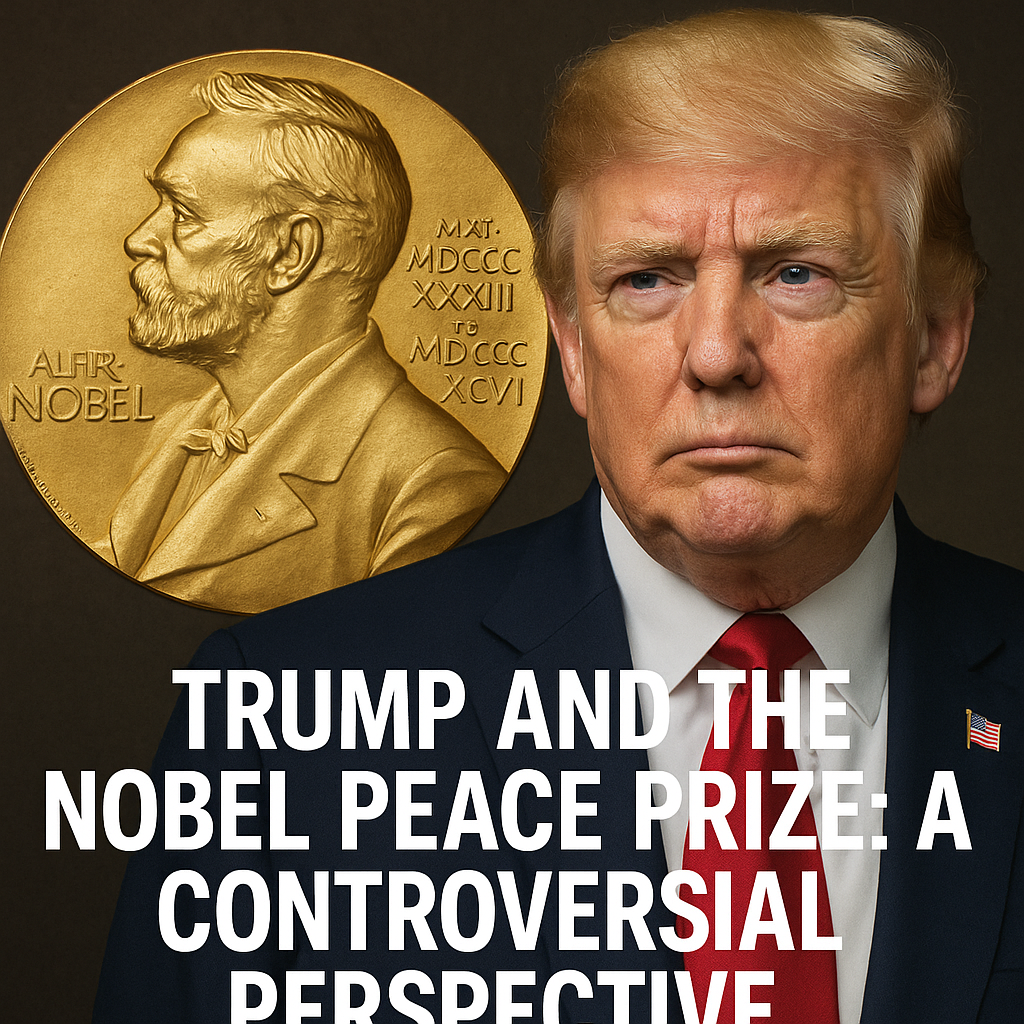
Trump and the Nobel Peace Prize: A Controversial Perspective
Trump and the Nobel Peace Prize: A Controversial Perspective
The debate over Donald Trump’s eligibility for the Nobel Peace Prize has stirred both enthusiasm and criticism, highlighting the complexities surrounding international diplomacy and peace efforts. Trump’s tenure as President of the United States was marked by significant foreign policy initiatives that attracted attention in the global arena, particularly his unprecedented engagement with North Korea and the Abraham Accords in the Middle East.

A New Era of Diplomacy
The argument supporting Trump’s nomination often centers on the groundbreaking diplomatic efforts relating to North Korea. In 2018, he became the first sitting U.S. president to meet with North Korean leader Kim Jong-un. Supporters argue that this summit opened channels of communication previously absent, with the aim of denuclearization. According to an opinion piece published on RT, advocates for Trump’s Nobel Peace Prize nomination emphasize that his willingness to engage with adversaries directly represents a significant departure from traditional diplomatic protocols. This viewpoint posits that engaging in dialogue—regardless of the complexities or critiques—is a foundational step toward fostering peace.

Conversely, critics question the long-term impact of this approach. They point to the minimal concrete progress on denuclearization and the subsequent deterioration in relations following the initial summit. Al Jazeera notes that while talks showed potential, they ultimately yielded few tangible results, leading some to argue that Trump’s actions may have merely created a façade of diplomacy.

The Abraham Accords: A Mixed Legacy
Another facet of Trump’s peace efforts, the Abraham Accords, has also garnered attention as a potential basis for a Nobel nomination. Announced in 2020, this normalization agreement between Israel and several Arab nations, including the United Arab Emirates and Bahrain, aimed to enhance stability in the Middle East. Supporters hail these accords as monumental achievements that could pave the way for broader peace in a historically volatile region.
Yet, criticism remains prevalent. Detractors contend that these agreements sidestep the Israeli-Palestinian conflict’s entrenched issues. According to reports from Sky News, many view the normalization as an ‘attempt to buy off’ the Arab states, asserting that it fails to address the core grievances of Palestinians, which are pivotal for lasting peace. This viewpoint underscores a fundamental challenge in peacemaking—whether agreements achieved through transactional means can lead to genuine reconciliation or merely temporary alliances.
The Polarizing Impact of Trump’s Nomination
The discourse surrounding Trump’s nomination is emblematic of broader societal divisions. Supporters argue for an innovative perspective on diplomacy that disrupts traditional norms, while critics underscore the lack of substantive outcomes and the risks associated with using dialogue as a substitute for sustained policy measures. This duality illustrates how Trump’s approach has split opinions not only within the United States but also internationally.
As we assess Trump’s candidacy for the Nobel Peace Prize, it’s essential to recognize that the award often embodies both acknowledgment of past achievements and aspiration for future ideals. It may be fair to conclude that while Trump’s foreign policy innovations have earned him a space in conversations about peace, they simultaneously raise complex questions about what constitutes genuine diplomacy and sustainable peace.
Conclusion: A Complex Legacy
In summary, the debate over Trump and the Nobel Peace Prize invites us to consider a nuanced perspective on international relations. While his efforts with North Korea and the Abraham Accords present compelling arguments for recognition, they also come with significant criticisms regarding their efficacy and moral implications. As more voices join the conversation, the ultimate evaluation of Trump’s endeavors may reveal that diplomatic success is not merely about initiating dialogue or signing agreements, but rather about achieving lasting peace that is embraced by all stakeholders involved.
This ongoing discussion reflects the evolving nature of peace in a complex global landscape, reminding us that the journey towards understanding and reconciliation is rarely straightforward.