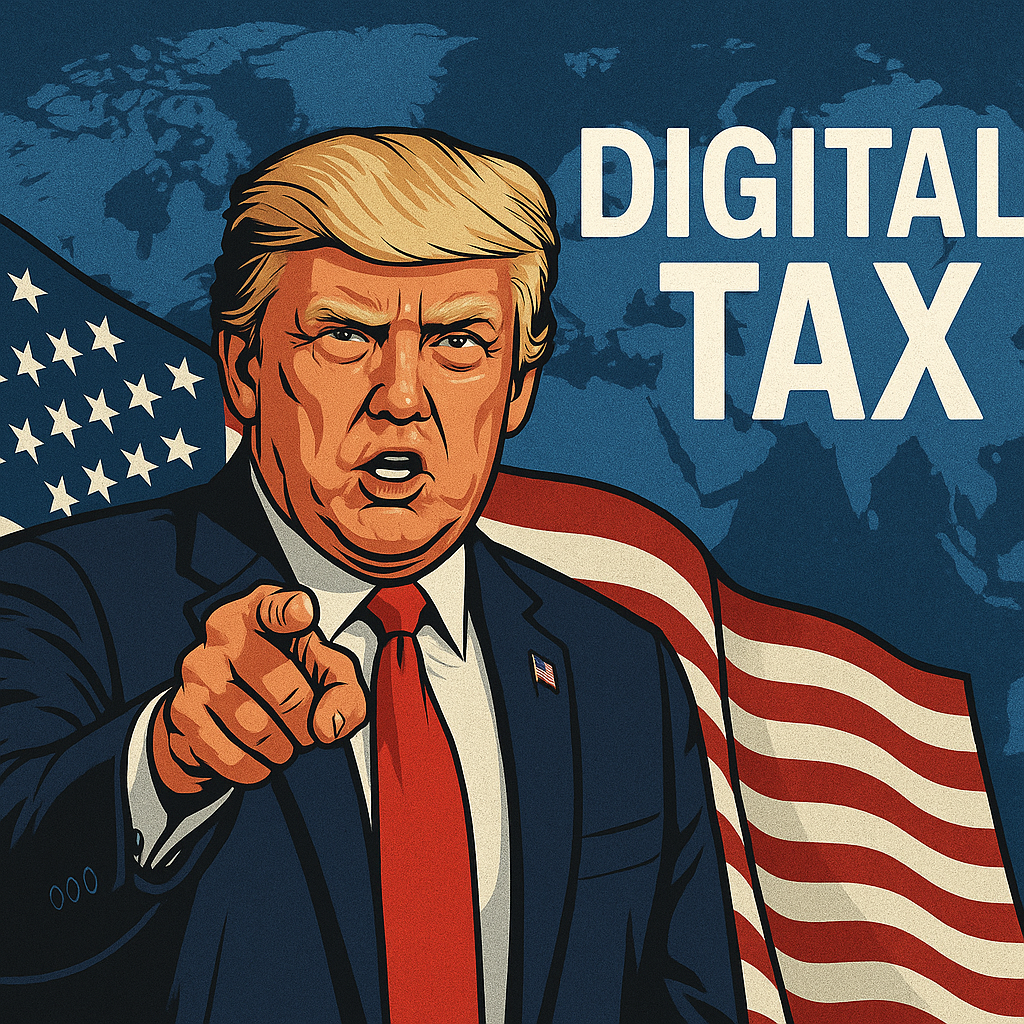
Trump Vows to Punish Nations for Digital Taxes
Trump Vows to Punish Nations for Digital Taxes
In recent statements, former President Donald Trump has vowed to take action against countries implementing digital taxes that he perceives as unfair to American companies. This declaration has ignited a complex conversation across various news and economic platforms about the implications of digital taxation on international trade and the potential consequences for diplomacy.

The Context of Digital Taxes
As digital economies continue to grow, many countries have begun adopting taxes aimed at large tech companies that generate significant revenue within their borders, despite having little physical presence. These digital taxes aim to ensure that multinational companies contribute fairly to the local economy. France, for example, implemented a digital services tax (DST) that targets tech giants like Google, Facebook, and Amazon.

Supporters of digital taxes argue that they level the playing field for local businesses that may struggle against larger, more established corporations. Critics, however, believe such taxes are a way for individual countries to exploit the global market at the expense of U.S. firms, as asserted by Trump. This perception has led to a series of retaliatory threats and discussions concerning trade policies.

Diverging Perspectives on the Issue
Trump’s position is clear: he sees digital taxes as a direct assault on American economic interests. He threatened punitive measures against countries like France that have made advances in imposing these taxes. This recent rhetoric reflects broader debates among policymakers and economists, highlighting sharply divided opinions on digital taxation.
In Support of Digital Taxes
Supporters, including many European leaders, argue that global tech companies profit significantly from local resources without contributing appropriately to public goods and services. For instance, an article from Al Jazeera quotes French Finance Minister Bruno Le Maire as saying that “the taxation of digital services is not a matter of hostility towards the U.S.” but rather a step toward a more equitable taxation system. They emphasize the necessity for these taxes to ensure fair competitiveness for local businesses.
Moreover, proponents point out that digital economies can give rise to inequalities, where physical presence no longer correlates with contribution. By taxing based on user activity, they believe countries can reclaim some measure of fairness in their economic landscapes.
Opposition to Digital Taxes
On the other hand, critics maintain that digital taxes lead to increased prices for consumers and potential trade wars. A report from RT highlights concerns raised by U.S. officials, warning that retaliatory tariffs against countries implementing these taxes could escalate into broader trade tensions, potentially impacting various sectors beyond just tech. Opponents argue that such taxation models may deter foreign investment and prompt companies to avoid specific markets altogether.
Trade experts also emphasize the interconnectedness of the global economy; retaliatory measures could diminish cooperation at a time when collaboration is critical in numerous sectors, particularly in an era marked by the pandemic and accompanying economic challenges.
Navigating Future Pathways
The conflicting approaches to digital taxation underscore broader issues about globalization and economic equity. As countries try to safeguard their interests, international organizations, including the OECD, are working towards establishing a more cohesive global framework for digital services taxation. However, consensus remains elusive as negotiations continue regarding fair taxation practices.
The Need for Collaborative Solutions
One potential pathway forward could involve international dialogue aimed at harmonizing tax regulations across borders. By fostering collaboration rather than confrontation, nations might better navigate the challenges presented by a rapidly evolving digital economy. Such cooperation could contribute to more equitable solutions that satisfy both national interests and global economic fairness.
The challenge lies in balancing national sovereignty with the need for international accountability in digital economies. As Trump and world leaders navigate these turbulent waters, it remains crucial that all parties engage in constructive dialogue to avert trade tensions that could have cascading effects on global trade and economic stability.
Conclusion
Trump’s vow to punish nations imposing digital taxes raises significant questions about the future of international trade, economic fairness, and the regulation of multinational corporations. As both sides present compelling arguments, the ultimate resolution may hinge on a willingness to engage in cooperative discussions that prioritize equitable solutions for all stakeholders involved. The global digital landscape is evolving rapidly, and the approaches taken today will define the frameworks of tomorrow.