
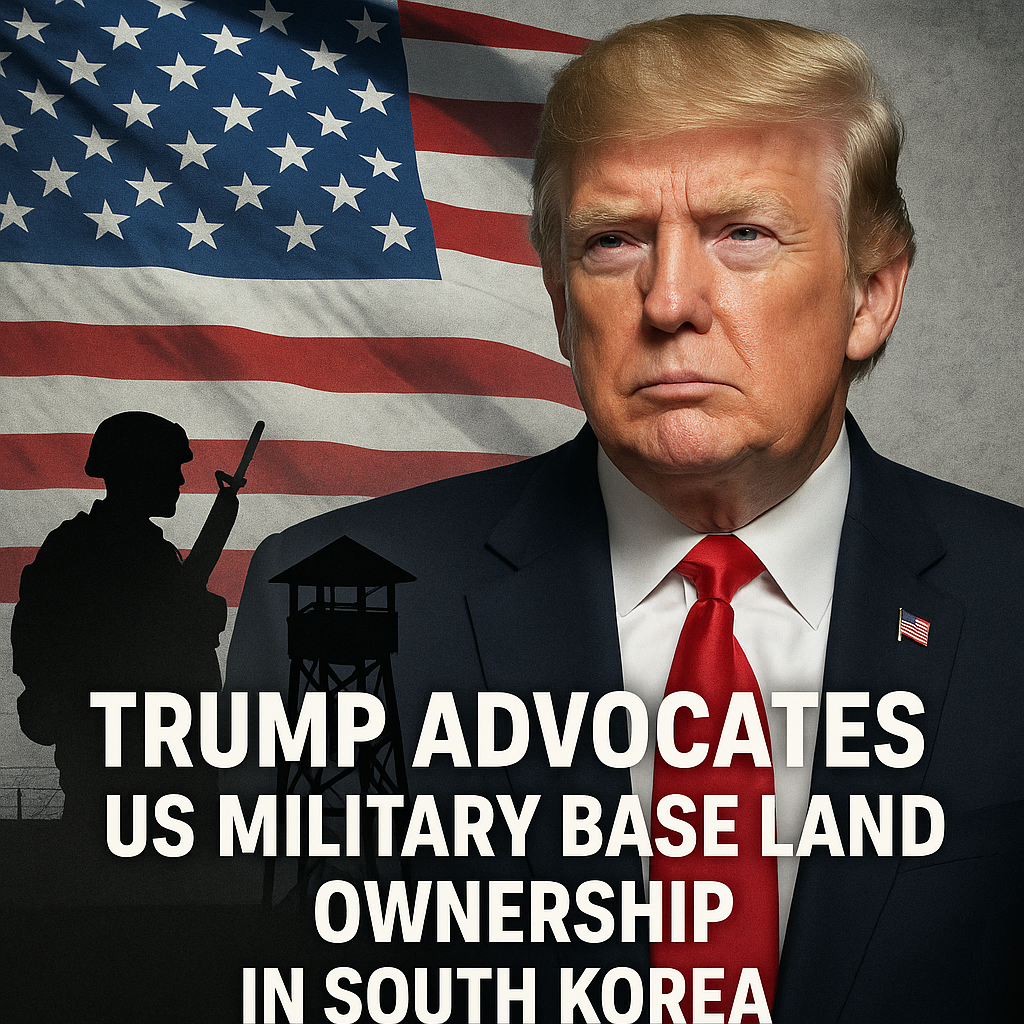
Trump Advocates US Military Base Land Ownership in South Korea

Trump Advocates US Military Base Land Ownership in South Korea
In a move that has sparked debate and controversy, former President Donald Trump has proposed that the United States should own the land on which its military bases are situated in South Korea. This suggestion raises numerous questions regarding financial responsibilities, bilateral relations, and military strategy in the Asia-Pacific region.

Understanding the Proposal
Trump’s proposal, presented during a recent public appearance, suggests that by owning the land, the U.S. could enhance its strategic military presence and alleviate financial burdens that South Korea currently bears. According to Trump, this would not only strengthen U.S. military readiness but also ensure better cost management for both nations.


Supporters argue that this ownership model could lead to more effective and long-term planning for defense operations in the region. In their view, it might eliminate some of the complexities associated with lease agreements and allow for more substantial infrastructure investments. Trump’s supporters believe that land ownership would bolster the perception of U.S. commitment to South Korean security amid rising tensions with North Korea.


Potential Reactions from South Korea
However, the proposal has not been universally welcomed. Many South Korean officials and citizens express discomfort at the idea of U.S. land ownership, viewing it as an infringement on sovereignty. South Korean public sentiment surrounding U.S. military presence is already a mixed bag, with growing concerns about how much influence the U.S. should exert in regional security affairs.
Political analyst Lee Jin-seok posed an important question during a recent interview: “Will the South Korean people feel more secure if foreign powers own our land?” He noted the historical context, recalling a time when the U.S. had significant control over military and diplomatic matters in the region, which many Koreans find concerning.
Weighing the Financial Aspect
From a financial perspective, Trump’s argument hinges on the assertion that land ownership could lead to a more equitable distribution of military costs. Trump argued that South Korea contributes significantly to U.S. base operations through annual funding, but advocates for a more balanced arrangement, where the U.S. maintains physical control.
Critics argue, however, that the current setup, which calls for shared funding arrangements, already respects the contributions South Korea makes while giving them a voice in the military’s ongoing operations. Furthermore, should the U.S. take ownership of the land, this could unsettle the existing financial balance and potentially lead to disputes over responsibilities.
Broader Implications for U.S.-Korea Relations
The broader implications of this proposal are equally complex. The U.S. military presence in South Korea has been a backbone of security since the Korean War. However, any move towards ownership may signal a shift in the traditional partnership, altering both nations’ dynamics.
While some defense experts see an opportunity for increased collaboration—arguing that land ownership could facilitate streamlined military operations—others caution against prioritizing U.S. interests over a collaborative approach to security.
As Keiko Fujikawa, a political theorist at Tokyo University, pointed out, “This is not just about land; it’s about how we view alliances in the Asia-Pacific region.” She emphasizes that the U.S.-South Korea relationship should evolve based on mutual respect rather than control.
Navigating the Future
In light of these developments, the question remains: What will be the ultimate impact of Trump’s land ownership proposal on U.S.-South Korea relations? The sentiment surrounding the proposal is mixed, pulling in differing perspectives from politicians, experts, and the general public.
Strategic military analysis must transcend mere geographical control to be genuinely effective. Mutual respect, shared responsibility, and long-term thinking about regional stability will be essential themes in any decisions made.
The proposal has catalyzed discussions about defense strategies in the region, but it is yet to be seen how seriously it will be taken in political or operational terms. American policymakers may need to balance Trump’s vision with the necessity of maintaining strong ties with South Korea—particularly with North Korea’s provocations continuing to loom.
As discussions unfold, understanding both the financial implications and the emotive factors tied to national sovereignty will be crucial for navigating the intricate landscape of U.S.-Korean relations shaped by this proposal. While it brings up valid points about military strategy and cost management, the underlying sensitivities related to sovereignty and partnership could play a decisive role in shaping its fate.
In conclusion, Trump’s advocacy for U.S. land ownership at military bases in South Korea is more than just a policy idea; it is a reflection of the changing dynamics in international relations. The future of U.S.-South Korea partnerships will depend on reconciling these complexities while fostering a secure and cooperative regional environment.















