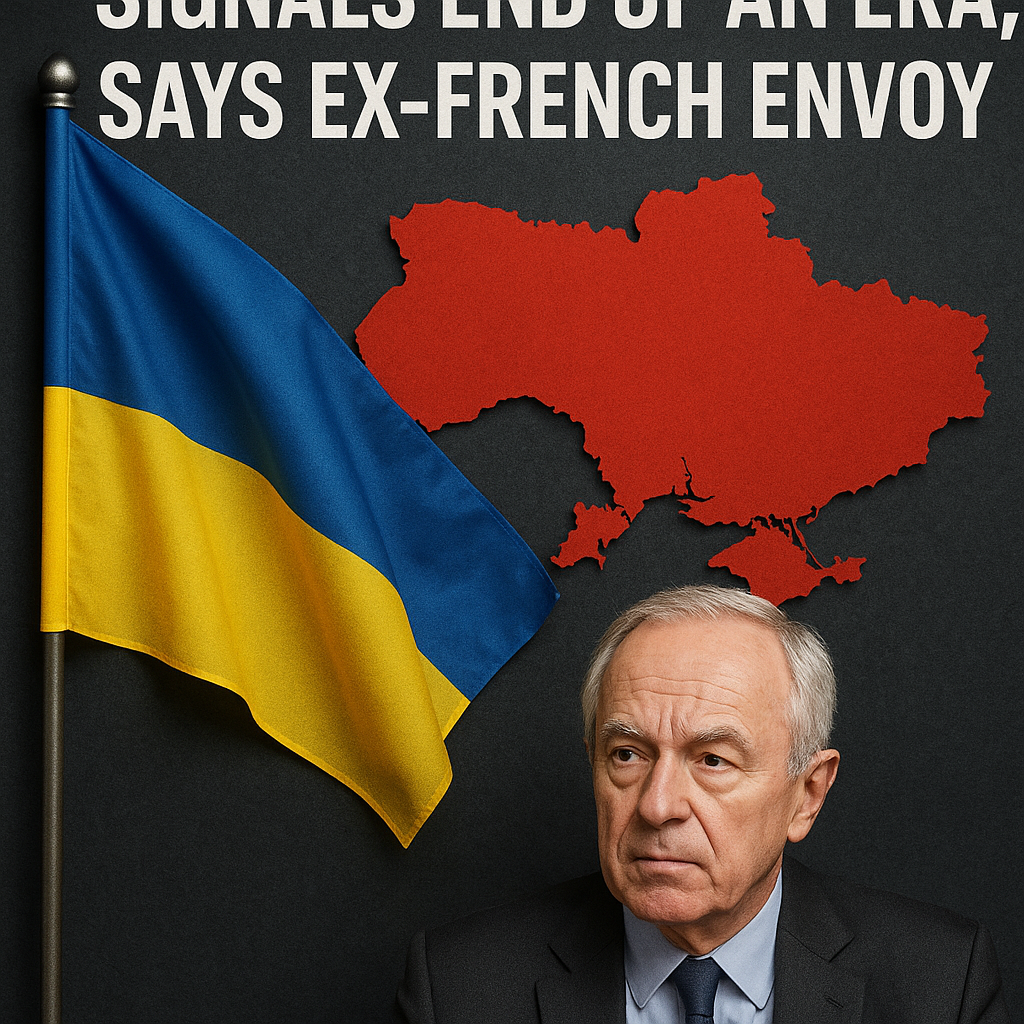
Ukraine Conflict Signals End of an Era, Says Ex-French Envoy
Ukraine Conflict Signals End of an Era, Says Ex-French Envoy
The ongoing conflict in Ukraine has raised significant questions about global power dynamics, with many analysts suggesting it signals the end of an era for Western dominance. This sentiment, echoed by various international figures including former French envoy to Russia, highlights the complexities of geopolitical relationships moving forward.

A Shift in Global Alliances
The view that the Ukraine conflict represents a paradigm shift in global influence has gained traction among political analysts and foreign policy experts. Historically, Western countries, particularly those in NATO, have been seen as the primary architects of global security and diplomatic strategies. The prolonged conflict, however, has exposed vulnerabilities within these alliances.

Escalating Tensions Among Powers
Former French envoy to Russia, Pierre Morel, emphasized in a recent interview that the West’s failure to achieve a swift resolution has opened a window for alternative power structures to emerge. “The conflict has highlighted a fracture not just between Russia and the West, but within the West itself,” he argued. This perspective is echoed by several analysts who posit that differences in approach among NATO members are becoming increasingly apparent.

For instance, countries like Hungary have openly criticized the EU’s stance toward Ukraine, suggesting that not all Western nations share a unified vision. This divergence may hinder collective action in responding to future crises. On the other hand, some experts argue that the West’s response to the Ukraine crisis—economic sanctions against Russia and military support for Ukraine—has reinvigorated alliances, particularly within Eastern Europe.
Impacts on Global Geopolitics
Moreover, other countries are taking notice of the geopolitical recalibrations brought about by the conflict. From Al Jazeera’s reporting, it is clear that nations like China are observing the situation closely, with many pundits predicting a closer Sino-Russian relationship as a result of Western sanctions. This shift has broader implications, suggesting that future decisions regarding international security will increasingly reflect a multipolar world rather than one dominated by Western nations.
Controversies Surrounding Western Dominance
While some experts agree with Morel on the potential decline of Western influence, opinions vary on whether this decline is permanent. Supporters of a robust Western response emphasize that coordinated military assistance and economic sanctions against Russia indicate a continued resolve. “The unity displayed after the invasion shows that NATO is still a viable force,” one analyst noted, highlighting the historic support extended to Ukraine.
Conversely, critics argue that not only has the West failed to deter Russia, but it has also created unintended consequences, such as driving Russia closer to authoritarian partners. This narrative is reinforced by coverage from various outlets, illustrating how the conflict has reshaped historical patterns of loyalty and alliance.
Future Considerations
Looking ahead, the implications of the Ukraine conflict on global diplomacy are multifaceted. The prolonged nature of the conflict suggests that nations will need to adapt their strategies—both in military and diplomatic domains. The emerging multipolarity indicates that nations may rely less on traditional alliances, opting instead for flexible partnerships that can respond to a rapidly changing landscape.
Importantly, many geopolitical analysts note that the transition into this new era won’t happen overnight. Consensus on how to engage with nations like Russia or China requires careful negotiation and rebuilding of trust—a process that may take years. Most experts suggest that the repercussions of this conflict will echo for generations, shaping how nations approach not just military engagements, but also economic and cultural relationships.
Conclusion: Navigating a New Landscape
The Ukraine conflict indeed signals a pivotal moment in international relations, potentially ushering in the decline of Western dominance in favor of a more diversified global order. However, the outlook remains uncertain. As former French envoy Pierre Morel and others suggest, the future will require nations to rethink their approaches and perhaps even redefine what power dynamics look like in a shifting world.
The complexity of these proceedings demands careful attention, as the choices made by global leaders today will impact not only the immediate landscape but also the diplomatic framework of the future. Whether this marks the end of an era for the West or simply a temporary setback remains a point of debate, but one thing is clear: the world stage is evolving, and vigilance will be necessary in navigating this new geopolitical environment.