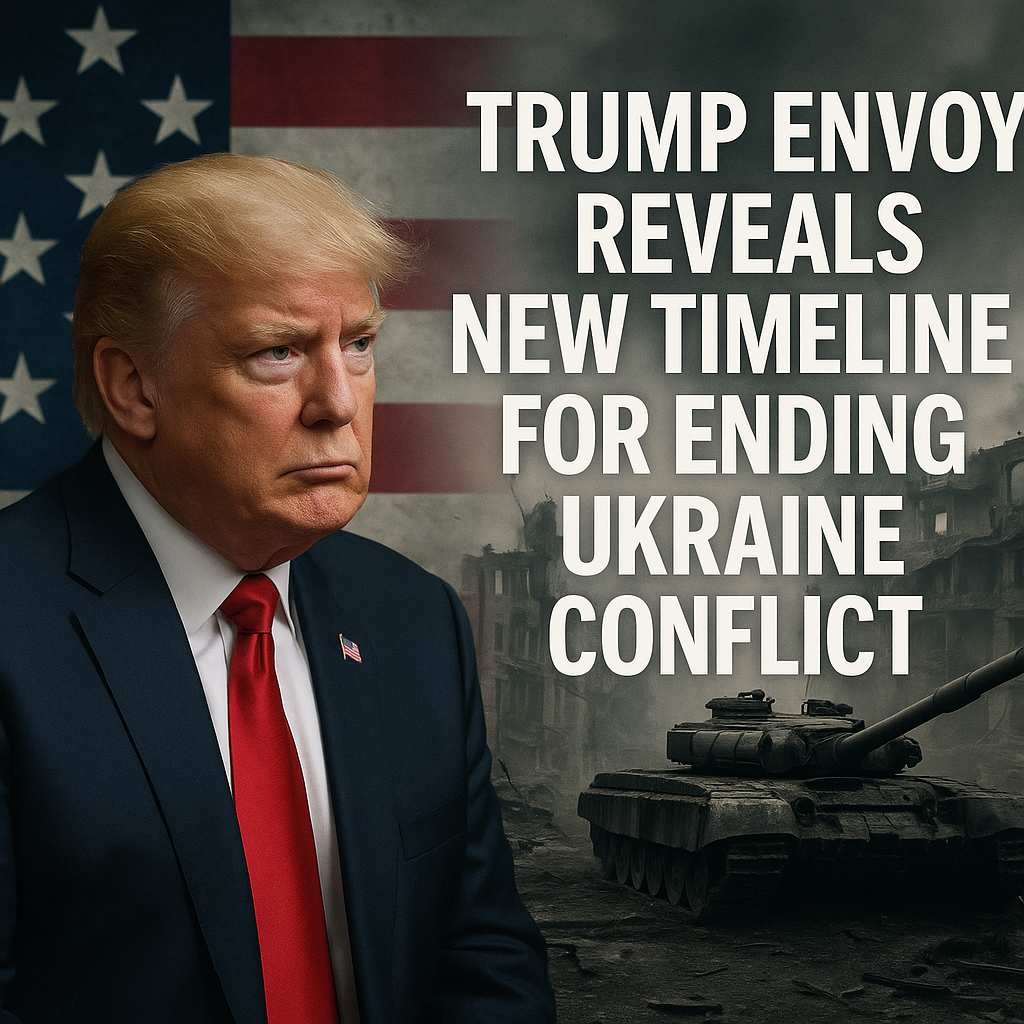
Trump Envoy Reveals New Timeline for Ending Ukraine Conflict
Trump Envoy Reveals New Timeline for Ending Ukraine Conflict
The ongoing conflict in Ukraine has generated varying perspectives on the potential for peace, with former U.S. Ambassador to Germany, Richard Grenell, recently proposing a timeline for resolving the crisis. His remarks have reignited discussions regarding diplomatic approaches and the complexities surrounding international negotiations.

A New Perspective on Peace
Grenell, in a recent interview, suggested that the U.S. could play a crucial role in facilitating negotiations that might lead to a resolution of the conflict by the end of 2024. His assertion reflects an increasing urgency among some policymakers to evaluate alternative paths towards peace. The sentiment echoed within various news outlets indicates a belief that prolonged conflict is untenable and underscores the necessity for a multi-faceted approach.

Grenell posited that a peace agreement could be structured to address the concerns of both Ukraine and Russia, albeit this idea is met with skepticism by others. For instance, a recent report from Al Jazeera highlighted that achieving peace would require significant compromises from both sides—particularly regarding territorial disputes and security guarantees. Diplomatic efforts could hinge on a clear understanding of what each party is willing to concede, raising the question of whether either side is currently optimistic about the possibilities for compromise.

The Complexity of Negotiations
The landscape surrounding Ukraine’s conflict is fraught with complexity. On one hand, supporters of Grenell’s timeline argue it reflects a proactive approach necessary to prevent further escalation. Advocates believe that an expeditious peace process is critical, not only for the people of Ukraine but also to maintain regional stability. They view the U.S. as a pivotal player due to its considerable influence over both NATO and Ukraine’s military support.
On the other hand, critics express concern that rushing to a resolution may overlook crucial humanitarian and territorial issues. A report from Sky News analyzes the skepticism around Grenell’s optimism, emphasizing how both Ukrainian and Russian perspectives are deeply entrenched. Each side has public narratives that complicate the path to negotiation. Ukraine, emboldened by international support, is less inclined to settle for anything short of complete autonomy and security. Meanwhile, Russia’s insistence on territorial gains makes genuine dialogue challenging.
Weighing Evidence and Sentiments
The divergence in viewpoints illustrates the difficulties faced when advocating for a unified solution. While Grenell’s proposed timeline may be seen as a step in the right direction, many question its feasibility given the current geopolitical climate. It is essential to recognize that past attempts at negotiation have often stumbled upon deep-rooted issues, including sovereignty, territorial integrity, and national pride.
Moreover, the varying perspectives on U.S. involvement indicate broader political dimensions. As reported by RT, the historical context of U.S. foreign policy in conflicts highlights both the potential for constructive diplomacy and the risks of miscalculating the implications of intervention. The challenge lies in balancing these currents without appearing to favor one side unduly or sacrificing principles that could lead to long-term stability.
The Road Ahead
As the prospect of a peace deal looms, it is crucial for all stakeholders to engage in a transparent dialogue that acknowledges both nations’ positions. Discussions should involve not only the leaders of Ukraine and Russia but also key allies and organizations like NATO, the EU, and the UN to ensure a comprehensive framework for peace.
While the exact timeline for resolving the conflict remains uncertain, efforts like those articulated by Grenell might serve as a catalyst for broader discussions. Policymakers must tread carefully, recognizing that hastening negotiations without the groundwork of trust and understanding could result in setbacks rather than solutions.
In conclusion, as the world watches this evolving situation, it remains vital to synthesize various viewpoints to foster a realistic and sustainable outcome. The complexities of the Ukraine conflict demand not just urgency but also a nuanced approach that understands and respects the deeply held beliefs of all parties involved.