Hungary Sues EU Over Frozen Russian Assets for Ukraine
Hungary Sues EU Over Frozen Russian Assets for Ukraine
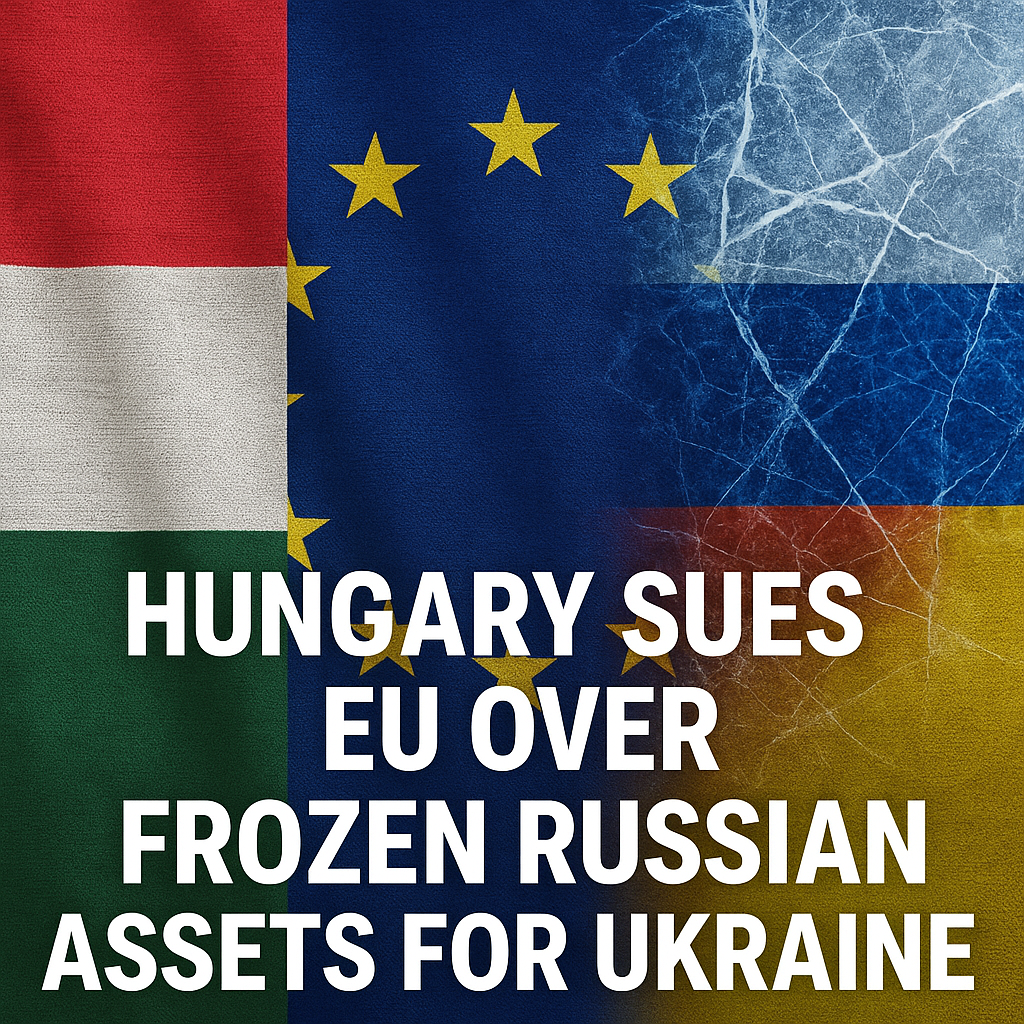
Hungary’s recent decision to sue the European Union over frozen Russian assets intended for Ukraine has sparked a complex debate about legality, ethics, and the delicate geopolitics of the region. At the heart of this issue is Hungary’s call for clarity and compensation related to the financial actions taken since the start of the Ukraine conflict.

The Legal Framework: A Closer Look
Hungary’s lawsuit claims that the European Union’s measures to freeze Russian assets—aimed at undermining Russia’s military capabilities—have direct implications for Hungary itself. The contention is rooted in the idea that these sanctions disproportionately affect not only Russia but also member states, which have economic ties with Moscow.

Hungarian officials argue that the EU’s actions lack sufficient legal backing, claiming that they infringe on national sovereignty and could disrupt established economic agreements. Hungary’s justice minister mentioned that the sanctions were not uniformly enforced or justified, raising concerns about fairness and the rule of law within the EU framework.

Counterarguments from EU officials highlight the necessity of robust sanctions as a tool to reason with Russia amidst its military aggression. They argue that freezing assets is vital for ensuring that economic consequences are felt by those responsible for the invasion of Ukraine. The EU’s stance underscores the belief that unified actions against Russia send a clear message that such aggression will not be tolerated.
The Political Dimensions of the Lawsuit
The lawsuit also carries significant political ramifications. Hungary has often found itself at odds with EU policies, especially regarding Russia. Prime Minister Viktor Orbán’s government has historically maintained a more amicable stance towards Moscow compared to other European nations, a point underscored by Hungary’s reliance on Russian energy.
Despite being a member of the EU, Hungary’s pro-Russian sentiments have drawn criticism, positioning it in a unique situation compared to its counterparts. Critics note that this lawsuit might be an attempt to draw attention away from domestic issues, serving as a rallying point that paints the EU as an antagonist.
On the flip side, some analysts see Hungary’s legal action as a reflection of a broader tension within the EU concerning the imposition of sanctions. While some member states advocate for strict measures against Russia, others are more cautious, considering the economic ramifications for their national interests.
Economic Implications and Future Considerations
As the lawsuit unfolds, the potential economic fallout could affect both Hungary and the broader EU landscape. If Hungary succeeds in its suit, it may encourage other member states to pursue similar actions, thus complicating the EU’s unified approach toward sanctions on Russia.
– Key Economic Points:
– Hungary’s reliance on Russian energy, including gas and oil, positions it uniquely against sanctions.
– Hungary may face criticism for prioritizing national interests over collective European security.
– The EU might need to re-evaluate its sanctions strategy to address concerns from hesitant member states.
The ongoing legal battle may also impact negotiations regarding future aid for Ukraine. Should Hungary’s lawsuit result in a thaw or breakdown of relations within the EU, it could hinder holistic support for Ukraine, which relies heavily on European solidarity.
Conclusion: A Case with No Easy Answers
Hungary’s lawsuit against the EU over frozen Russian assets for Ukraine presents a multifaceted conundrum. It encapsulates not only the legal and economic implications of global sanctions but also the political intricacies of EU unity in the face of external aggression.
As discussions continue, it is important to note that the underlying questions remain unresolved. How far can the EU push sanctions before they become counterproductive? Can Hungary navigate its complex relationship with Russia while remaining a committed EU member? The answers remain uncertain, reflective of the broader geopolitical struggle that will likely play out in the coming months.
Engaging in dialogue and fostering cooperation among member states may be essential in addressing these challenges and maintaining both national and collective interests as the landscape evolves. Hungary’s legal move serves as a reminder that the path toward resolution is rarely straightforward in the realm of international relations.