Russia, China Condemn Europe for Iran Snapback Sanctions
Russia and China Condemn Europe for Iran Snapback Sanctions
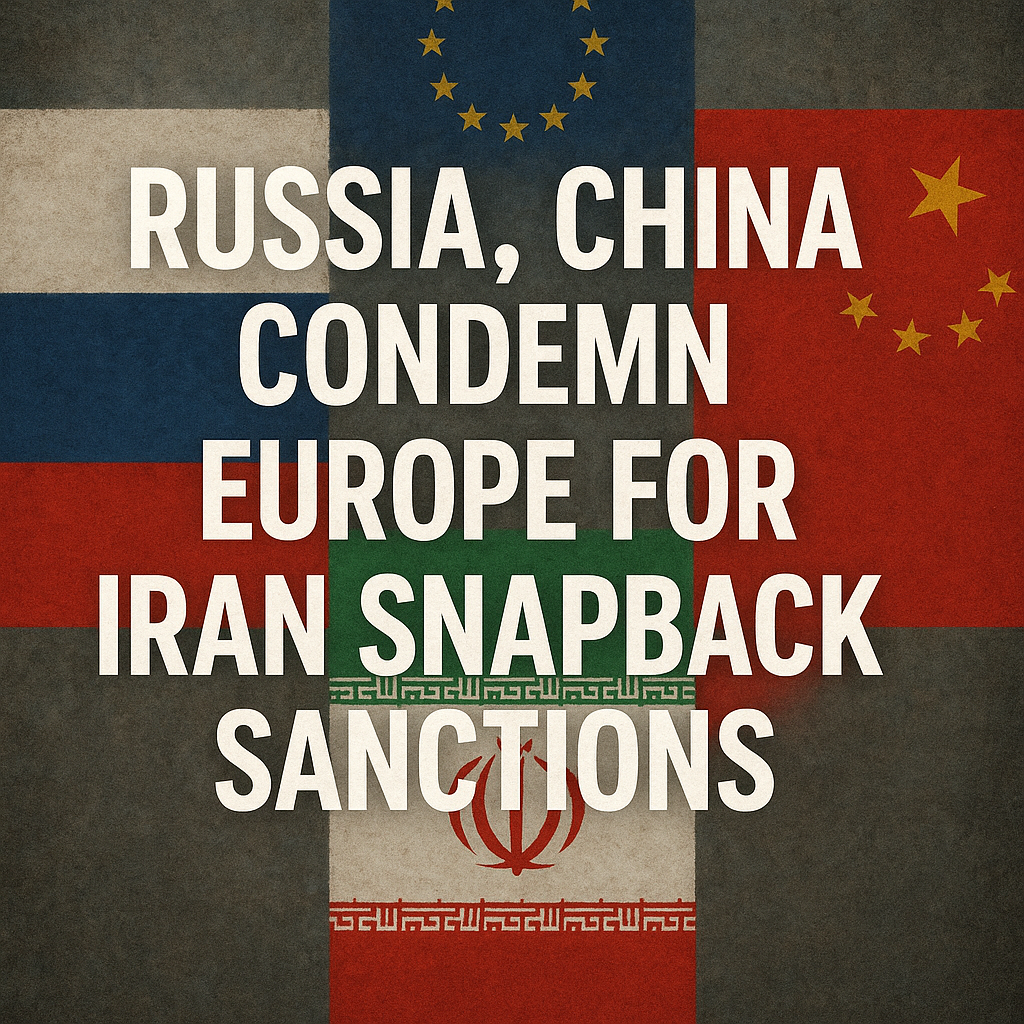
In recent weeks, Russia and China have fiercely condemned European nations’ decision to impose snapback sanctions on Iran, asserting that these moves threaten regional stability and diplomatic resolutions. The complexity of the geopolitical landscape surrounding Iran demands an examination of multiple viewpoints, as tensions continue to flare and alliances shift.

The Context of Snapback Sanctions
Snapback sanctions refer to the reimposition of sanctions that were lifted under the Joint Comprehensive Plan of Action (JCPOA), which aimed to curtail Iran’s nuclear program in exchange for relief from economic pressure. The European nations’ push for these sanctions comes amid concerns regarding Iran’s nuclear ambitions and its involvement in regional conflicts. As explained by Al Jazeera, the West claims that Iran has failed to comply with the terms of the JCPOA, citing increased enrichment of uranium beyond agreed limits.

Diverging Perspectives
European Justifications
European nations such as France, Germany, and the United Kingdom argue that snapback sanctions are necessary to hold Iran accountable. They maintain that the increased uranium enrichment and military provocations pose a significant risk not just to the region, but globally. According to a source from Sky News, European leaders assert that these measures are integral to ensuring that Iran does not become a full-fledged nuclear power. The European Union hopes that reinstating these sanctions will rejuvenate diplomatic efforts aimed at mitigating Iran’s nuclear aspirations and push the nation back to the negotiating table.

Russian and Chinese Opposition
Conversely, Russia and China have publicly denounced these actions as detrimental and unilateral. Russia’s Foreign Ministry has stated that the reimposition of sanctions undermines the authority of international frameworks and could exacerbate tensions in the Middle East. The Russian perspective emphasizes the importance of dialogue over punitive measures, warning that such actions may lead to further destabilization.
China, for its part, has echoed these sentiments, criticizing the European nations’ approach and stressing the need for coordinated multilateral efforts rather than unilateral sanctions. Chinese officials have voiced concerns that these actions could ignite a new wave of conflict, departing from what they categorize as a peaceful resolution through diplomacy.
The Stakes of Diplomatic Relations
The disagreement over snapback sanctions isn’t merely about Iran; it reflects broader geopolitical tensions between Russia, China, and Western nations. As both sides grapple with their interests in the Middle East, their positions could have long-lasting implications for relations among major powers.
Potential Outcomes
Notably, a significant factor in this equation is the Iran-Russia-China alliance, which has grown stronger in recent years, particularly in defense and energy cooperation. For instance, Russia and China may look to deepen their involvement in Iranian markets as a counterbalance to Western influence. This alignment poses a challenge to Europe and the U.S., as they must consider the ramifications of pushing Iran closer to these powers.
The future remains uncertain, as many experts assert that the snapback sanctions could inhibit constructive dialogue. Some argue that reinforcing sanctions might lead Iran to double down on its nuclear efforts out of a sense of desperation, while others believe that they could eventually prompt Iran to return to the negotiating table—albeit under pressure rather than genuine willingness.
The Complexity of International Reactions
While the European Union remains steadfast in its pursuit of accountability from Iran, the reactions from Russia and China call for a critical reevaluation of the efficacy of sanctions as a foreign policy tool. As highlighted by RT, sanctions may have unintended consequences, leading not only to escalating tensions but also to reinforcing alliances among nations antagonistic to Western influence.
The differing viewpoints surrounding this issue underscore the complexities of international relations. Observers must recognize that while sanctions might provide short-term leverage, they potentially disrupt long-term strategic goals in the region.
Conclusion: Walking a Tightrope
As Europe, Russia, and China grapple with their conflicting narratives around Iran’s nuclear program, the world watches with bated breath. The fear of escalating tensions looms large, emphasizing the need for diplomatic engagement over punitive actions. Ultimately, the real challenge lies not in determining whose stance will prevail, but in fostering a climate where all parties can negotiate their differences and seek sustainable solutions.
The timeline ahead will reveal whether these snapback sanctions serve their intended purpose or if they, instead, pave the way for a more complicated and contentious diplomatic landscape. The intricate intertwining of national interests and global peace ensures that this discussion will remain pertinent in the months to come.