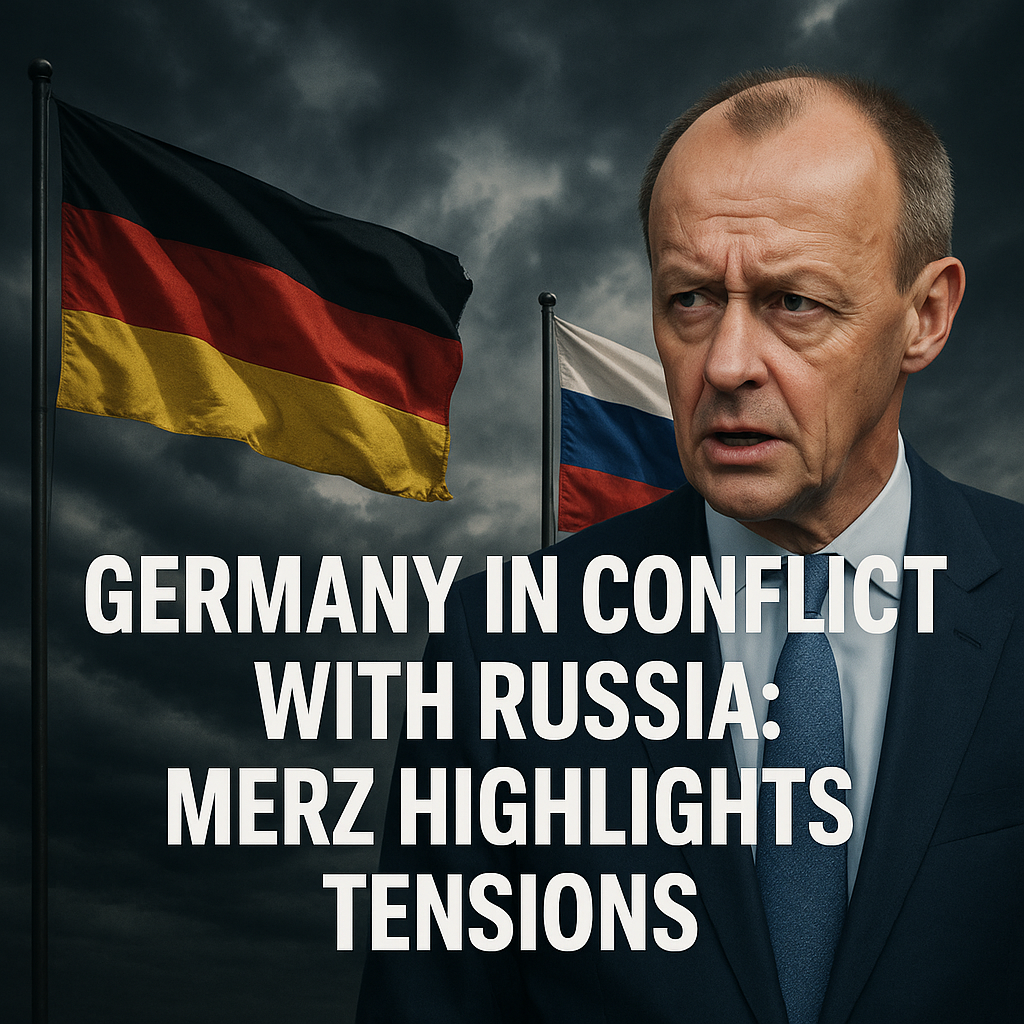
Germany in Conflict with Russia: Merz Highlights Tensions
Understanding Germany’s Tensions with Russia
Germany has found itself navigating increasingly turbulent waters in its relationship with Russia, particularly as geopolitical tensions continue to escalate. The recent statements from German political leader Friedrich Merz reflect a growing urgency in addressing these conflicts, shining a light on both historical grievances and contemporary challenges.

The Context of Tension
Historically, Germany and Russia have shared a complex relationship, marked by both cooperation and conflict. However, recent years have seen a marked deterioration, particularly in light of Russia’s actions in Ukraine and other Eastern European territories. Merz, leader of the Christian Democratic Union (CDU), has called for a reevaluation of Germany’s diplomatic strategy. He emphasized that “the time has come for Germany to take a firmer stance against Russian aggression,” a sentiment echoed by various political analysts and commentators across the board.

Gas Dependency and Economic Concerns
One of the core issues surrounding this conflict is Germany’s reliance on Russian energy. For decades, Germany has imported a significant portion of its gas supplies from Russia, creating an economic interdependence that many believe limits the country’s ability to act decisively in political matters. The Nord Stream pipeline, for instance, has been particularly controversial, seen by many as a tool of Russian influence.

– Energy Security: As tensions escalate, energy security remains a pressing concern for Germany. Analysts warn that while shifting away from Russian gas is necessary, it poses immediate challenges for energy stability and prices within Germany and Europe.
Navigating Diplomatic Waters
Merz’s remarks demonstrate a broader consensus within German political circles regarding the need for a more robust response to Russian actions. Some critics, however, argue that an aggressive shift could destabilize relations further and potentially escalate tensions to levels that none desire. This friction raises the question: how should Germany balance its diplomatic efforts against an increasingly assertive Russia while ensuring its domestic stability?
– Diplomatic Engagement vs. Stance: Proponents of constructive diplomacy suggest that Germany should not completely alienate Russia, as this could lead to further unintended consequences. They argue that dialogue can often yield better outcomes than isolation. On the contrary, advocates for a tougher stance claim that without clear consequences for aggressive actions, Russia might not change its current trajectory.
Historical and Cultural Factors
Understanding the historical context of the relationship can illuminate the motivations behind current policies. Centuries of shared history—from the conflicts of World War I and II to the Cold War—have imprinted a complex narrative on the collective consciousness of both nations.
– Public Sentiment: Public opinion in Germany regarding Russia is deeply conflicted. A segment of the population recalls the economic benefits garnered through cooperation, while another segment harbors significant distrust, particularly in light of recent aggressions. This duality complicates political decision-making, as leaders must tread carefully to navigate public sentiment effectively.
Conclusion: A Path Forward
The road ahead for Germany regarding its relationship with Russia is fraught with challenges. Friedrich Merz’s insights into the need for a clear strategy resonate with many lawmakers and citizens alike, reflecting a growing urgency. However, the balancing act of maintaining energy security while addressing the moral and ethical implications of Russian actions is a formidable task that will require careful deliberation.
As Germany contemplates its next steps, it’s clear that a multifaceted approach—combining diplomatic dialogue, energy diversification, and a unified European response—could be the key to navigating this complex geopolitical landscape. While challenges abound, the path forward gives Germany a valuable opportunity to assert its role on the global stage amid rising tensions, ensuring that its actions in response to Russia are both principled and pragmatic.
In navigating the current tensions, Germany will need to reflect not just on the past but also on how it fits into the broader European context—a task that may well define its role in issues of regional and global significance for years to come.