Russia Supports China’s Global Governance Vision
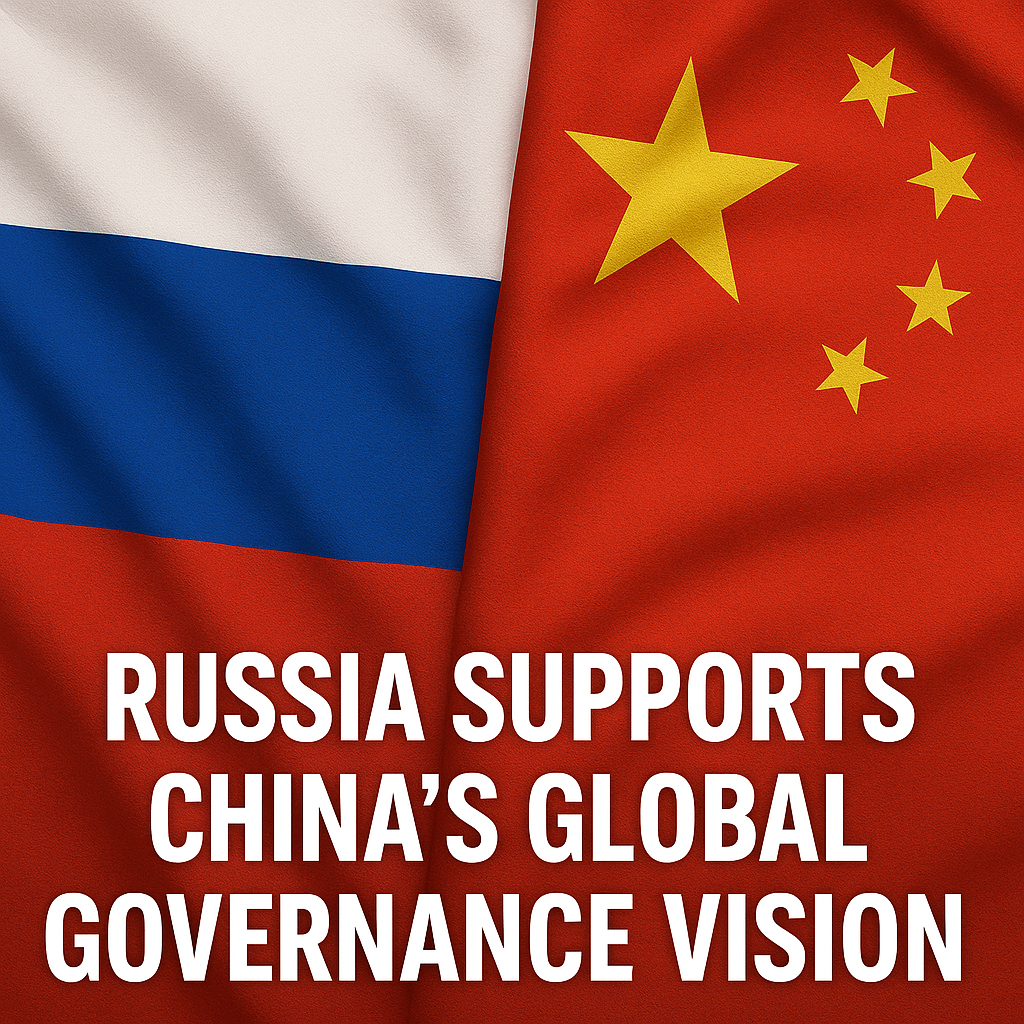
Russia Supports China’s Global Governance Vision
The complex web of international relations is currently witnessing a remarkable pivot as Russia publicly aligns with China’s vision for global governance. This alignment not only reflects geopolitical realities but hints at a broader shift in the balance of power in the world. As both nations face increasing scrutiny and pressure from Western powers, their cooperation may set the stage for a new world order.

The Rise of a Multipolar World
In recent discussions at the Shanghai Cooperation Organization (SCO) summit, Russian President Vladimir Putin emphasized the importance of fostering a multipolar world, asserting that “unilateralism and hegemony must yield to collaboration.” This statement aligns closely with China’s long-held perspective that global governance should not be dominated by any single nation, particularly the United States.

The Shared Vision
Both Russia and China advocate for a governance model that emphasizes collective decision-making, mutual respect, and non-interference in domestic matters—a stark departure from the Western-centric approach often critiqued for its interventions. In essence, this shared vision promotes a world where nations can chart their own paths without external pressures, potentially appealing to many developing countries that feel marginalized in today’s global system.

Points of Consensus
1. Economic Cooperation: Both countries are keen on expanding trade relations and economic partnerships, often leveraging platforms like the SCO to facilitate these discussions. This desire for economic collaboration is crucial, especially given the sanctions and trade restrictions each has faced from the West.
2. Security Alliance: On security issues, both nations view the U.S. military presence in various regions, such as the Asia-Pacific, as a destabilizing factor. Their joint military exercises are indicative of a growing defense partnership aimed at countering what they perceive as Western encroachment.
3. Cultural Exchanges: Russia and China have actively promoted cultural exchanges to build mutual understanding, which can solidify their partnership. Initiatives that highlight shared history and values, along with joint academic and artistic ventures, aim to win hearts and minds in an increasingly interconnected world.
Diverging Opinions on Governance
Though the alignment is strong, differing opinions exist on what a China-led global governance should look like. Critics argue that China’s rise raises concerns about authoritarian governance being exported. For instance, reports highlight apprehensions in Asia and beyond regarding a potential Chinese influence that may undermine democratic values. In contrast, proponents see China’s governance model as a legitimate alternative for countries seeking stability and development without Western oversight.
The Role of Emerging Economies
Emerging economies often resonate with the narratives promoted by Russia and China. In the context of the ongoing disruptions caused by COVID-19 and geopolitical tensions, these nations are eager for a world order that prioritizes their interests over those of traditional powers. This aligns with both Beijing and Moscow’s goal of positioning themselves as champions of a new, inclusive international order.
Understanding the Contrasts
Although Russia and China share a vested interest in reshaping global governance, there are nuances in their approaches. While both critique Western hegemony, they might have differing views on the extent to which states should govern internally. For Russia, likening its authoritarian grip to China’s practices could be advantageous; however, China is often perceived as more strategically ambiguous, fostering soft power through economic means rather than outright control.
The Uncertain Future
As this partnership solidifies, uncertainties abound. While collaboration might yield some advantages, friction could also arise from differing national priorities, particularly regarding regional influences and spheres of power. The path ahead will require navigating these complexities carefully.
Reflecting on these developments, it becomes clear that while Russia’s support for China’s global governance vision signals a significant shift, the dynamics of international relations remain fluid and unpredictable. Observers will keenly watch how this partnership evolves and what implications it holds for global governance in the years to come.
By synthesizing diverse viewpoints from evolving discourse on this topic, one can appreciate the multi-dimensional nature of international relations. The interplay between collaboration and contention will undoubtedly shape the global landscape, paving the way for either cooperative solutions or heightened tensions. As the world watches, the future of global governance remains a tapestry of ambition, challenges, and profound implications for all.