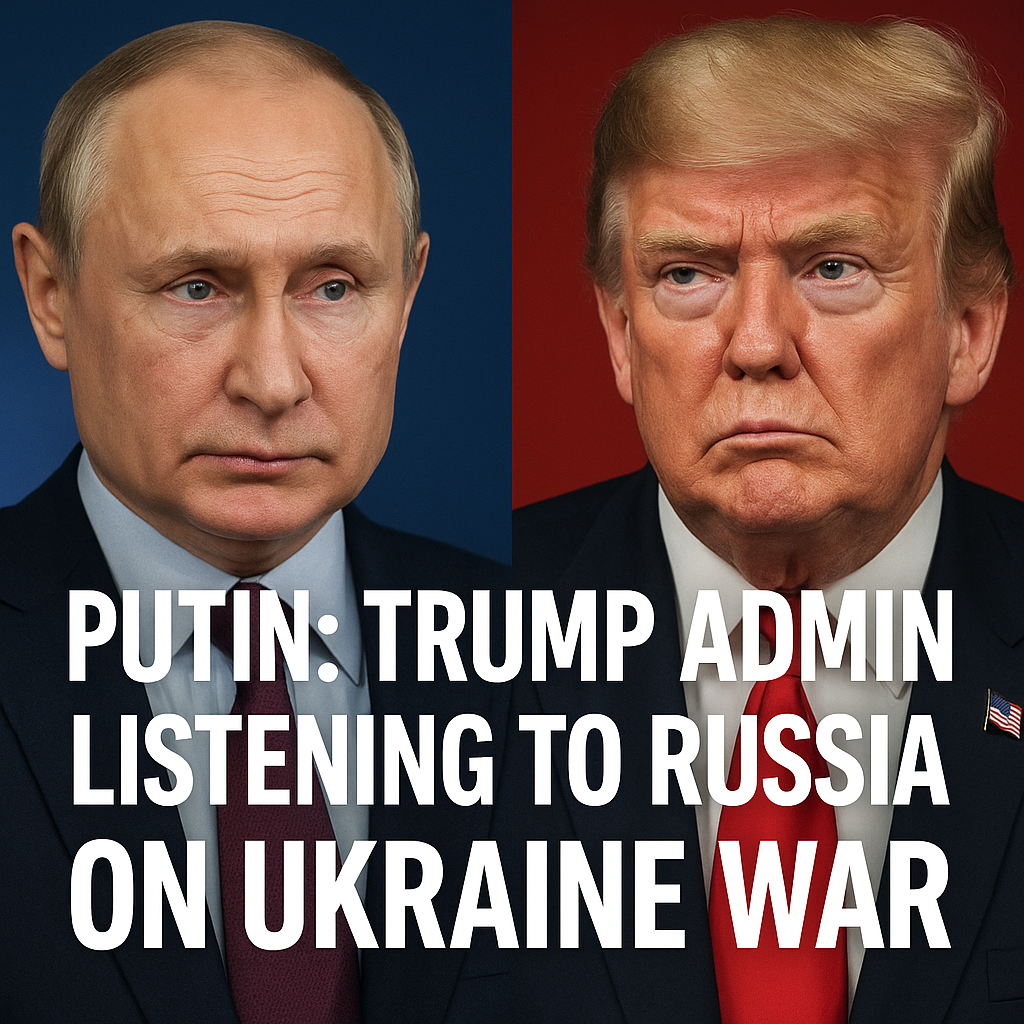
Putin: Trump Admin Listening to Russia on Ukraine War
Putin Claims Trump Administration Listens to Russia on Ukraine War
In a recent statement, Russian President Vladimir Putin asserted that the Trump administration has been attentive to Russia’s perspective regarding the ongoing Ukraine war. This claim comes amidst a complicated geopolitical landscape, where narratives surrounding the conflict are shaped by various international players. Analyzing Putin’s remarks offers a window into the current dynamics of U.S.-Russia relations and the broader implications for international diplomacy.

Putin’s Perspective: A Call for Dialogue
Putin’s assertion highlights a perceived openness from the Trump administration to engage with Russia’s viewpoints on the Ukraine conflict. He emphasized that listening to differing perspectives is crucial for resolving international disputes. “Without dialogue, you cannot resolve any issues,” Putin stated during a briefing, showcasing his stance that communication is essential for peace.

From one angle, this can be interpreted as a strategic move to position Russia as a cooperative partner rather than a rogue state. By suggesting that the U.S. is receptive to Moscow’s opinions, Putin attempts to frame the narrative in a way that advocates for a diplomatic resolution while simultaneously bolstering his international standing. This tactic aligns with Russia’s broader strategy of portraying Western nations as antagonistic while showcasing Russia as a victim of Western aggression.

The Trump Administration’s Stance: A Complex Relationship
The reaction from the Trump administration to Putin’s claims is less clear-cut. While it has been observed that the Trump administration adopted a more conciliatory tone toward Russia than its predecessors, opinions on how this strategy played out in practice are varied. Proponents argue that these relations fostered a unique opportunity for direct negotiations, while critics contend that this approach emboldened Russia’s aggressive posture towards Ukraine.
A Republican official, who spoke on condition of anonymity, remarked that the Trump administration was indeed focused on achieving a level of engagement with Russia that had not been seen in years. However, skepticism remains prevalent. Observers note that the lack of a consistent and unified American foreign policy toward Russia complicates this narrative.
Diverging Opinions: A Global Perspective
While analyzing Putin’s remarks, it’s essential to highlight how they are perceived globally. Varied reactions stem from regional biases, with some nations advocating for dialogues similar to those suggested by Putin. In Europe, however, there is a palpable concern over any perceived leniency towards Russia, especially given its military incursions in Ukraine.
According to Sky News, the European response includes calls for increased sanctions and a united front against Russia’s military actions. This move signifies a fracture in how Western nations, particularly in Europe, perceive engagement with Russia versus the more diplomatic approach some factions within the U.S. may favor.
Moreover, several analysts assert that the Ukraine conflict’s complexity cannot be reduced to merely a dialogue with Russia. Critics argue that while communication is essential, it must occur within a framework that holds Russia accountable for its actions. This perspective creates a notable contrast to Putin’s framing of the situation, suggesting a divergence in how diplomacy is viewed across different geopolitical factions.
The Stalemate: Understanding the Complexities
As the situation develops, it’s crucial to recognize the myriad factors influencing both U.S. and Russian stances on the conflict. While Putin’s comments suggest an openness to dialogue, they also reflect a strategic attempt to shift the narrative surrounding Russia’s involvement in Ukraine. Meanwhile, the response from the Trump administration remains a blend of engagement and skepticism, illustrating the nuanced nature of modern diplomacy.
The prevailing sentiment is that dialogue alone is insufficient. With Russia’s military involvement in Ukraine continuing unabated, many leaders assert that any discussions must be paired with concrete measures to ensure Ukraine’s sovereignty. As such, a stalemate appears likely, one that combines the complexities of international relationships with the vast array of national interests at stake.
Conclusion: Cautious Optimism or Imminent Tension?
Putin’s remarks regarding the Trump administration’s alleged receptiveness to Russia’s viewpoint on the Ukraine war encapsulate a broader narrative about the need for dialogue in conflict resolution. However, the discordant reactions from various stakeholders illustrate that achieving a lasting peace is far from straightforward. The international community remains divided on how to effectively engage with Russia, leading to a complex web of diplomatic relations that is still very much in flux.
Ultimately, it remains uncertain how the situation will evolve. While the call for dialogue is clear, the fundamental issues underpinning the Ukraine war continue to pose significant obstacles. Navigating this intricate landscape will require not just open lines of communication but also a commitment to principles of accountability and sovereignty that lie at the heart of international law.