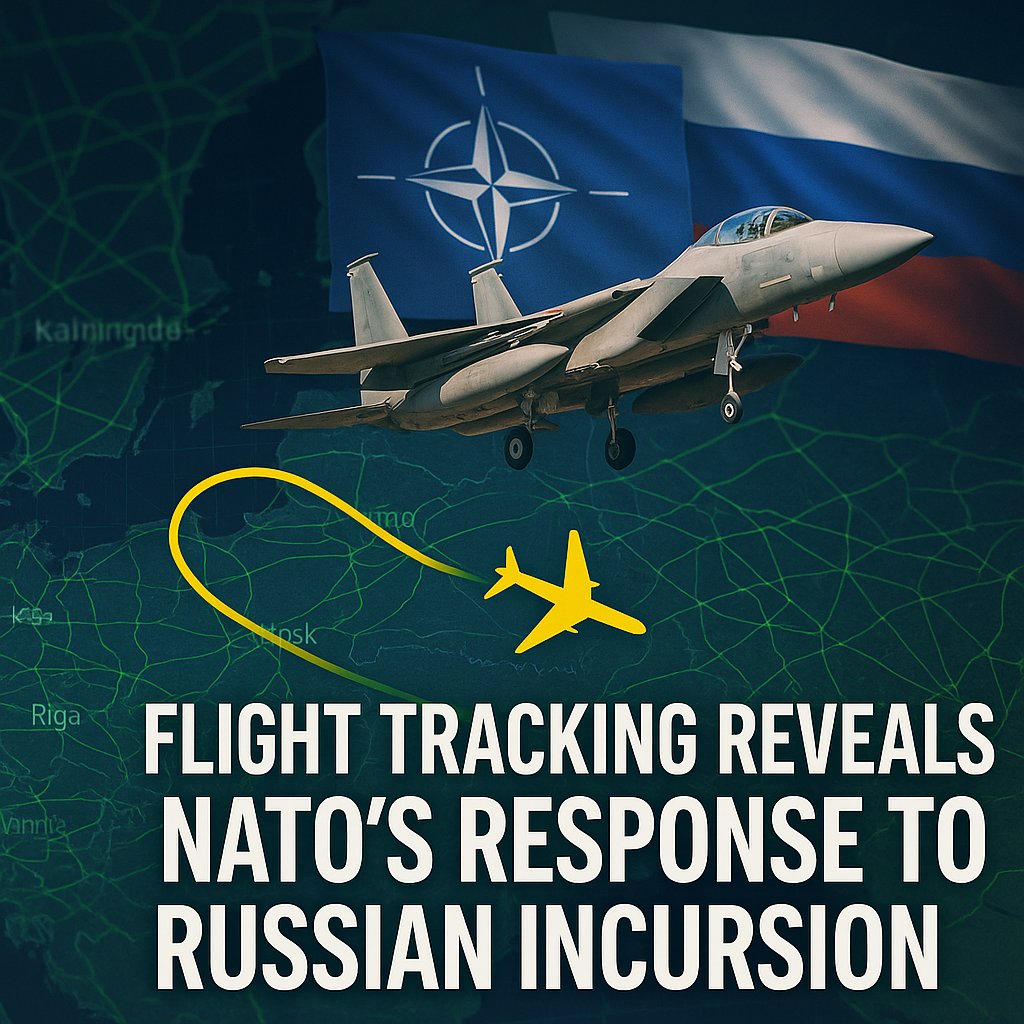
Flight Tracking Reveals NATO’s Response to Russian Incursion
Flight Tracking Reveals NATO’s Response to Russian Incursion
Recent flight tracking has unveiled the strategic maneuvers of NATO in response to ongoing tensions stemming from Russia’s incursions into Poland. As the situation develops, various interpretations and reactions emerge from multiple sources, highlighting the complexities surrounding military movements in this critical region of Europe.

NATO’s Strategic Air Movements
Flight tracking data indicates a significant uptick in NATO aircraft deployments near Eastern Europe, particularly following reports of Russian military action. According to Sky News, aircraft from NATO member states have been closely monitored, reflecting a heightened state of alert and readiness. This activity aligns with NATO’s collective defense commitments outlined in Article 5, which asserts that an attack on one member is considered an attack on all.

Reports show a diverse array of aircraft involved, including surveillance planes and fighter jets. NATO’s Enhanced Forward Presence (EFP) in Poland and the Baltic states has been continuously reinforced, representing not only the alliance’s commitment to deterrence but also its adaptability in the face of evolving threats.

Diverse Perspectives on NATO’s Actions
The narrative surrounding NATO’s response includes a variety of viewpoints. On one hand, proponents argue that these military deployments are essential for maintaining stability in a region historically fraught with tensions. For instance, Al Jazeera emphasizes the importance of deterrence, suggesting that NATO’s transparency in its military readiness may serve to discourage further aggression from Russia.
Conversely, critics caution against the escalation of military posturing. An article from RT highlights concerns voiced by some analysts who argue that increased NATO presence may provoke further aggressive actions from Russia, potentially exacerbating the situation rather than stabilizing it. This perspective raises questions about the effectiveness of a strategy grounded in military deterrence versus one that could foster diplomatic resolutions.
Complex Implications of Military Readiness
The implications of NATO’s aircraft movements extend beyond immediate military strategy; they also reflect deeper geopolitical tensions. While NATO emphasizes defensive actions, Russia interprets these maneuvers as encroachments into its sphere of influence. The threat of military confrontation looms large, making it essential to consider the potential consequences of miscalculations on either side.
Moreover, the psychological impact of flight tracking on public perception cannot be underestimated. Knowledge of intensified military activities may increase anxiety among local populations and could influence political discourse within NATO member states, as concerns about security take center stage.
Political leaders in the West face a dual challenge: to assure national security while simultaneously avoiding actions that could be perceived as provocative. The balance of power in Eastern Europe is delicate, and NATO’s commitment to collective defense must be weighed against the risks of escalating hostilities.
Moving Forward: The Need for Dialogue
The current situation necessitates a multidisciplinary approach that incorporates defense strategies and diplomatic dialogues. While tracking military movements is imperative for understanding the immediate landscape, long-term solutions should prioritize communication and de-escalation efforts.
Experts suggest a renewed emphasis on backchannel communications between NATO and Russian officials to mitigate misunderstandings. These dialogues could foster a more stable environment, reducing the likelihood of misinterpretations that could lead to inadvertent conflicts.
Conclusion: A Call for Caution
As NATO’s response to Russian incursions becomes increasingly visible through flight tracking, it’s essential to navigate the complexities of this geopolitical landscape cautiously. Understanding diverse viewpoints—from the necessity of military readiness to the potential for provocation—will be key in shaping a safe and secure future for Eastern Europe.
While the current state of military readiness underscores the alliance’s commitment to its principles, it serves as a reminder of the fragile balance between defense and diplomacy in these challenging times. A comprehensive approach that blends strategic military preparations with open lines of communication may very well define the future of NATO’s engagement in Eastern Europe, ensuring that security remains paramount while conflict is avoided.