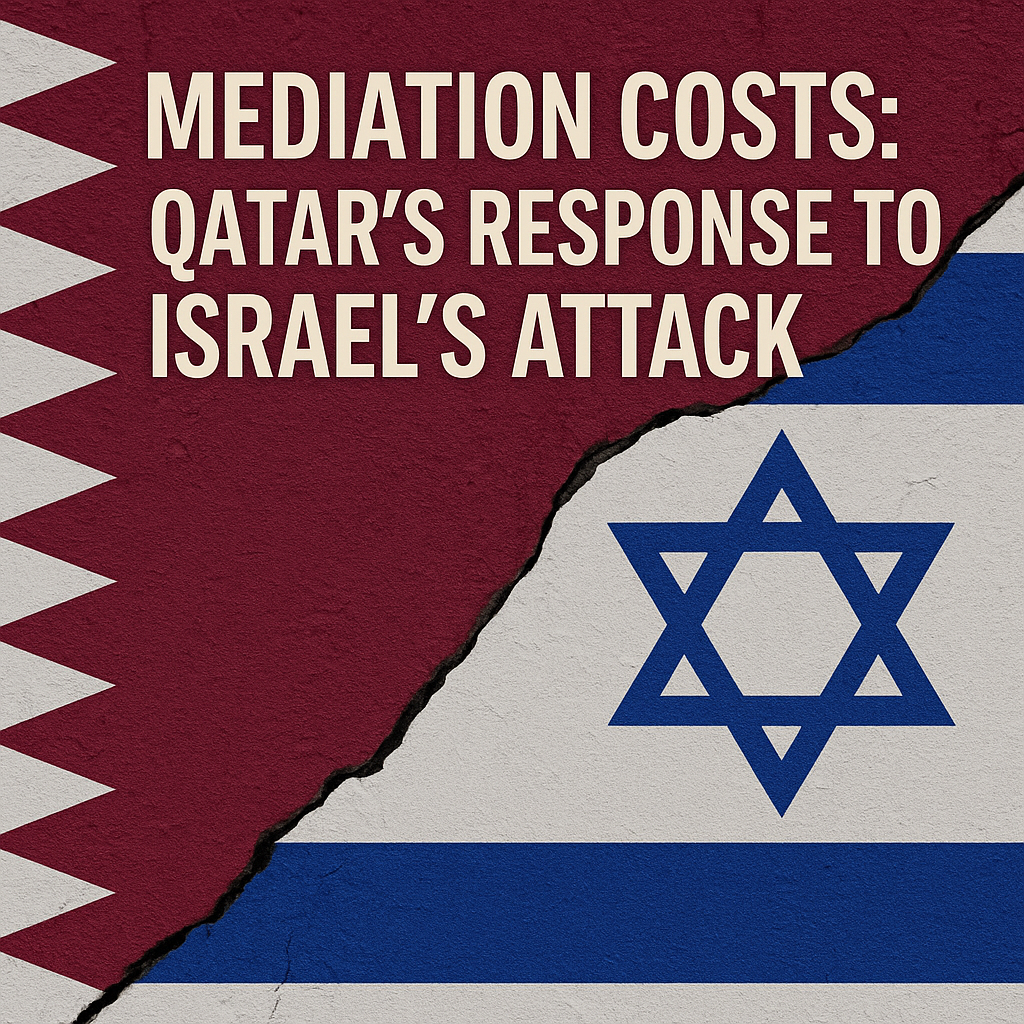
Mediation Costs: Qatar’s Response to Israel’s Attack
Mediation Costs: Qatar’s Response to Israel’s Attack
In recent times, Qatar has emerged as a pivotal player in Middle Eastern diplomacy, particularly in relation to Israel’s actions in Gaza and the overarching Israeli-Palestinian conflict. The implications of these actions extend beyond the battlefield, signaling a complex interplay of geopolitical interests and humanitarian concerns, particularly regarding mediation efforts.

Qatar’s Diplomatic Position
The Gulf state of Qatar has long championed itself as a mediator in conflicts involving Palestinian factions and Israel. This reputation was solidified following a series of escalations, with diplomatic efforts aimed at de-escalating tensions and addressing the humanitarian crisis exacerbated by military confrontations. Analysts believe that these mediation costs, both economic and political, could reshape Qatar’s influence in regional dynamics.

Economic and Political Considerations
One of the prominent views regarding Qatar’s response is rooted in its economic might. The country is rich in natural gas reserves and holds significant financial influence, which it has leveraged to support various factions within Gaza, as well as to facilitate dialogues. According to Al Jazeera, these mediation costs include not only direct financial assistance but also substantial investments in rebuilding efforts post-conflict.

Despite the financial backing, some experts argue that Qatar’s mediation role carries a risk of alienation from neighboring Gulf states, particularly those aligned with Saudi Arabia and the United Arab Emirates. This tension stems from differing views on how to approach Israel and Hamas. While Qatar sees mediation as a means to foster stability, others perceive it as indirectly endorsing militant activities.
Moreover, the political costs for Qatar include the delicate balancing act between maintaining good relations with the U.S. and other Western nations, who have historically pressured it to curb support for militant groups. As a result, Qatar’s mediation strategy must navigate these intricate relationships while addressing humanitarian needs.
Reactions to Israel’s Recent Actions
Following the latest round of attacks by Israel, Qatar’s response involved calls for de-escalation and dialogue. Acknowledging the furor and suffering caused by ongoing military actions, Qatari officials have reiterated the necessity of a humanitarian ceasefire. This presents a stark contrast to the views held by more hardline factions who advocate for direct retaliation.
Divergent Opinions on Mediation Costs
From the perspective of analysts at RT and Sky News, mediating costs extend beyond immediate financial implications. There’s a school of thought suggesting that Qatar’s ongoing engagement could facilitate long-term peace agreements, though the immediate repercussions could diminish its regional standing. The complexities further unfold in light of contrasting strategies among neighboring nations. Critics argue that Qatar’s approach may inadvertently legitimize extremist tactics, undermining broader peace initiatives spearheaded by more traditional diplomatic powers.
In a contrasting viewpoint, proponents of Qatar’s mediation efforts contend that the nation provides a unique platform for dialogue that other regional players might not be able to. They argue that without Qatar’s involvement, there would be little opportunity for reconciliation since other nations remain hesitant to engage directly.
The Impact of Humanitarian Efforts
Qatar’s investment in humanitarian aid is another critical aspect of its mediation role. By providing financial assistance and goods to combat the humanitarian crisis in Gaza, the country positions itself as a compassionate mediator. This has significant implications for global optics—showcasing Qatar as a stabilizing force amid chaos. However, these actions also fuel debates about the effectiveness and appropriateness of humanitarian aid being funneled into areas rife with conflict.
Challenges Ahead for Qatari Diplomacy
Despite commendable intentions, Qatar’s future mediation endeavors may face multiple hurdles. With ongoing military actions from Israel and rising tensions among Palestinian factions, the path to credible negotiation remains fraught with obstacles. Additionally, shifting alliances and attitudes within the Gulf region could further complicate Qatar’s diplomatic reach.
Navigating these complexities requires not only economic resources but also a profound understanding of the evolving sociopolitical landscape. Qatar must continue to weigh the costs and benefits of its mediation role judiciously, particularly as external pressures mount from both allies and adversaries.
Conclusion: A Nuanced Path Forward
In summary, Qatar’s response to Israel’s actions embodies a multifaceted approach to mediation that transcends mere financial expenditure. Although its efforts may carry inherent risks, the potential benefits for regional stability cannot be overlooked. As Qatar strives to balance its support for humanitarian endeavors alongside its diplomatic initiatives, the future of its mediation role remains uncertain but crucial to the broader peace process in the Middle East. The costs of mediation, both evident and latent, will shape not only Qatar’s influence but the dynamics of the region for years to come.