Qatar Attack: Will It Isolate Israel Internationally?
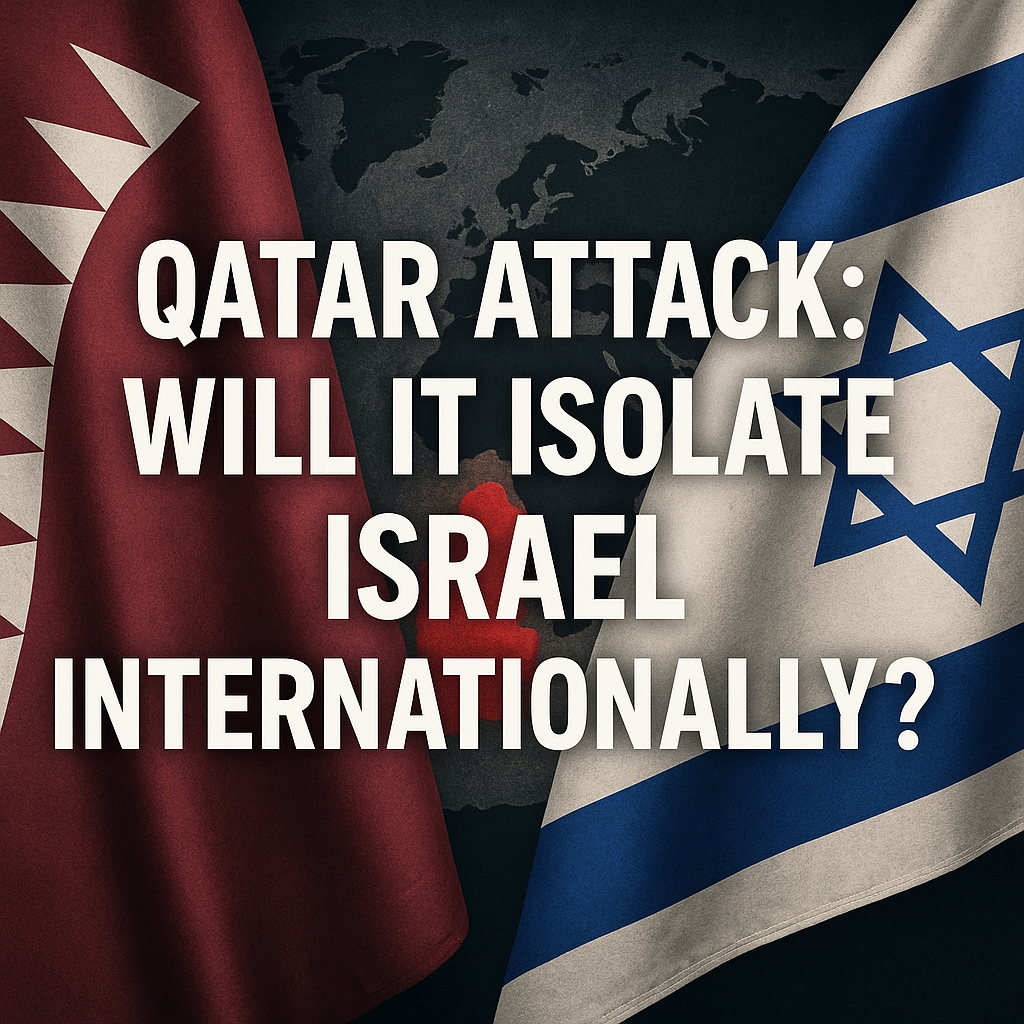
Qatar Attack: Will It Isolate Israel Internationally?
The recent attack in Qatar has sparked debates on its potential implications for Israel’s international standing. Given the intricate web of geopolitical alliances in the Middle East, understanding the ramifications of this incident requires a careful exploration of various perspectives.

A Tenuous Balance: Regional Responses
Following the attack, regional reactions have been mixed, showcasing the complexity of Middle Eastern politics. On one side, Palestinian factions such as Hamas have condemned the Israeli government, viewing the attack as a consequence of its policies in Gaza and the West Bank. They argue that Israel’s military actions contribute to cycles of violence, ultimately isolating it further in the Arab world. As noted in Al Jazeera’s analysis, these events could galvanize support for Palestinian movements, reinforcing both local sentiments and international critiques against Israel.

Conversely, countries such as Egypt and Saudi Arabia have urged for calm and diplomatic dialogue, emphasizing stability in the region over further hostility. They recognize Israel as a key player in regional security and express concern that escalating tensions could undermine recent normalization efforts. The dichotomy in responses underscores the precariousness of alliances—while some factions may lean towards isolationist sentiments against Israel, others prioritize a more strategic approach focused on diplomacy.

International Reactions: Allies and Opposition
Internationally, the reaction to the Qatar attack has also been polarized. Countries like the United States, which has historically supported Israel, have voiced their commitment to Israel’s right to defend itself while calling for de-escalation. This was reflected in statements made by key U.S. officials, who have reiterated the need for both security and peace in the region.
In contrast, European nations have expressed growing concern over Israel’s military operations, calling for a more balanced approach to prevent human rights violations. Recent reports indicate that several EU leaders are reconsidering their support for Israeli policies, especially in light of increased violence and the humanitarian crisis in Gaza. This potential shift could lead to a more unified European stance against Israeli actions, driving a wedge between Israel and its European allies.
The Role of Global Institutions
Organizations like the United Nations have begun spotlighting the incident, with calls for investigations into the actions leading to the attack. A recent UN resolution has condemned violence from all sides but specifically targeted Israeli policies seen as exacerbating tensions. If global institutions take a firmer stance against Israel’s actions, it could further complicate its diplomatic relations, possibly leading to a degree of international isolation.
However, the potential for such isolation remains uncertain. Israel continues to maintain strong relationships with nations beyond the immediate region, such as India and several Eastern European countries, which view Israel as a strategic ally. The complexity of international relations, particularly in the wake of shifting power dynamics post-2021, means that while some regions may express discontent, others are likely to strengthen ties with Israel.
Looking Ahead: Prospects for Diplomacy
As the dust settles from the attack in Qatar, the implications for Israel’s international standing remain nuanced and complicated. While there are voices calling for solidarity with the Palestinian plight and increased international pressure on Israel, these sentiments must be weighed against the backdrop of existing geopolitical alliances.
The ongoing volatility in the region suggests that while an immediate isolation may not materialize, the attack could serve as a catalyst for changing perceptions and policies regarding Israel. As nations reassess their alliances and responsibilities in light of humanitarian concerns, Israel may find itself at a crossroads: choosing between military action and diplomatic engagement.
Conclusion: An Uncertain Future
The incident in Qatar highlights the multifaceted nature of international relations in the Middle East. The potential for Israel’s isolation hinges not only on immediate reactions but also on the long-term strategies pursued by both its allies and adversaries. With calls for accountability rising and regional dynamics shifting, the future remains unpredictable but undoubtedly complex.
Ultimately, the lesson here is that geopolitical landscapes are ever-evolving. The outcome of this incident will depend on a confluence of factors, including diplomatic efforts, regional responses, and the voices of the international community. For now, the world watches closely as the events unfold, uncertain yet hopeful for a resolution that prioritizes peace and stability.