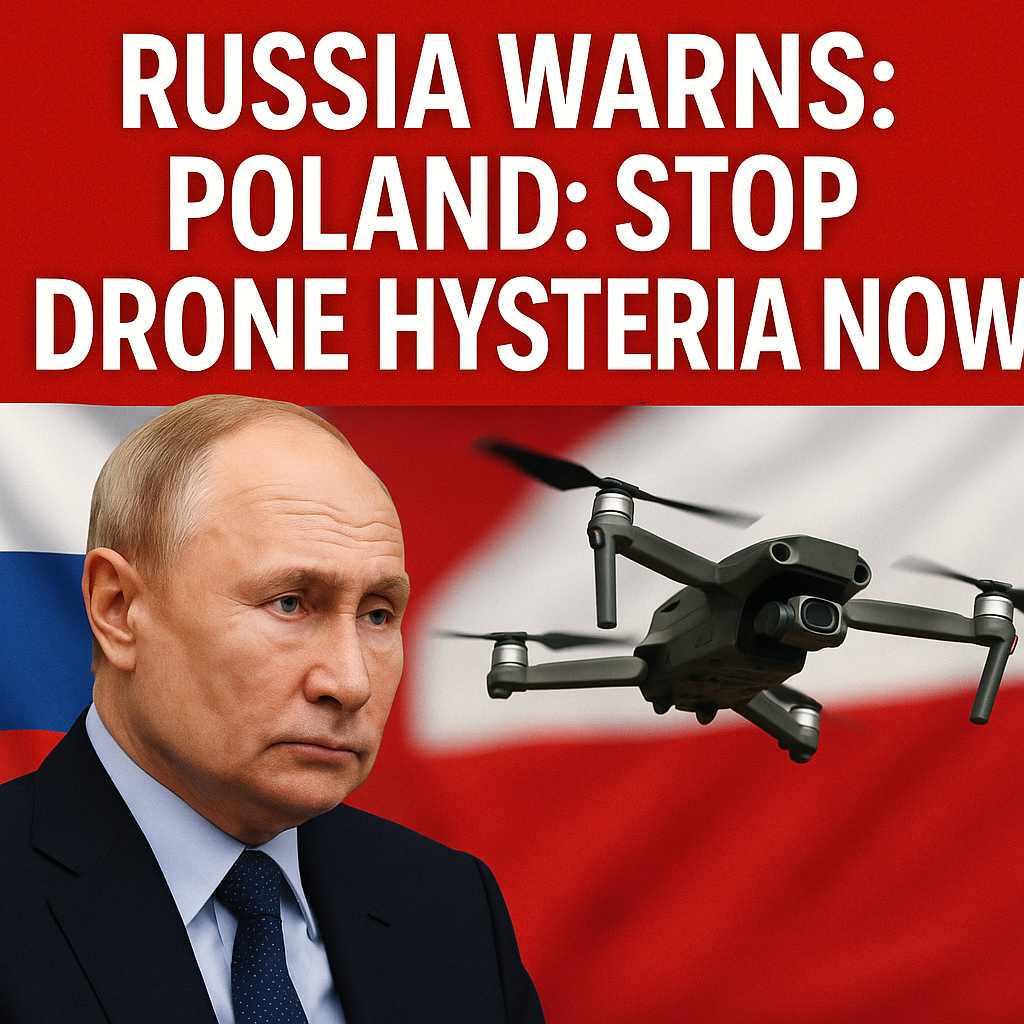
Russia Warns Poland: Stop Drone Hysteria Now
Russia Warns Poland: Stop Drone Hysteria Now
In recent geopolitical tensions, Russia has warned Poland to cease what it describes as “drone hysteria.” This statement comes as diplomatic relations between the two nations experience a notable strain. Understanding the context and implications of this warning requires a dive into the underlying tensions, the broader East European security landscape, and the contrasting perspectives presented by various media outlets.

The Background of Tension
The backdrop of Russia’s warning is influenced by Poland’s increasing military readiness, specifically citing concerns surrounding drone usage in the region. Amid growing hostilities and fears of aggression, Poland has ramped up its military expenditures and embraced NATO’s collective defense posture. This has included the acquisition of advanced drone systems.

Russia’s Foreign Ministry expressed discomfort over Poland’s military actions, framing them as provocative and unnecessary. According to reports from RT, Russian officials allege that Poland’s rhetoric contributes to regional instability, which reflects a fear of NATO’s eastward expansion. The Russian government views these developments as a potential threat to its boundaries and security interests.

Poland’s Position
On the other hand, Poland justifies its military enhancements as necessary for national security. Al Jazeera highlights that, following historical invasions and regional conflicts, Warsaw sees the strengthening of its defenses, including drone capabilities, as vital to deterring potential threats from Russia. Polish officials argue that improving military readiness is not about aggression but about safeguarding sovereignty and stability in the face of perceived pressures from Russia.
Poland’s military acquisitions are, therefore, seen as an assertive but defensive stance, aiming to enhance deterrence rather than inciting further conflict. Analysts suggest that Polish policymakers believe they must actively counter Russian influence, which is underscored by past experiences in the region.
Diverging Narratives: A Closer Examination
The contrasting narratives between Russian officials and Polish representatives reflect broader tensions that characterize East European geopolitics. Sky News emphasizes that Russia’s response can be interpreted as a way of asserting dominance and intimidation. By labeling Poland’s military advancements as “hysteria,” Russia aims to shift the narrative and gain domestic support while undermining European solidarity against perceived Russian aggression.
Furthermore, the term “drone hysteria” suggests an attempt to downplay legitimate security concerns. Each side presents a rational explanation for its actions; Russia, in defending its territorial integrity and urgency to correct what it perceives as escalating threats, while Poland seeks reassurance in a world where historical trauma is still fresh in its collective memory.
A Risky Standoff
The ongoing discourse surrounding drones highlights the challenges of modern warfare where technology shapes tactics. Drones are seen as cost-effective tools in asymmetric warfare, enabling smaller nations to enhance their military presence. This has led to an increased likelihood of miscalculations and misunderstandings, which can escalate the situation into unplanned confrontations.
Both Poland and Russia are navigating a landscape filled with uncertainties. The current exchange can escalate into a more intense standoff if diplomatic channels do not facilitate dialogue. Moreover, any incident involving drones could spiral out of control, leading to consequences that are difficult for either side to predict or manage.
Conclusion: What’s Next?
As tensions evolve, the call for diplomacy and open communication channels becomes crucial. Engagement cannot be ignored despite the differences in narrative. Both nations are poised at a critical juncture; Poland must ensure its security while Russia must avoid alienating its neighbors further.
The complexity of this situation underscores the need for a nuanced understanding that takes into account historical relationships, the evolution of military technology, and the realities of current global politics. While both sides have valid security concerns, finding a pathway that prioritizes de-escalation and mutual respect is paramount for the stability of Eastern Europe. With ongoing debates and military posturing likely to continue, the hope remains for reasoned dialogue to replace rhetoric and suspicion.