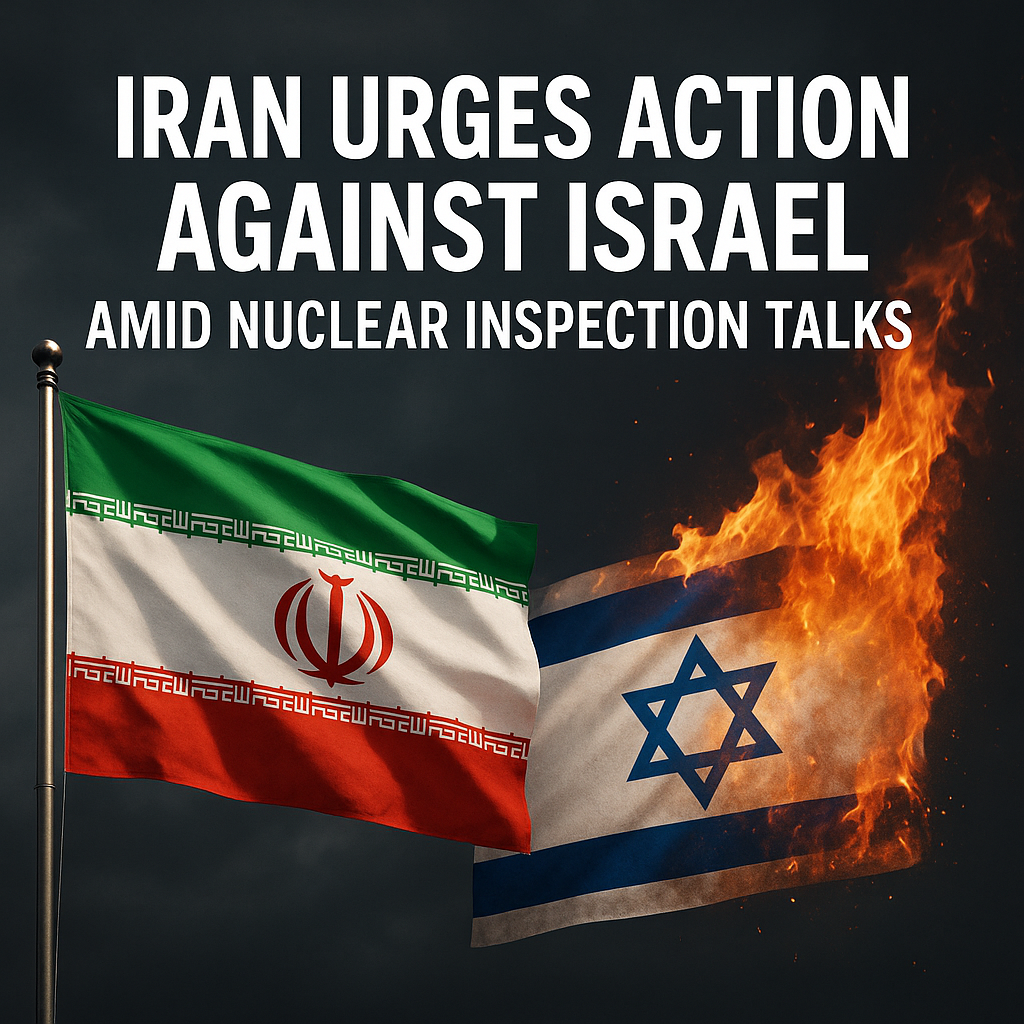
Iran Urges Action Against Israel Amid Nuclear Inspection Talks
Iran Urges Action Against Israel Amid Nuclear Inspection Talks
In a landscape marked by geopolitical tensions, Iran has recently called for immediate action against Israel, coinciding with critical discussions surrounding nuclear inspections. This convergence of issues underscores a multifaceted crisis, wherein Iran’s nuclear ambitions are juxtaposed against its regional rivalries, particularly with Israel.

The Context of Nuclear Inspection Talks
As the clock ticks on Iran’s nuclear program, negotiations regarding inspections have become paramount. Reports suggest that Iran is prepared to grant access for inspections in connection with its nuclear facilities. However, this offer comes amid escalating rhetoric against Israel, intensifying fears of potential conflict in the region.

According to Al Jazeera, Iranian officials emphasize that any agreements regarding inspections should not deter the international community from taking more definitive actions against Israel, particularly concerning its military actions in the region. This sentiment highlights a broader narrative within Iranian politics: the perception that Israeli activities pose an existential threat, even as diplomatic discussions progress regarding Iran’s nuclear capabilities.

Conversely, RT News posits that Iran’s calls for action serve as a political maneuver designed to strengthen internal unity and divert attention from its nuclear negotiations. Such a stance illustrates the complexity of Iran’s foreign policy, as it seeks to balance the pressures of international diplomacy and its regional ambitions.
Divergent Perspectives on Iran’s Position
Diplomatic Rhetoric and Military Posturing
Iran’s dual approach—addressing international scrutiny over its nuclear program while subtly threatening a regional adversary—brings forth contrasting interpretations among analysts. On one hand, Al Jazeera underscores the Iranian leadership’s efforts to strengthen its position through international alliances, especially with nations opposed to Israel’s influence. This perspective suggests that Iran views its nuclear negotiations not just as a diplomatic issue but as a cornerstone of its national defense strategy amid perceived threats from Israel.
In contrast, perspectives from Sky News argue that such posturing could provoke a backlash, alerting regional players to increase their military readiness in response to Iranian threats. The outlet stresses that heightened tensions could jeopardize any progress made in nuclear talks, thus complicating diplomatic strategies and risking a larger conflict.
Internal Politics Versus Regional Strategy
Debates also emerge regarding the impact of internal Iranian dynamics on its foreign policy. The notion that Iran might be utilizing anti-Israel rhetoric to galvanize support at home is prevalent among some experts. By amplifying threats against Israel, Iranian leaders may seek to unify the populace around a common cause, diverting attention from domestic issues such as economic turmoil and human rights concerns.
However, RT News raises caution against overly simplifying Iran’s motives. The publication suggests that Iran’s actions are not solely driven by internal politics, but also by a calculated effort to assert its influence in a region shaped by complex historical grievances and shifting allegiances. This insight urges stakeholders to consider the multifaceted nature of regional dynamics instead of relegating them to binary narratives of good versus evil.
The Implications for the International Community
The charged atmosphere surrounding Iran’s nuclear program and its threats against Israel poses significant questions for international diplomacy. While some analysts argue that a strong, unified response from the international community is essential to hold Iran accountable, others caution against actions that may exacerbate tensions.
The absence of consensus among global powers regarding Iran’s nuclear ambitions becomes increasingly evident. The imposition of sanctions, threats of military action, or mere diplomatic engagement all contribute to a delicate balance that requires deft handling to avoid triggering a conflict.
In summary, while Iran’s nuclear inspection talks signify a potentially pivotal moment in its history, the accompanying calls for action against Israel introduce layers of complexity to an already intricate geopolitical landscape. As policymakers navigate this delicate situation, understanding the interplay of internal and external pressures will be crucial. These dynamics point to the necessity for ongoing dialogue and caution, lest the region spirals further into conflict propelled by longstanding rivalries and contemporary ambitions.
Conclusion
The intersection of Iran’s nuclear negotiations and its antagonism towards Israel exemplifies the challenges of contemporary diplomacy in a fraught geopolitics environment. With each side escalating its narrative, the path forward remains uncertain. For those engaged in foreign policy, the delicate balance between asserting national interests and pursuing diplomatic engagements is crucial to ensuring regional stability. As these developments unfold, the international community must remain vigilant and responsive to the evolving complexities in the Middle East.