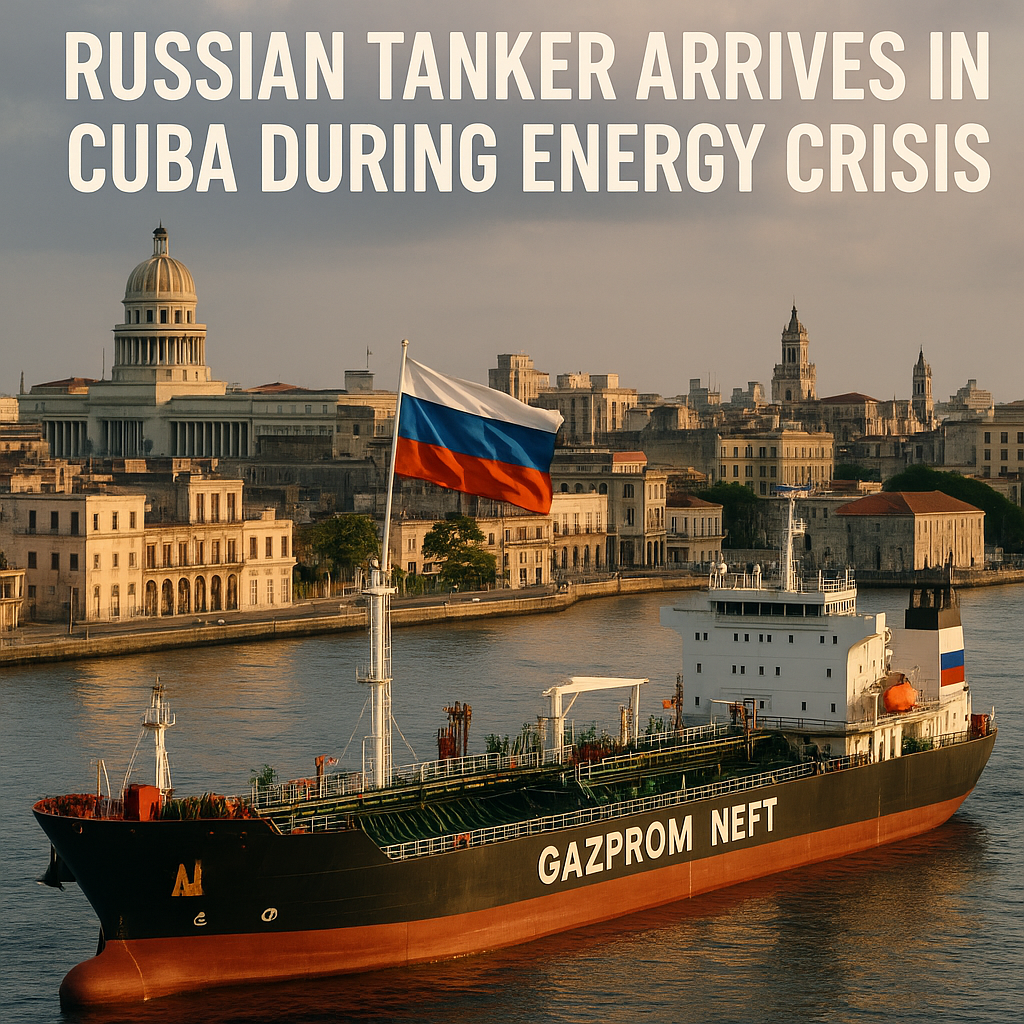
Russian Tanker Arrives in Cuba During Energy Crisis
Russian Tanker Arrives in Cuba Amid Energy Crisis
A Russian tanker recently docked in Cuba during a time of mounting energy struggles. This delivery coincides with the Caribbean nation’s ongoing crisis, prompting discussions about the implications for both Cuba and its relationship with Russia.

Context of the Energy Crisis in Cuba
Over the past year, Cuba has faced severe energy shortages characterized by extended blackouts and rolling power cuts. Economic sanctions and the COVID-19 pandemic have exacerbated these challenges, pushing the nation into a precarious situation where its capacity to secure fuel has sharply diminished. According to Al Jazeera, these shortages have sparked public dissatisfaction, leading to protests as citizens demand government accountability and transparency regarding the country’s energy policies.

Cuba has historically relied on imports to meet its energy needs, with oil coming from a variety of sources, primarily Venezuela and Russia. However, the recent geopolitical tensions—especially related to the war in Ukraine—have prompted shifts in energy dynamics globally, making it difficult for Cuba to secure the reliable and affordable oil it once did. Reports indicate that prior agreements with Venezuela have soured due to its own struggles, amplifying Cuba’s vulnerability.

Russia’s Role and Implications
The arrival of the Russian tanker is significant for several reasons. First, it symbolizes not just an energy lifeline for Cuba but also a strengthening of ties between the nations. As indicated by RT, this visit comes at a crucial moment when Russia is looking to extend its influence in Latin America, particularly as its international relationships are strained due to continued sanctions from the West.
Experts note that the shipment offers Cuba not just oil, but a strategic partnership that benefits both parties. For Russia, deepening ties with Cuba could serve as a counterbalance against U.S. influence in the region. This evolving relationship raises questions about the broader implications for Latin American geopolitics. Some analysts warn that increasing dependence on Russian energy could lead Cuba into a precarious dependency that might complicate its future diplomatic options.
Diverse Perspectives on the Delivery
There are contrasting viewpoints regarding the arrival of the Russian tanker. Proponents argue that this partnership can provide Cuba with not only immediate relief but also long-term benefits. The assistance could bolster Cuba’s energy infrastructure, which is in dire need of investment and modernization. They suggest that cooperation could lead to technological exchanges and improved energy production capacities, which could stabilize the economy in the long run.
Conversely, critics emphasize that this reliance on Russian energy sources could entrap Cuba in a cycle of dependency and limit its sovereignty. As highlighted by various sources, such an alliance might leave Cuba vulnerable to the geopolitical whims of Russia, especially as tensions in Eastern Europe remain high. The fear is that Cuba could find itself caught in an international tug-of-war, further complicating its already fragile economic landscape.
Looking Forward: What Lies Ahead?
The docking of the Russian tanker heralds a significant moment for Cuba, yet it is surrounded by uncertainty. While the immediate infusion of energy may provide a temporary reprieve, the longer-term implications remain ambiguous. Observers note that achieving true energy independence should remain a central goal for Cuba, and significantly relying on foreign partnerships may inhibit that aspiration.
Moreover, the ongoing energy crisis reflects deeper systemic issues within Cuba’s economy that require more than just external assistance. As the government grapples with the complexities of managing energy resources, there are calls for reforms that prioritize sustainability and diversification of energy sources. Perspectives within Cuba highlight the need for investment in renewable energy as a pathway toward long-term stability.
Conclusion
While the arrival of the Russian tanker provides immediate energy relief for Cuba amid a pressing crisis, it also invites a range of complex considerations. The situation underscores the delicate balance Cuba must maintain between seeking external support and fostering sustainable growth independent of foreign powers. As geopolitical dynamics continue to shift, the path forward for Cuba will require careful navigation and strategic thinking to ensure a resilient and self-sufficient energy future.