
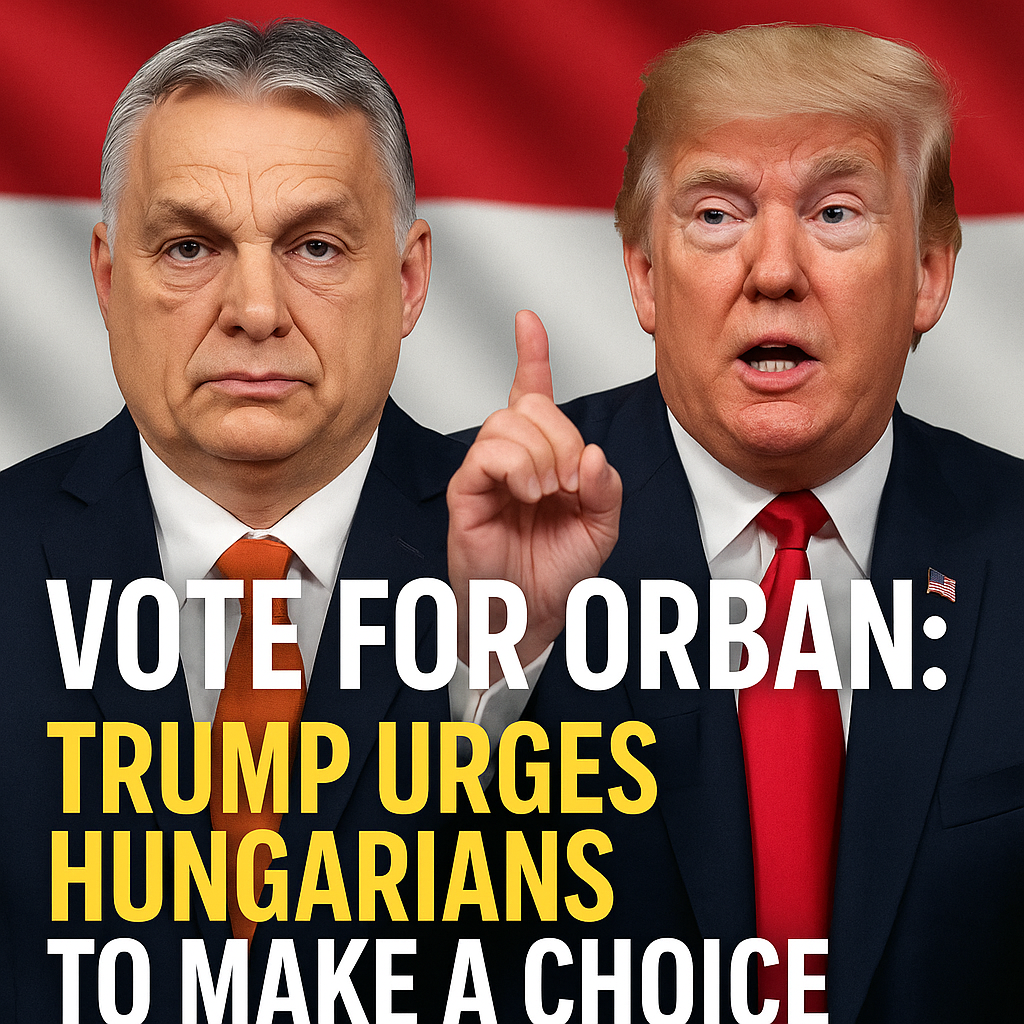
Vote for Orban: Trump Urges Hungarians to Make a Choice
Vote for Orban: Trump Urges Hungarians to Make a Choice
The political landscape in Hungary is currently attracting international attention, especially after former U.S. President Donald Trump’s recent endorsement of Prime Minister Viktor Orban. In urging Hungarians to support Orban in the upcoming elections, Trump’s proclamation raises several questions about populism, democracy, and Western political alignments.

A Complex Relationship: Trump and Orban
Trump’s support for Orban is not unprecedented; the two leaders have often been compared due to their shared ideologies centered on nationalism and anti-immigration policies. Orban has been a polarizing figure, receiving acclaim from nationalists and criticism from advocates for democratic governance. Trump’s call for Hungarians to re-elect Orban comes at a time when Hungary’s democratic institutions are under scrutiny, particularly concerning press freedom and judicial independence.

According to an article from RT, Trump emphasized that Orban has “done a great job” steering Hungary according to conservative values, which resonates strongly with Trump’s American electorate. This sentiment mirrors Trump’s own approach during his presidency, focusing on an “America First” policy that appealed to his base through immigration control and economic nationalism.

Conversely, critics of both leaders argue that their policies undermine democratic principles. Al Jazeera pointed out that Hungary’s governmental framework has been increasingly authoritarian under Orban, contrasting sharply with the democratic ideals upheld by many Western nations. The concerns extend beyond Hungary’s borders, indicating a struggle within Europe over the balance between national sovereignty and adherence to democratic norms.
Populism’s New Frontier
The endorsement of Orban by Trump is indicative of a larger trend in global politics: the rise of populism. Both leaders capitalize on public discontent, portraying themselves as the voice of the “common people” against establishment elites. This dynamic is not just a local phenomenon; it reflects a broader disillusionment with traditional political structures fueled by social and economic grievances.
A Sky News analysis suggests that the appeal of such populist leaders is rooted in their ability to present simple solutions to complex problems. Orban, for instance, attributes Hungary’s socioeconomic challenges to external influences, particularly migrants. This narrative plays well with voters feeling threatened by globalization and immigration, making Trump’s endorsement even more potent.
However, the populist approach often raises serious concerns about governance. Critics argue that this style can lead to authoritarianism, as democratic institutions become compromised in favor of consolidating power. Trump’s endorsement may galvanize Orban’s base in Hungary, but it also raises alarms about the future of democracy in the country and similarly aligned nations.
Diverging Viewpoints
While the endorsement of Orban has solidified support among nationalist factions, it has encountered skepticism from some quarters. Many Hungarians, as reported by various outlets, feel torn between re-electing a leader who promises stability and confronting the unsettling implications of his governance style. This division is echoed in broader European sentiments regarding the balance between nationalism and liberal democracy.
Notably, even within Hungary, public opinion seems to be coalescing around polarized narratives. Supporters highlight economic growth and stability under Orban’s administration, while detractors focus on the erosion of freedoms and democratic norms. The nuances in public sentiment are crucial, as they could determine the outcome of the elections and the direction Hungary takes in the coming years.
Final Thoughts
The call from Trump urging Hungarians to support Viktor Orban reflects the intertwining of global populism with local electoral politics. As both leaders have demonstrated a penchant for leveraging national identity and traditionalism, their relationship exemplifies a significant faction within Western politics that could reshape geopolitical dynamics.
As the election approaches, it remains uncertain whether Trump’s endorsement will significantly sway voters. The discourse in Hungary continues to evolve, and the implications could resonate far beyond its national borders. Ultimately, the outcome will not only influence Hungary’s future but could also serve as a litmus test for the viability of populist narratives in the broader European context. Only time will tell if this alliance proves beneficial for both parties involved.















