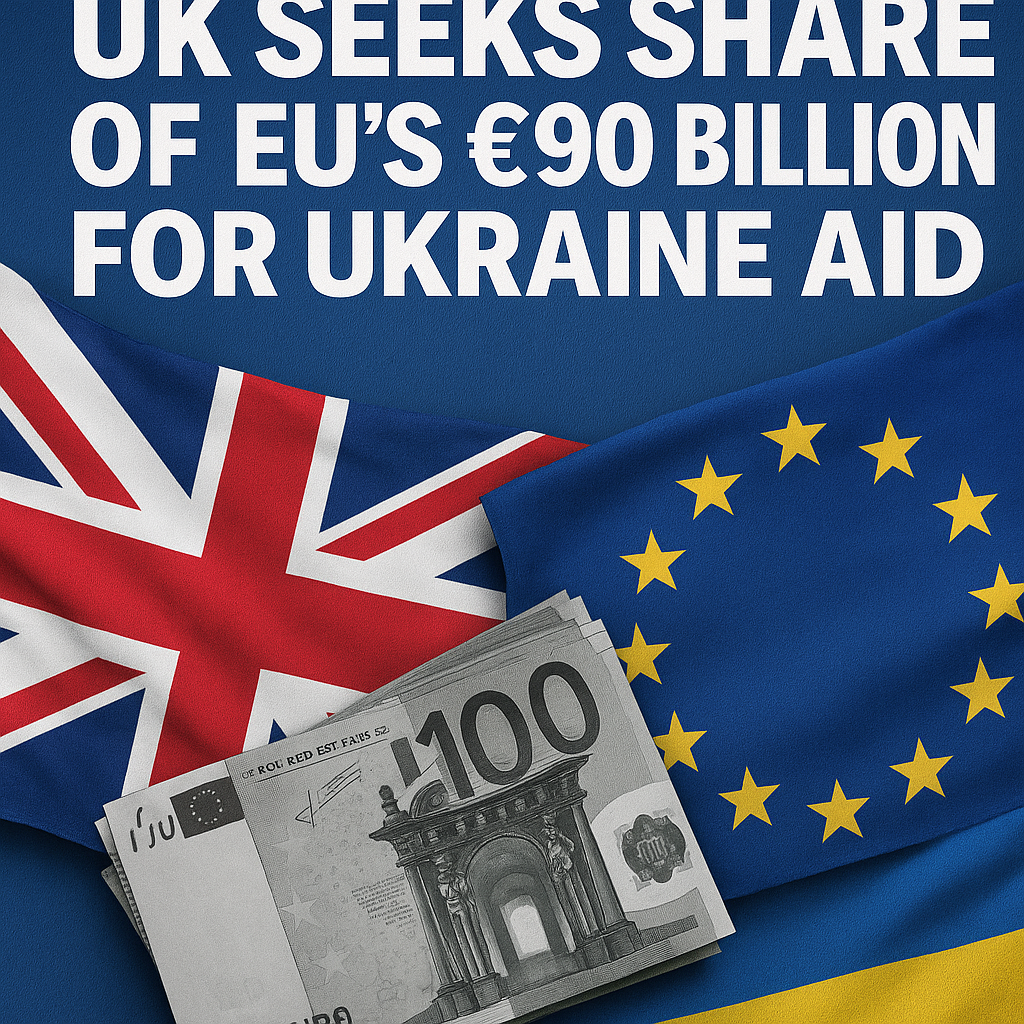
UK Seeks Share of EU’s €90 Billion for Ukraine Aid
The UK is actively pursuing a share of the European Union’s €90 billion allocation designated for aid to Ukraine, aiming to bolster its own support efforts while navigating post-Brexit relationships with European neighbors. This initiative reflects a complex interplay of geopolitical strategy, humanitarian concern, and economic interests.

UK’s Position in the Ukrainian Aid Landscape
Amid the ongoing conflict in Ukraine, the UK government has steadily increased its commitment to aiding the war-torn nation. Recent reports indicate that British officials are now pressing for a share of the EU’s substantial aid package, which is primarily intended to support Ukraine in its fight against Russian aggression. The UK’s overture comes despite having separated from the EU, illustrating their intent to maintain influence in European security matters.

The UK’s initiative aligns with broader international efforts to ensure Ukraine receives substantial financial support, particularly as winter approaches and the humanitarian situation remains dire. The complexity of the situation is underscored by the differing viewpoints on how best to deliver aid and maintain geopolitical stability.

Diverging Perspectives on Aid Distribution
Opinions surrounding the UK’s accession to the EU’s aid framework are varied. Proponents argue that collaboration with the EU is essential for maximizing the effectiveness of aid. By coordinating resources, the UK and EU can mitigate the effects of Russia’s prolonged military actions, which have caused significant economic and infrastructural damage in Ukraine. Sky News reported on discussions emphasizing the urgency of a unified approach to aid, noting that fragmentation could lead to inefficiencies in resource allocation.
Conversely, critics within some political circles in the UK argue that participating in the EU’s scheme could dilute British influence over aid decisions and distract from direct bilateral support initiatives. They contend that post-Brexit relations should underscore the UK’s independence in establishing tailored foreign policies, particularly concerning Ukraine. Furthermore, there is concern that aligning too closely with the EU could be perceived as a step backward in the UK’s newly defined global position.
Considering the Broader Impacts
This debate is not solely about financial contribution but also reflects deeper strategic considerations. Engaging with the EU’s aid mechanism could enhance diplomatic relations at a time when unity against Russian aggression is pivotal. As reported by Al Jazeera, EU officials have also acknowledged the importance of bringing non-member countries into the fold of support for Ukraine, signaling an evolving nature of transnational cooperation that transcends traditional boundaries.
Moreover, the fund is not only crucial for immediate military assistance; it encompasses humanitarian aid and economic recovery components vital for Ukraine’s long-term stability. The recent refugee crisis stemming from the war has compounded these needs, making the distribution of aid even more critical.
Navigating Uncertainties Ahead
Despite the evident urgency surrounding Ukraine’s plight, uncertainties remain about how the UK’s request will be perceived by EU member states. There are questions regarding the legal frameworks governing the EU’s aid distribution and whether the inclusion of a non-member like the UK is feasible within these constraints. Additionally, considerations about public opinion in both the UK and EU concerning foreign aid will likely play a crucial role in shaping policies moving forward.
In the realm of international politics, clear-cut solutions are often elusive. The varying approaches toward the aid package underscore a broader tension between national interests and collective responsibility in addressing humanitarian crises. As the situation unfolds, it remains to be seen how collaboration—or lack thereof—will impact both Ukraine and the geopolitical dynamics in Europe.
Ultimately, the UK’s pursuit of a share of the EU’s €90 billion for Ukraine aid illustrates the intricate balancing act of maintaining sovereignty while pursuing cooperative solutions to international crises. The outcome of this endeavor will likely influence future relationships between the UK and the EU, as well as the efficacy of international aid in stabilizing Ukraine during these turbulent times.