
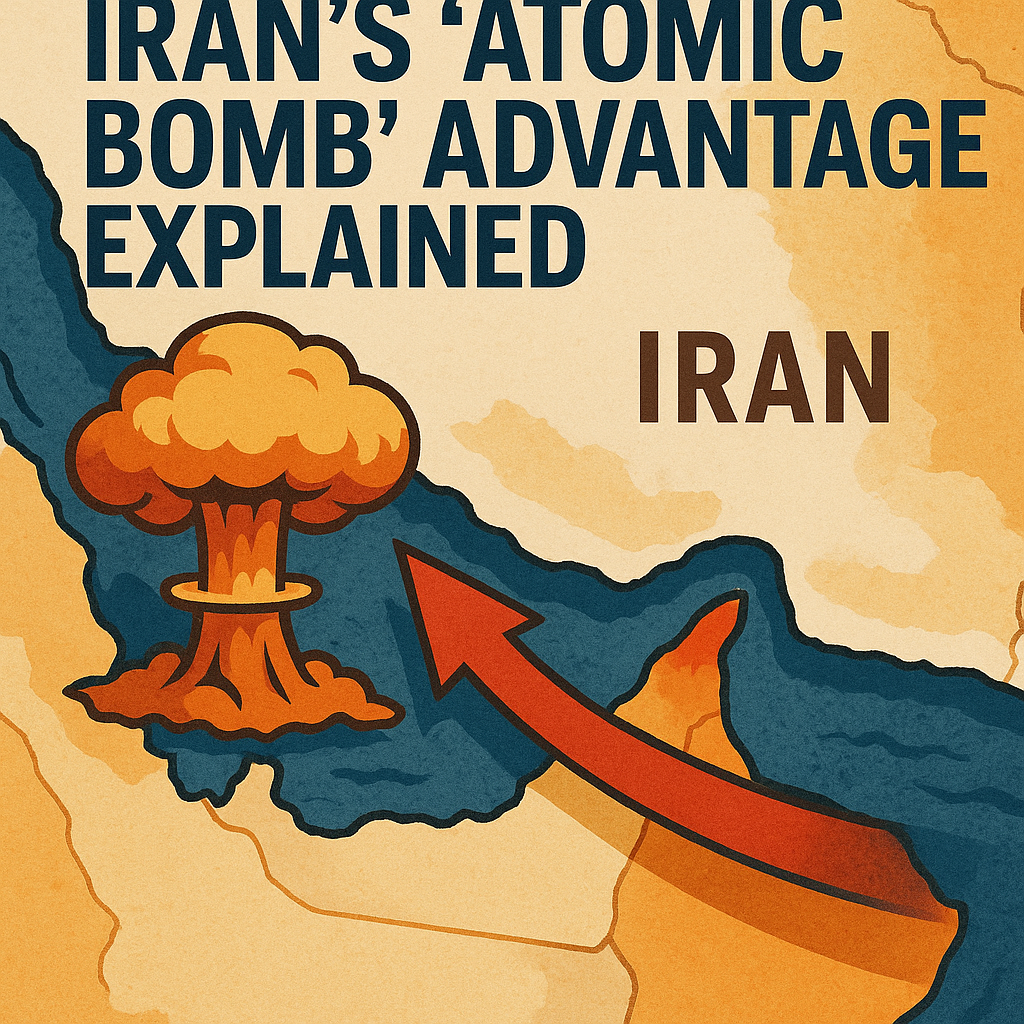
Hormuz: Iran’s ‘Atomic Bomb’ Advantage Explained
Hormuz: Iran’s ‘Atomic Bomb’ Advantage Explained
The strategic significance of the Hormuz Strait is underscored by its role as a critical chokepoint for global oil trade, particularly as it relates to Iran’s geopolitical maneuvers. This narrow passage is more than just a transit route for oil; it has become a focal point of contention that intertwines Iran’s military strategy with its nuclear ambitions.

The Geopolitical Landscape of Hormuz
The Hormuz Strait connects the Persian Gulf to the Gulf of Oman and acts as a conduit for roughly 20% of the world’s oil supply. Given its economic significance, any disruption here can have far-reaching implications on global energy markets and international relations. Iran’s military presence in this area, accentuated by its advancing nuclear capabilities, raises serious concerns among neighboring states and international powers alike.

The Iranian leadership has strategically framed its military capabilities in the region as a deterrent against perceived threats, particularly from the United States and its allies. Recent reports point toward Iran leveraging its position to project power across the region, with some analysts suggesting that Tehran views its influence over the Strait as akin to having an “atomic bomb” advantage in a non-nuclear context. This hyperbolic assertion indicates Iran’s dual approach of conventional military preparedness while simultaneously advancing its nuclear program.

Nuclear Ambiguities and Military Posturing
Iran’s nuclear program has long been a subject of contention, sparking fears of potential nuclear weaponization. The ongoing complexities surrounding this issue are compounded by the ambiguity surrounding its intentions. While Tehran insists its nuclear advancements are strictly for peaceful purposes, various Western nations remain skeptical. The 2015 Joint Comprehensive Plan of Action (JCPOA) aimed to curtail Iran’s nuclear activities, but its effectiveness has been called into question following the U.S. withdrawal in 2018.
Iran’s response has been characterized by a gradual ramp-up of uranium enrichment, which some analysts interpret as Iran’s strategy to enhance its bargaining position in future negotiations. This tactic reflects a broader geopolitical strategy where Iran’s nuclear capability serves a dual purpose: as a negotiating chip and as a means for regional intimidation. The ability to control and potentially disrupt oil passage through the Hormuz Strait offers Iran a leverage point that enhances its strategic narrative.
Diverse Perspectives and Concerns
Opinions on Iran’s military and nuclear posturing are varied, with some experts acknowledging the legitimacy of Iran’s concerns about external threats while others criticize its aggressive posturing. On one hand, Iranian officials frequently cite historical grievances dating back to U.S. interventions in the region, using these narratives to justify military investments and nuclear advancements. This sense of historical victimhood is potent in shaping Iran’s national identity and policy decisions.
Conversely, critics argue that Iran’s nuclear ambitions and its military maneuvers in the Strait are destabilizing factors that create a security dilemma in the region. The heightened military presence, increased naval activities, and missile tests signal to neighboring countries that Iran may not be primarily focused on defense, but rather on exerting hegemony over the Gulf region. Such tensions could provoke preemptive actions from rival states, thereby escalating an arms race in an already volatile region.
Conclusion: Navigating a Complex Future
As the international community grapples with Ukraine’s ongoing conflict and rising global energy prices, the focal point of the Hormuz Strait remains a flashpoint for potential crises. Iran’s nuclear capability coupled with its dominant maritime influence presents both opportunities and challenges in diplomatic engagements.
While Iran perceives its foothold in Hormuz as a form of power projection akin to possessing an atomic bomb, the actual implications of such positioning could deepen existing tensions rather than provide any real advantage. As various stakeholders continue to assess Iran’s actions, the breadth of uncertainties surrounding its nuclear program and military intent will require careful scrutiny and, notably, a coordinated diplomatic response to avert further escalation.
In navigating this complex landscape, it is crucial for international stakeholders to balance security interests with engagement strategies to foster a more stable maritime and nuclear environment.















