
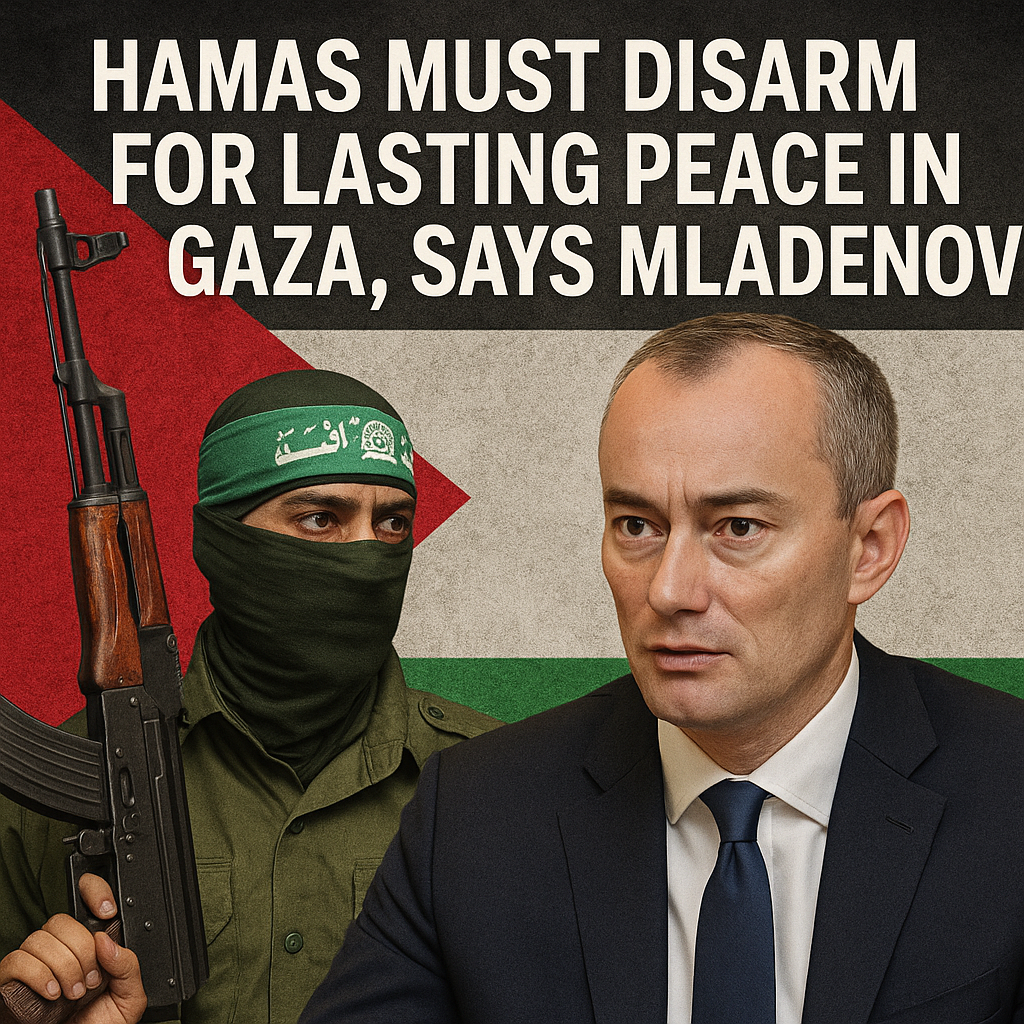
Hamas Must Disarm for Lasting Peace in Gaza, Says Mladenov
Hamas Must Disarm for Lasting Peace in Gaza, Says Mladenov
In a call that echoes across the geopolitical landscape of the Middle East, former UN envoy Nikolay Mladenov stated that the path to sustainable peace in Gaza hinges on the disarmament of Hamas. This position brings to light longstanding debates surrounding the group and the broader implications for the Israeli-Palestinian conflict.

The Case for Disarmament
Mladenov’s assertion centers on the critical need for a ceasefire that is not just a temporary solution but a stepping stone toward genuine stability in the region. He argues that disarmament is essential not merely for curbing violence, but also for laying the groundwork for meaningful negotiations aimed at addressing the myriad issues plaguing Gaza. Reports from Al Jazeera align with this viewpoint, emphasizing that without significant changes in Hamas’ military posture, the cycle of conflict is likely to continue, jeopardizing any efforts toward long-term peace.

Supporters of this perspective argue that Hamas’ military capabilities thwart attempts at peaceful dialogue. By maintaining stockpiles of weapons and resorting to armed conflict, they contend that Hamas effectively marginalizes other Palestinian voices advocating for diplomatic resolutions. This narrative positions disarmament not just as a necessity for peace, but as a prerequisite for enabling a governance structure that prioritizes the well-being of the Palestinian people.

Yet, the disarmament argument isn’t universally accepted. Critics of Mladenov point to the historical context of the Israeli-Palestinian conflict, suggesting that calls for disarmament may overlook the complexities of Palestinian self-determination and resistance against occupation. Some argue that disarming Hamas would further weaken Palestinian autonomy and leave civilians in Gaza more vulnerable to external threats, particularly from Israel.
Complex Realities on the Ground
Drawing from diverse news sources, it’s evident that the situation in Gaza is characterized by layers of complexity that defy simple solutions. Sky News highlights various sentiments among Gazans who see Hamas not merely as a militant group, but as a governing authority that provides social services and defense against perceived external aggression. This perspective complicates Mladenov’s argument, as disarming Hamas would mean dismantling the very institution that many Palestinians view as a necessary protector.
Moreover, RT outlines potential ramifications of disarmament, suggesting that the demand may lead to further alienation of Palestinian voices that are not aligned with Hamas. Such a move could bolster radical factions within the region, creating a power vacuum that may be filled by groups with even more extreme ideologies. This highlights a critical uncertainty: could disarmament genuinely lead to peace, or would it backfire, resulting in even greater violence?
In addition to these competing narratives, the importance of international engagement cannot be overstated. Mladenov’s remarks suggest that diplomatic efforts focusing solely on disarmament could sideline broader issues such as economic development and human rights in Gaza. Many advocates argue that any strategy aimed at achieving lasting peace must include socioeconomic measures that address the root causes of conflict, including poverty and unemployment.
The Path Forward
Given the multifaceted dynamics at play, where does this leave us in terms of achieving peace in Gaza? There are likely no single solutions, but a collaborative approach that engages various stakeholders may be the most viable path forward. International entities should seek to mediate dialogues that not only address disarmament but also encompass humanitarian efforts and economic development.
In this landscape, the call for Mladenov’s proposed disarmament remains contentious. While it might contribute to reducing immediate violence, the call has to be part of a broader diplomatic effort that recognizes the importance of fostering inclusive governance, economic stability, and human rights for all Palestinians.
Listeners and observers must remain wary of simplistic interpretations of the conflict, recognizing that the quest for peace in Gaza is deeply intertwined with historical grievances, political realities, and humanitarian needs. The road to a lasting solution is undoubtedly complex, but as Mladenov’s statement reminds us, it begins with a recognition that lasting peace demands nuanced understanding and concerted effort from all parties involved.















