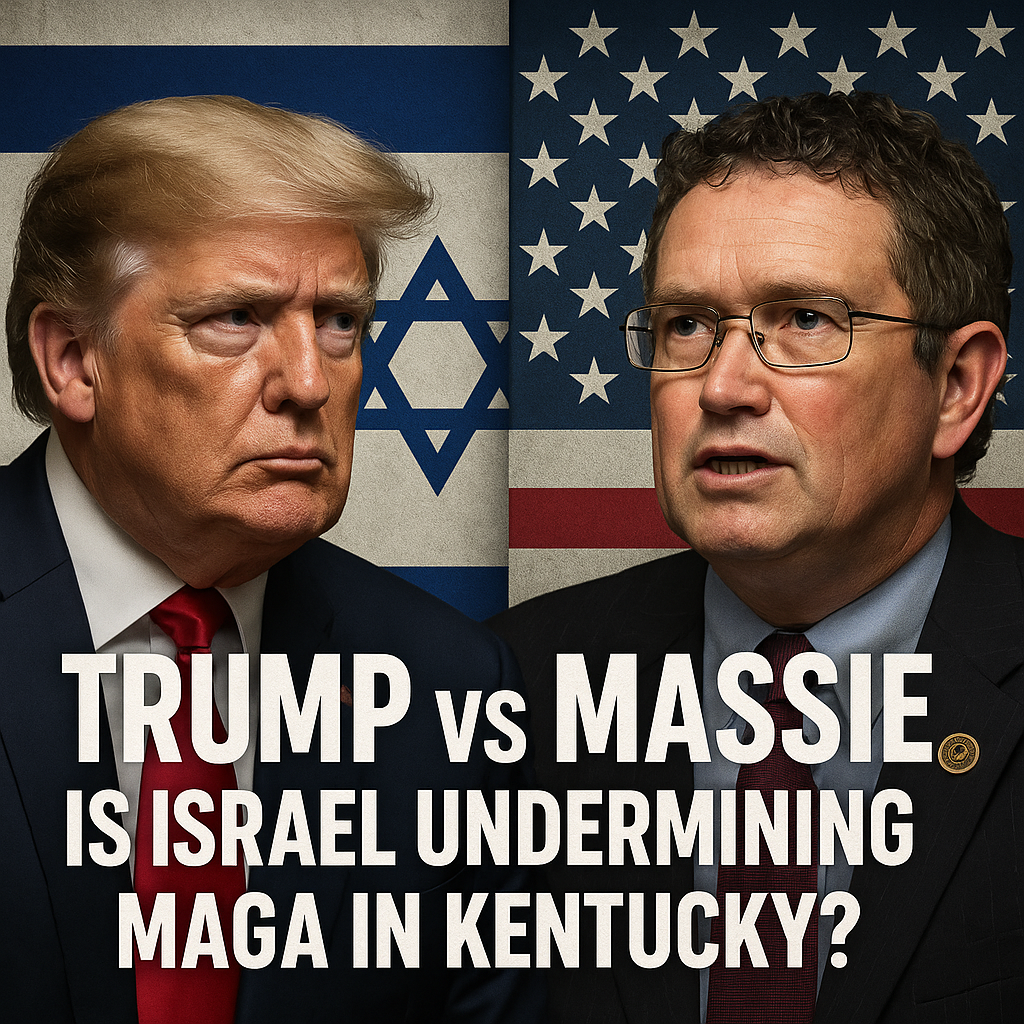
Trump vs Massie: Is Israel Undermining MAGA in Kentucky?
Trump vs. Massie: Is Israel Undermining MAGA in Kentucky?
In the heated landscape of American politics, the clash between former President Donald Trump and Congressman Thomas Massie has taken a curious turn, raising questions about the influence of foreign policy narratives—specifically regarding Israel—on local electoral dynamics in Kentucky. This unfolding scenario illustrates not just a personal political rivalry, but deeper complexities about what it means to be part of the “MAGA” (Make America Great Again) movement.

The Context of the Clash
As the 2024 elections loom, political tensions between Trump and Massie are surfacing against a backdrop of significant geopolitical concerns. Reports indicate that Massie’s critique of U.S. support for Israel has put him at odds with the prevailing sentiments in some Republican circles, including Trump’s inner circle. This is particularly striking given that support for Israel has traditionally been a bipartisan issue in U.S. politics. Massie’s stance, which sometimes aligns with a more isolationist perspective, may alienate him from mainstream Republican voters who largely support robust backing for Israel.

In a recent Kentucky primary, Massie’s assertions about America’s foreign commitments prompted a backlash from Trump supporters. During a campaign event, Trump voiced support for a robust relationship with Israel, emphasizing the importance of unwavering U.S. support. This stance not only reflects his administration’s policies while in office but also resonates with many core voters who perceive Israel as a reliable ally in a tumultuous region.

Diverging Perspectives within the GOP
Massie’s perspective on foreign policy highlights a growing schism within the Republican Party. Several factions exist: traditionalists who emphasize a strong international presence, and libertarians or nationalist-leaning conservatives who advocate for reduced foreign entanglements. Massie’s connection to the latter has sparked debate over whether his position could draw discontent among voters who expect allegiance to longstanding U.S.-Israel ties.
On the other hand, Trump’s assertive rhetoric and policies, such as relocating the U.S. embassy to Jerusalem, have endeared him to pro-Israel factions within the party. Trump’s endorsement is notably coveted among Republican candidates, and Massie seems to be risking that crucial backing by diverging from the mainstream.
Trump has branded Massie’s approach as potentially harmful to the Republican agenda. Describing the congressman as “not a true MAGA” at a recent rally encapsulates the tension between the two figures. For Trump’s loyal base, which remains significant in Kentucky and beyond, being aligned with Israel is seen as a critical element of the MAGA platform.
The Broader Implications for Kentucky Voters
Massie’s voters are often characterized by a desire for fiscal conservatism and limited government, but his recent comments on foreign aid have not necessarily aligned with their expectations concerning Israel. In this contest, we see a microcosm of deeper ideological battles playing out not just in Kentucky, but across the country. The central focal point remains whether younger, more libertarian-minded voters can shake off traditional GOP loyalties, especially concerning foreign policy.
This situation presents an opportunity for Kentucky voters to reevaluate their priorities as the election approaches. Is there room for a candidate who emphasizes less militaristic approaches on foreign policy while retaining party loyalty? Or will Massie’s views prove too radical for the large bloc of traditional Republicans who might favor the status quo?
The Influence of Foreign Policy on Local Elections
Complicating this political landscape is the question of how important foreign policy is to local voters. Polls have shown that while many Americans regard international issues as important, they often prioritize issues like healthcare, the economy, and education in local elections. This raises the question—will Massie’s stance resonate, or will Trump’s steadfast support for Israel prove decisive?
Voter sentiment in Kentucky may reveal a blend of influences: traditional values, economic concerns, and emerging views on foreign diplomacy. If Massie can articulate a vision that resonates with local issues while unpacking his foreign policy stance thoughtfully, he may yet carve out a path to victory.
Meanwhile, Trump’s position can be seen as a reaffirmation of a staunch conservative ideology that prioritizes international alliances, particularly with traditionally aligned countries. For Trump supporters, his clear stance is a reaffirmation of loyalty to longstanding geopolitical frameworks.
Conclusion: A Defining Moment for MAGA in Kentucky
As the narrative unfolds, the contest between Trump and Massie becomes a litmus test for the future of the MAGA movement in Kentucky. The widening fissures in the Republican ideological landscape signify a potential shift in how foreign policy impacts local voter behavior.
Ultimately, whether Israel’s influence undermines the MAGA message depends on the ability of individual candidates to articulate their visions in relatable terms. As voters weigh their options, the outcomes of this political tussle will likely serve as a bellwether for broader Republican trends heading into the 2024 elections.