
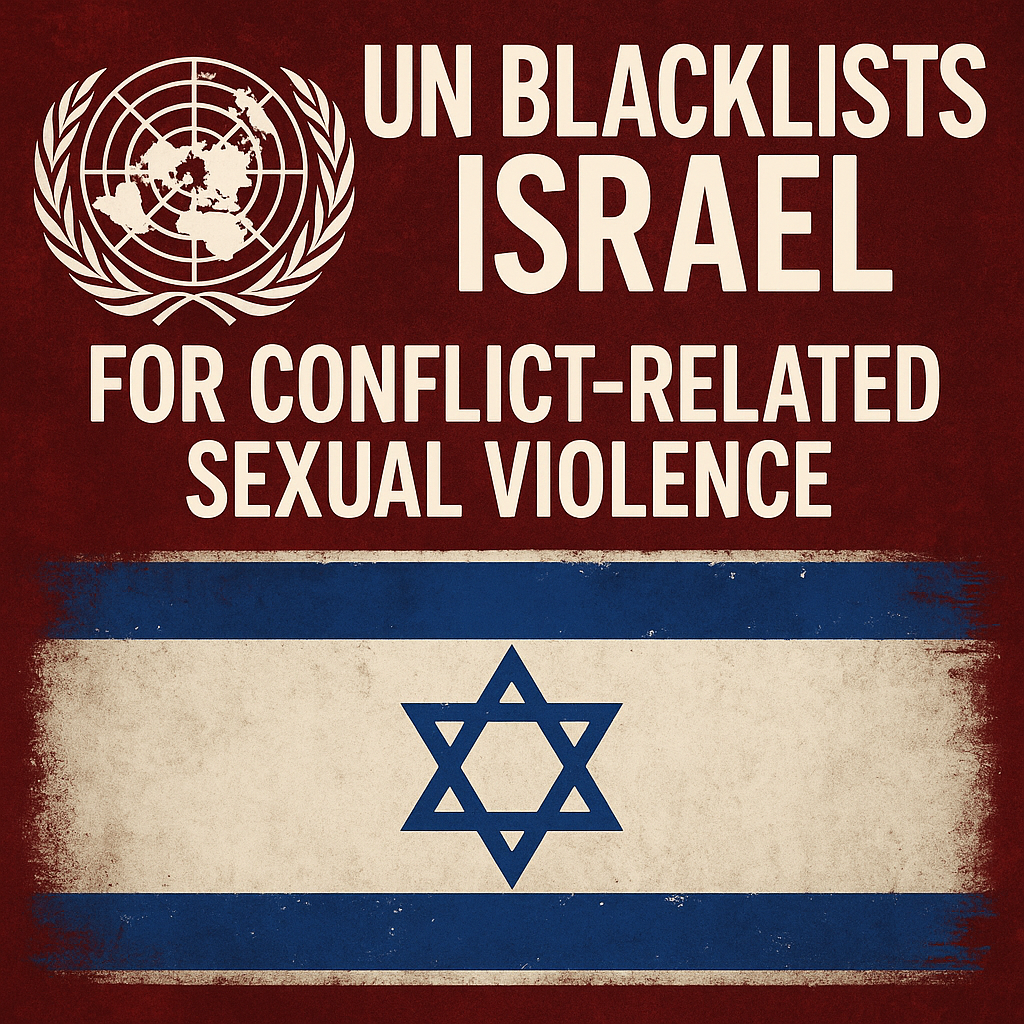
UN Blacklists Israel for Conflict-Related Sexual Violence
UN Blacklists Israel for Conflict-Related Sexual Violence
The recent decision by the United Nations to blacklist Israel for its actions related to sexual violence in conflict zones has ignited a significant response from international communities and human rights activists. This designation is derived from a report highlighting serious allegations that humanitarian principles have been undermined by state actors during military engagements.

Background on the UN’s Decision
The UN’s stance is underpinned by findings that point to systemic issues regarding conflict-related sexual violence. Numerous reports, particularly from the UN’s own agencies, have emphasized the rising accounts of such acts amid ongoing conflicts in varying regions. In this particular case, the U.N. Secretary-General Antonio Guterres noted that the situation in Israel and Palestine has reached a level of concern warranting this action.

Reports indicate that the UN’s blacklist serves not merely as a punitive measure but as a call to action for member states to adhere to their obligations under international law. Guterres underscored the importance of accountability, stating that the inclusion of nations on such a list should spur dialogue and reform, rather than serve as an additional layer of division in already fraught geopolitical landscapes.

Diverse Perspectives on the Blacklist
Reactions to the blacklist have been intensely polarized. On one hand, proponents of the move cite it as a necessary step toward addressing impunity in war zones. They argue that acknowledging the role of state actors, including Israel, in perpetuating sexual violence during conflicts is crucial for both justice and the protection of marginalized populations. Activists assert that failing to hold parties accountable perpetuates cycles of violence and disallows victims from attaining the justice they deserve.
Conversely, critics of the UN’s decision—including various Israeli officials—view this listing as a politically motivated action that undermines Israel’s right to defend itself. They argue that this blacklisting disregards the complexities of conflict and presents a one-sided narrative that fails to account for the security challenges Israel faces. Many have articulated concern that such classifications might have broader implications, potentially impacting international relations and humanitarian efforts within the region.
The Uncertain Path Ahead
As this situation unfolds, the UN’s action reflects deeper institutional struggles around addressing sexual violence amid armed conflict. The reactions to Israel’s inclusion on the blacklist underscore an ongoing complexity in global diplomacy where humanitarian laws intersect with geopolitical realities. The call for accountability in conflict-related sexual violence provides a framework through which discussions on military ethics and human rights advocacy can evolve.
Yet, the path to resolving these issues remains fraught with uncertainty. The contrasting viewpoints exemplify the challenges the UN faces in balancing its mandate for humanitarian advocacy with the need to engage nations diplomatically. For some members of the international community, continuing to draw attention to alleged violations, such as those attributed to Israel, is essential. For others, closer ties with the Israeli government complicate the moral imperatives of such listings.
Engaging in the dialogue surrounding the UN’s blacklist carries implications for future humanitarian efforts and outlines the pressing need for reform within the institution itself. The nuanced perspectives highlight a broader conversation that transcends borders, where accountability and security must work in tandem to foster a more just global community.
The implications of the blacklist extend far into international relations. Observers note that the labeling of states for humanitarian violations can strain partnerships and inhibit collaborative efforts designed to enhance stabilizing measures within conflict-affected regions. It raises critical questions about how societies define and pursue justice at the global level, and whether current mechanisms are sufficient to address the complexities of sexual violence in warfare.
In conclusion, the UN’s decision to blacklist Israel serves as a flashpoint in ongoing discussions regarding conflict-related sexual violence. As stakeholders from various spheres—government, civil society, and international organizations—continue to engage with this sensitive topic, the hope remains that a pathway to greater accountability and understanding can emerge, potentially transforming how conflicts and their aftermath are addressed in the future.















