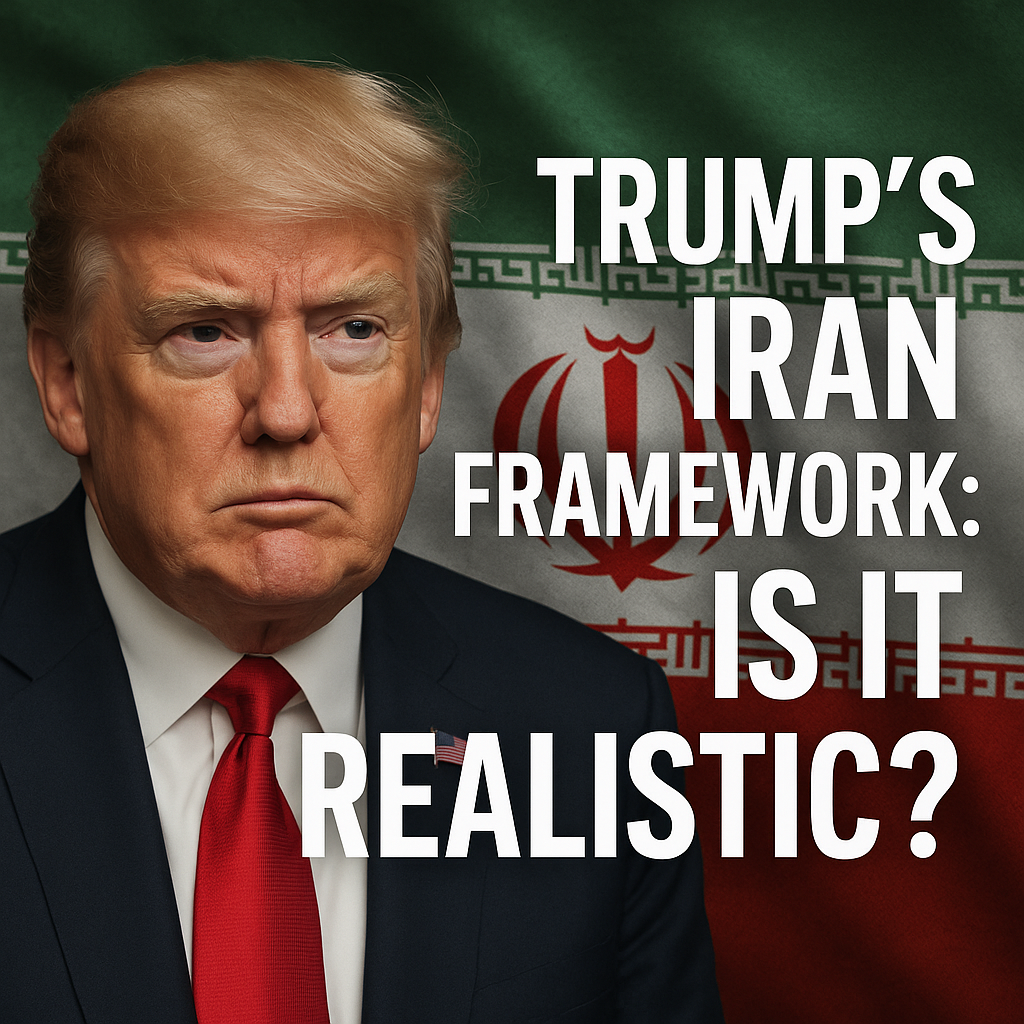
Trump’s Iran Framework: Is It Realistic?
Trump’s Iran Framework: Is It Realistic?
Trump’s Iran framework has generated significant discussion among policymakers and analysts, raising questions about its feasibility and potential impact on international relations. As the geopolitical landscape continues to evolve, understanding the intricacies of this proposed framework is essential for those monitoring U.S.-Iran relations.

An Overview of Trump’s Iran Framework
The framework proposed by Donald Trump centers on a significant shift from the previous administration’s approach to Iran. Emphasizing a “maximum pressure” strategy, Trump aims to curb Iran’s nuclear ambitions while addressing its regional influence, which many in the U.S. government view as destabilizing. This approach focuses on both diplomatic negotiations and economic sanctions as central tools.

Trump’s framework includes key components like:

– Sanctions Reinforcement: The elimination of waivers for oil exports and financial transactions to escalate economic pressure on Iran.
– Regional Alliances: Strengthening alliances with Gulf states and Israel to counteract Iran’s influence.
– Security Guarantees: Offering security assurances to allies as a strategic counterbalance against Iranian activities.
While supporters assert that this approach could compel Iran to negotiate and adhere to a more favorable deal, critics argue that it risks isolating the U.S. and escalating tensions in an already volatile region.
Diverse Perspectives on Feasibility
The differing viewpoints on the realism of Trump’s framework mainly stem from interpretations of its efficacy in addressing Iran’s behavior.
Support for the Framework
Proponents of Trump’s Iran strategy argue that the maximization of sanctions has already demonstrated a tangible impact. Reports indicate that Iran’s economy has contracted significantly due to U.S. sanctions, affecting its ability to fund militias and influence in the region. Advocates contend that sustained economic pressure may force Iran back to the negotiation table, potentially leading to a new agreement that limits its nuclear capabilities.
Furthermore, supporters highlight the need for a more flexible diplomatic approach that combines pressure with the possibility of incentives. They cite examples from history when sanctions have effectively led nations to reconsider their positions, asserting that a tough stance could ultimately lead to positive diplomatic outcomes.
Skeptical Voices
On the other side, opponents express skepticism regarding the framework’s pragmatic aspects. Analysts argue that the approach could lead to unintended consequences, such as strengthened nationalistic sentiments within Iran and a potential escalation into military confrontation. Critics also highlight that unilaterally withdrawing from the Joint Comprehensive Plan of Action (JCPOA) undermined U.S. credibility and alienated key allies who supported the original agreement. Without collaborative diplomacy, they warn, the chances of meaningful dialogue with Iran diminish.
Moreover, some experts suggest that the framework does not adequately account for financial repercussions faced by U.S. allies. European nations, particularly France and Germany, have expressed their commitment to the JCPOA and may resist endorsing a strategy perceived as autocratic. This discord complicates the ability to form a united front against Iran.
Navigating Uncertainties
As discussions surrounding Trump’s Iran framework continue to evolve, several uncertainties remain. The potential for diplomacy to succeed hinges not only on Iran’s response but also on the U.S.’s ability to collaborate with international partners. Questions surrounding the efficacy of economic sanctions in the long term further complicate the discourse. Will Iran’s economy continue to bear the strain, or will it adapt and find new pathways for resilience?
Moreover, the geopolitical dynamics in the Middle East, particularly the roles of Russia and China, add layers of complexity. These countries may pursue their interests in countering U.S. influence, thereby complicating the situation even further.
In conclusion, while Trump’s Iran framework offers a robust vision for addressing Iran’s nuclear ambitions and regional activities, its realism remains a subject of debate. Synthesizing various viewpoints reveals that the approach is not a straightforward path to resolution but rather a complex interplay of sanctions, diplomacy, and regional alliances that must be navigated carefully. Understanding these dynamics is crucial as the world watches how the U.S. chooses to engage with Iran in the coming years.