
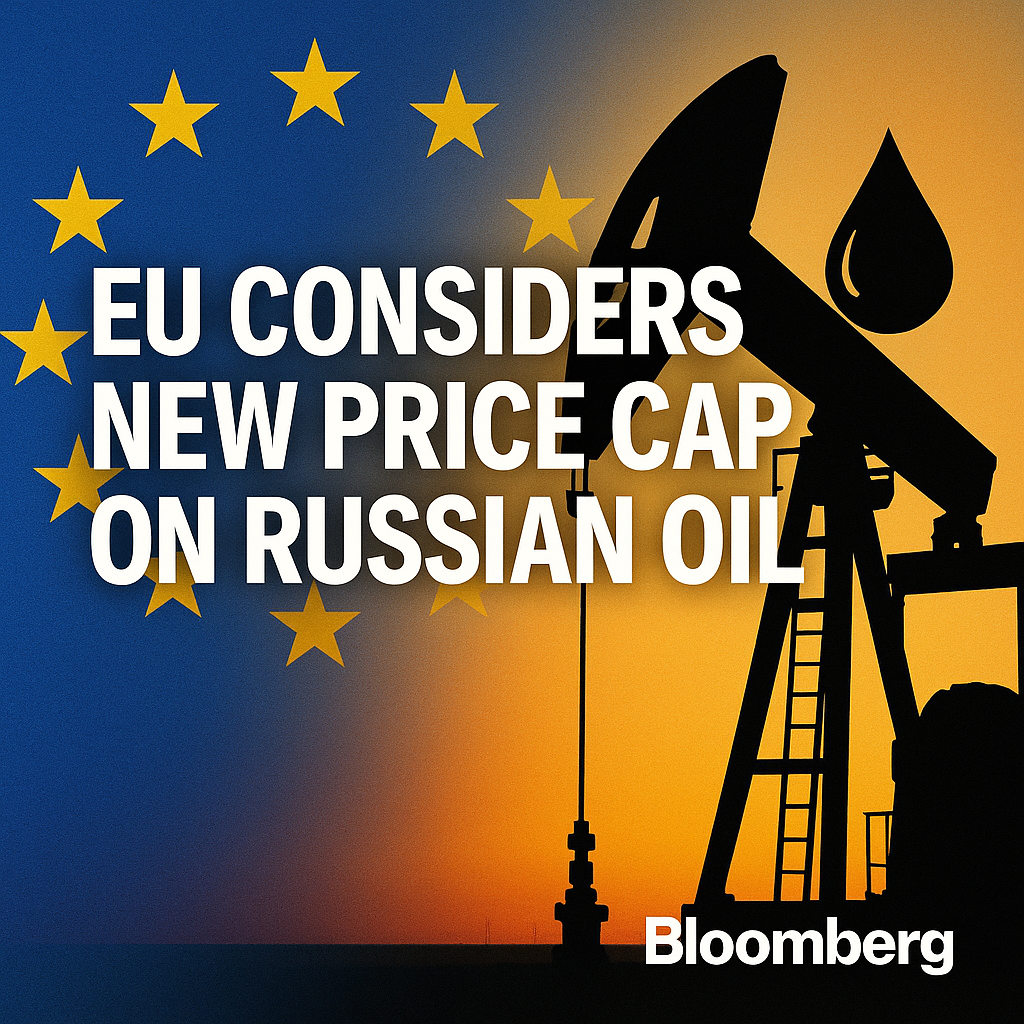
EU Considers New Price Cap on Russian Oil – Bloomberg
The European Union (EU) is contemplating a new price cap on Russian oil, igniting a multifaceted debate regarding its economic ramifications and geopolitical implications. This move arises from ongoing tensions stemming from Russia’s invasion of Ukraine and the resulting sanctions aimed at crippling its economy. The focus on a price cap on Russian oil has become a pivotal strategy in the EU’s broader efforts to reduce energy dependence on Russia while maintaining global oil supply stability.

The Rationale Behind the Price Cap
Historically, price caps have been used as economic tools to manipulate market behaviors without resorting to overt trade embargoes. The EU’s proposed price cap aims to limit the amount Russia can earn from oil exports, thereby diminishing funds that could be utilized for military endeavors. According to multiple reports, including insights from RT and Al Jazeera, this initiative follows previous efforts to curb Russia’s revenue from energy sales, which serve as a vital artery for its economy.

The EU is under pressure to lessen its reliance on Russian fossil fuels—at one point, EU countries were dependent on Russia for up to 40% of their natural gas and oil imports. Many member states view a price cap as a method for stabilizing oil prices globally while simultaneously discouraging Russia’s aggressive actions in Ukraine. By capping prices, the EU hopes to strike a balance that ensures energy security while mitigating the flow of substantial revenues to Moscow.

Diverse Perspectives on the Cap’s Implementation
The discussions surrounding the price cap reveal a spectrum of perspectives. Supporters argue that implementing such a cap could significantly weaken Russia’s economic standing. They believe that reducing oil revenue is crucial for constraining military funding, thus potentially leading to a shift in Russia’s military strategy in Ukraine. Adding to this sentiment, Al Jazeera reports that European Commission President Ursula von der Leyen has reiterated that sanctions should aim to reduce Russia’s capacity to wage war.
Conversely, some experts caution against potential backfires. The financial implications of constraining Russian oil can ripple across global markets, potentially leading to increased prices for consumers in EU countries. Sky News highlights the complex dynamics of oil markets, suggesting that while a price cap could limit revenue for Russia, it might lead to disruptions in supply that could inadvertently inflate oil prices in Europe and beyond. Furthermore, other nations, including traditional buyers like China and India, may simply acquire Russian oil at the capped price, undermining the EU’s objectives.
The Uncertain Path Forward
As these discussions unfold, uncertainty looms over how effectively a price cap could be enforced. Russia has previously indicated that it may withdraw from contracts with nations that implement price caps, creating potential supply shortages. Additionally, the nuances of oil trading—where intermediaries and complex logistics come into play—suggest that ensuring compliance across various markets will be challenging.
Ultimately, the EU’s approach needs to consider the possibility that Russia might find alternative markets which could mitigate the impact of the cap. A significant challenge thus remains: how to implement the price cap in a way that maintains economic activity without pushing global oil prices higher.
The contrasting viewpoints emphasize the complexity of the issue at hand. Some analysts believe the EU could achieve its goal of diminishing Russian funding while supporting global oil prices, while others forewarn that the market’s response could lead to unintended consequences that affect European economies more severely.
Conclusion
The EU’s consideration of a new price cap on Russian oil illustrates the delicate balancing act it must navigate in its geopolitical strategy. While the intention behind the cap is to stifle funding for conflict, the multifaceted repercussions of such a move present significant challenges. As member states deliberate the potential consequences, the focus will inevitably pivot toward not only how effectively this plan can be operationalized but also what it will mean for global energy security amidst an already volatile landscape. The outcome of this debate will be pivotal in determining both Europe’s energy independence and its stance in an increasingly polarized international arena. With various stakeholders invested in the final decision, the path forward remains a complex interplay of policy, economy, and realpolitik.















