
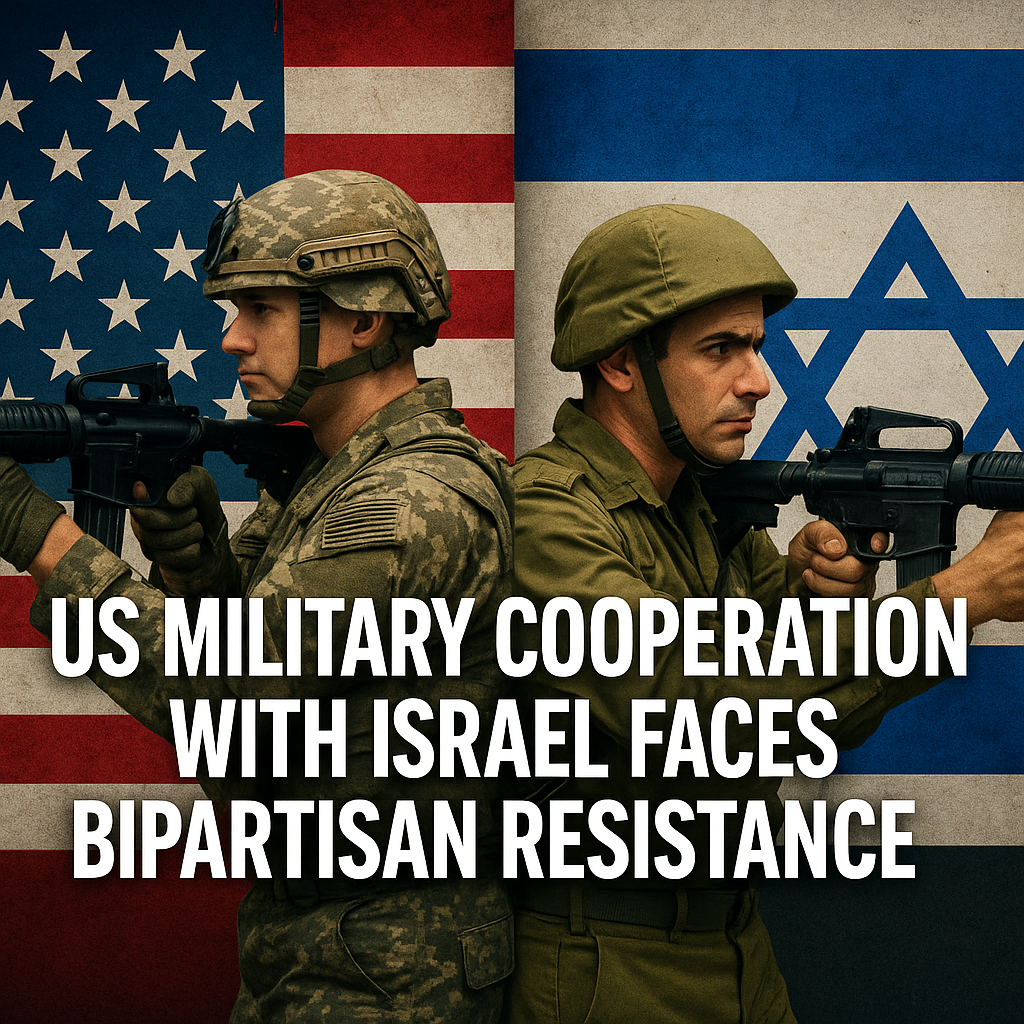
US Military Cooperation with Israel Faces Bipartisan Resistance
Growing Pushback Against US-Israel Military Cooperation
The intricacies of US military cooperation with Israel are generating simmering tensions on Capitol Hill, highlighting a complex mix of geopolitical strategy and domestic concerns. Recently proposed measures intended to deepen military collaboration have met with surprisingly robust bipartisan resistance, reflecting a landscape where opinions on foreign relations are notably shifting.

The Nature of Military Cooperation
For decades, the United States has supported Israel militarily and financially, viewing the partnership as a cornerstone of stability in the Middle East. However, recent events suggest a reevaluation among some lawmakers regarding the extent and nature of this cooperation. Critics argue that increased military aid could exacerbate tensions within the region, calling into question the morality and strategic wisdom of unconditional support.

Reports indicate that lawmakers from both parties are voicing concerns. Some Democrats have begun to express unease about Israel’s military policies, particularly in regard to its treatment of Palestinians. This cohort underscores the need for a reassessment of aid tied directly to human rights considerations. Conversely, certain Republicans maintain that unwavering support for Israel remains essential for US interests, viewing any pushback as detrimental to the alliance.

Diverging Perspectives Among Lawmakers
The division in opinion can often be traced back to differing ideological frameworks. On one side, progressives emphasize ethical foreign policy, advocating for a model of military cooperation that incorporates accountability and aligns with international human rights standards. They argue that the current trajectory not only endangers Palestinian lives but also risks alienating other nations in the Middle East that may view US support as enabling oppressive actions. Prominent voices from this faction highlight recent reports surrounding Israeli airstrikes and their implications, suggesting that military cooperation, as currently structured, undermines peace initiatives.
On the other hand, traditional defenders of the US-Israel alliance argue that Israel serves as a crucial ally in a tumultuous region. They contend that military support is vital for Israel’s self-defense against hostile neighbors and non-state actors. This perspective, often heard in discussions with defense experts, posits that aiding Israel fortifies US strategic interests, ensuring a foothold in a geopolitically significant area.
The Broader Implications of Resistance
The bipartisan pushback illustrates a significant shift in the political landscape concerning foreign aid and military partnerships. As younger generations of lawmakers enter the fray, traditional alliances are being scrutinized more closely. Polls indicate a growing inclination among the American public to reexamine US foreign policy, particularly in the context of military aid. Scholar analyses suggest this could lead to transformative policy changes, possibly reshaping US engagement with allies like Israel.
Experts warn that failing to address these growing tensions could result in a fracturing of bipartisan support that has characterized US-Israel relations for decades. All parties must grapple with an increasingly informed and vocal electorate that demands accountability and a reevaluation of long-standing practices.
Looking Ahead: A Unified Strategy or Fragmentation?
The future of US military cooperation with Israel remains uncertain, as both the executive and legislative branches contemplate their next moves. It is apparent that the calling for a reassessment is not simply a matter of partisanship, but a nuanced conversation that requires understanding the ramifications of continued military aid in the face of observable human rights concerns.
In conclusion, the ongoing debate surrounding US-Israel military cooperation underscores a pivotal moment in American foreign policy. As lawmakers wrestle with pushing back against or doubling down on historical alliances, it remains essential for the discourse to remain grounded in a holistic view of both national interests and humanitarian considerations. Only time will reveal if this bipartisan resistance spurs a transformative dialogue, leading to a more ethically aligned foreign policy framework or if it simply leads to a deeper entrenchment of divisions in Congress.















