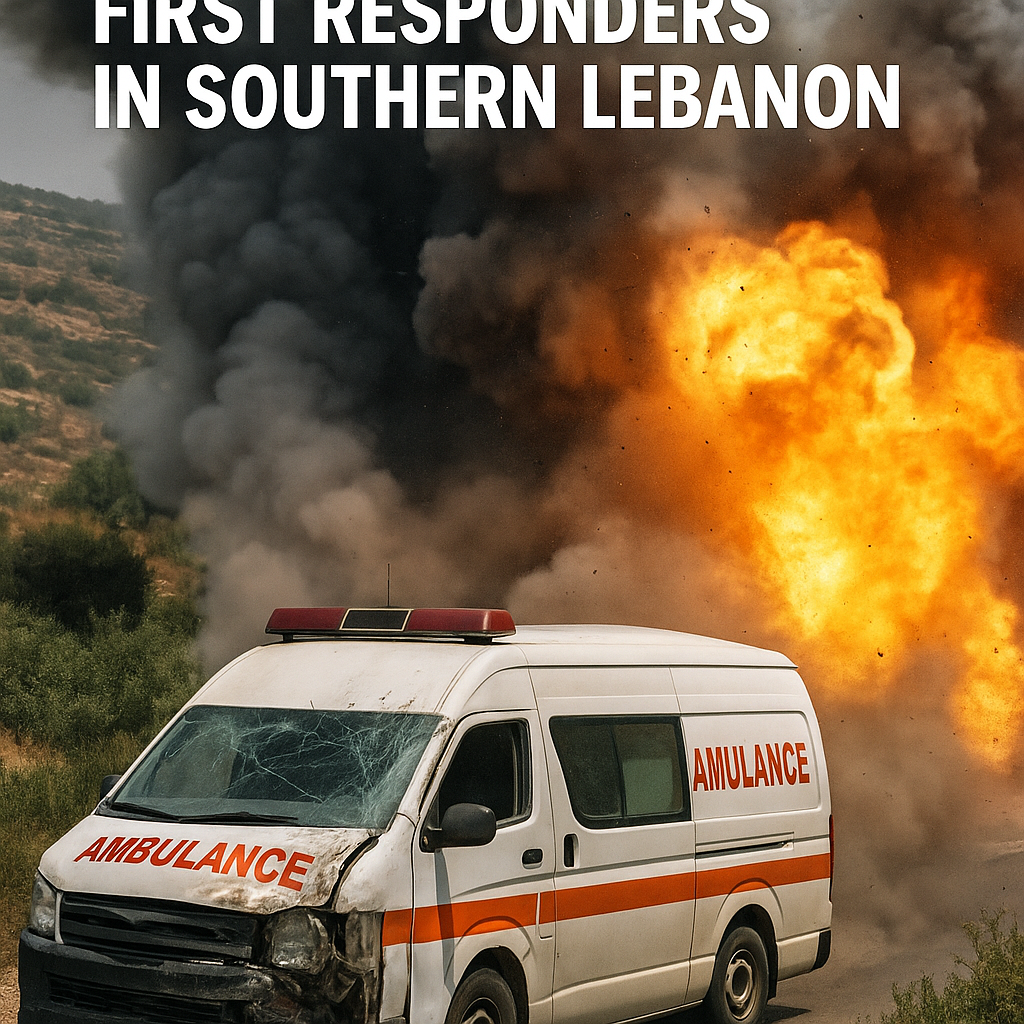
Israeli Military Targets First Responders in Southern Lebanon
Targeting First Responders: A Complex Situation in Southern Lebanon
In recent weeks, reports have emerged indicating that Israel’s military operations in Southern Lebanon have increasingly involved targeting first responders, raising concerns about the ethical implications of such actions. This situation emphasizes the complicated nature of conflict in the region, where humanitarian mandates clash with military objectives.

The Context of Military Engagement
The Israeli Defense Forces (IDF) have stated that their operations in Southern Lebanon are primarily aimed at dismantling Hezbollah’s infrastructure, which they allege poses a significant threat to Israeli security. Reports suggest that during these military actions, first responders—emergency medical personnel and rescue workers—have been caught in the crossfire, resulting in casualties among those attempting to provide aid to the wounded.

In several instances, eyewitnesses and local sources have voiced accusations against the IDF for deliberately targeting rescue operations. A correspondent from RT highlighted a specific episode where medical teams were reportedly attacked while trying to evacuate injured civilians. This claim raises serious questions regarding international humanitarian law, which mandates the protection of medical personnel in conflict zones.

On the other hand, the IDF has defended its actions by asserting that military operations are conducted with precision and in accordance with operational protocols aimed at minimizing collateral damage. They argue that military targets sometimes overlap with areas where rescue operations are happening, complicating the situation. “The IDF operates with the understanding that combat must be carried out effectively while striving to minimize civilian casualties,” a military spokesperson stated.
Perspectives from the Ground
Human rights organizations have condemned the targeting of first responders as a violation of humanitarian principles. Organizations such as Human Rights Watch and Amnesty International emphasize that attacking those who are providing aid constitutes a war crime under international law. These organizations have called for independent investigations into incidents where emergency services were attacked, underlining the need for accountability.
Conversely, some analysts suggest that Hezbollah’s use of human shields complicates the operational landscape for the IDF. They argue that these tactics create a perilous environment for both military forces and civilians, as combatants often embed themselves within civilian populations, thereby putting first responders in danger during military operations.
The situation becomes even murkier with the media narratives surrounding these events. While some reports underscore the risks that first responders face, others focus on the IDF’s considerations of security and military necessity. This divergence illustrates the difficulty in reaching a consensus on an accurate depiction of the conflict.
Ethical Implications and Future Considerations
As the situation in Southern Lebanon evolves, the ethical implications surrounding the targeting of first responders must not be overlooked. The Geneva Conventions clearly stipulate that medical personnel should be granted protection and must be allowed to carry out their duties without fear of attack. Violations of these protections could lead to calls for international intervention and a reconsideration of military strategies employed by all actors involved.
The ongoing conflict raises pressing questions about the need for a balanced approach that considers both security and humanitarian concerns. An escalation of violence that increasingly endangers first responders could lead to a humanitarian crisis, undermining the very objectives that military operations hope to achieve.
In conclusion, the targeting of first responders in Southern Lebanon presents a multifaceted issue enriched by varying perspectives on morality, legality, and national security. As both regional and global stakeholders observe the unfolding situation, ongoing discussions must prioritize humanitarian principles in the face of complex military dynamics. The wider implications of such actions will undoubtedly reverberate, influencing both current and future engagements in the region.