
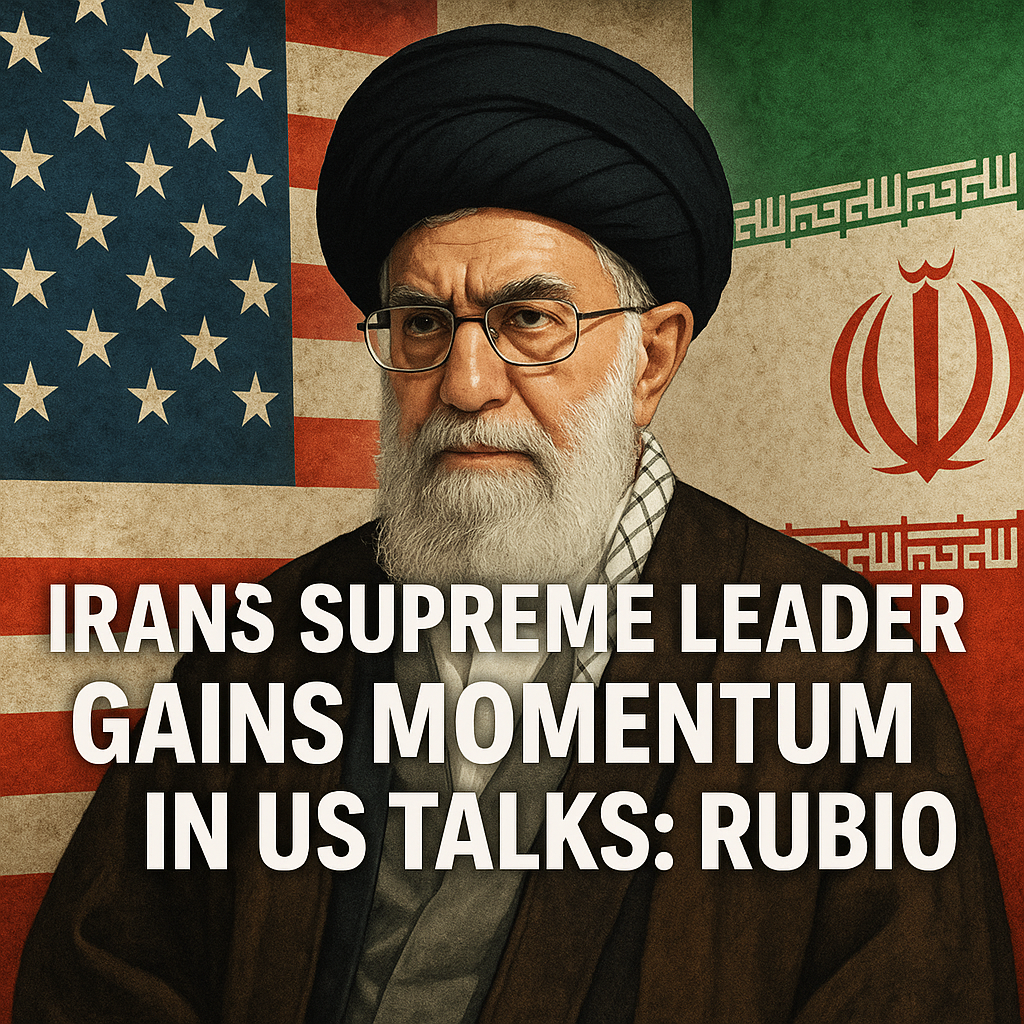
Iran’s Supreme Leader Gains Momentum in US Talks: Rubio
Iran’s Supreme Leader Gains Momentum in US Talks: Insights and Implications
In recent discussions surrounding Iran’s political landscape, Iran’s Supreme Leader, Ayatollah Ali Khamenei, appears to be gaining momentum in talks with the United States, according to various analyses from news sources. This development raises questions about the future of U.S.-Iran relations, the potential for renewed dialogue, and what this could mean for the region.

A New Era of Diplomacy?
As reported by Al Jazeera, Khamenei has shown a newfound willingness to engage with U.S. officials, focusing on issues critical to both nations. This shift is particularly notable given the historically fraught relationship that has defined U.S.-Iran interactions for decades. The Supreme Leader’s recent statements highlight a desire to navigate complex challenges including nuclear negotiations and regional security dynamics.

However, not all analysts are convinced that this represents a definitive and enduring change in Iran’s approach. Some commentators, including figures from RT, argue that Khamenei’s proactive stance may be part of a broader strategy to consolidate power domestically while appearing receptive to external pressures. They caution that while increased communication is a positive sign, actions in the political sphere may ultimately dictate the sincerity of these overtures.

Domestic and International Reactions
The Iranian populace’s response to Khamenei’s outreach is mixed. Many citizens express skepticism over the regime’s intentions, given a history of broken promises and limited improvements in civil liberties. The U.S. position, as conveyed by GOP Senator Marco Rubio, underscores the belief that any dialogue would be contingent on a cessation of destabilizing activities, particularly concerning Iran’s influence in neighboring countries and its ballistic missile program.
Contrarily, some U.S. officials see this possible thawing of relations as an opportunity to promote stability in the region. They argue that dialogue could pave the way for incremental trust-building measures that might lead to more significant concessions on Iran’s nuclear ambitions. The alternative, according to supporters of negotiation, could be further sanctions or military escalation, neither of which would serve the long-term interests of either nation.
Weighing the Evidence
The complexity of Iran’s geopolitical stance cannot be overlooked. Experts note that Khamenei’s moves may be partly driven by the necessity for economic relief amid ongoing sanctions that have battered the Iranian economy. Negotiations in good faith could serve to alleviate some of this pressure, although critics remain wary, suggesting that Iran might use this window to bolster its regional proxies without yielding substantive commitments.
Additionally, the scope of U.S. engagement with allies in the region adds another layer to these discussions. Countries such as Israel and Saudi Arabia express concern over any potential concessions made to Iran, fearing that such diplomatic gestures might embolden Iran’s more aggressive policies in the Middle East.
Conclusion: A Cautious Path Forward
In summation, while Iran’s Supreme Leader gaining momentum in talks with the U.S. reflects a pivotal moment in international relations, it is essential to approach these developments with caution. The interplay between domestic pressures in Iran, the historical context of U.S.-Iran relations, and the broader implications for Middle Eastern geopolitics all contribute to an intricate and often unpredictable landscape.
As further talks unfold, the world watches closely, recognizing that the outcome of these discussions could either produce a framework for a more stable future or lead to renewed cycles of distrust and conflict. Ultimately, the path forward heavily relies on mutual concessions and a genuine commitment from both sides to address the deeper issues at stake.















