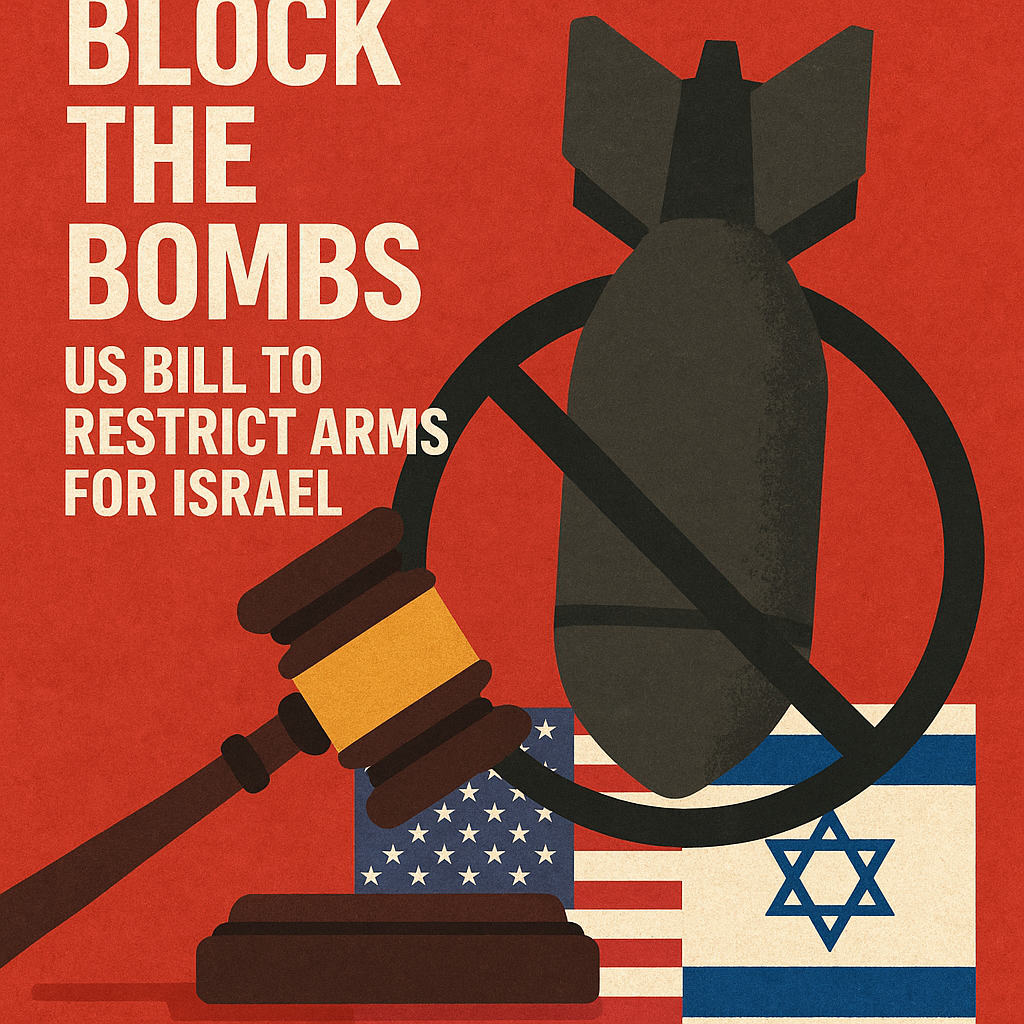
Block the Bombs: US Bill to Restrict Arms for Israel
Growing Support for US Legislation to Restrict Arms for Israel
The initiative to block arms sales to Israel has garnered increasing attention amid ongoing debates surrounding military aid and human rights. A recent U.S. bill aims to restrict the sale of specific munitions to Israel, reflecting a broader scrutiny of military partnerships in the context of the Israeli-Palestinian conflict.

Background and Legislative Details
The bill, known informally as “Block the Bombs,” is positioned within a complex landscape of U.S. foreign policy. Supporting voices argue that the legislation is a necessary measure that recognizes growing concerns over Israel’s military actions and their humanitarian implications. Proponents emphasize the need for the U.S. to align its arms sales with principled human rights considerations.

In contrast, opponents of the bill warn of potential implications for U.S.-Israeli relations. They argue that restricting arms could undermine Israel’s security in a volatile region, jeopardizing its ability to defend itself against threats. This perspective underscores a long-standing view that military aid plays a crucial role in maintaining balance and deterrence in the Middle East.

Key Arguments and Perspectives
Supporters of the arms restriction emphasize several critical points:
– Human Rights Concerns: Advocates highlight documented incidents where U.S.-made weapons have been implicated in actions against civilian populations, specifically in Gaza. They contend that the U.S. should not be complicit in these actions and must enforce strict guidelines on military aid.
– Public Sentiment: There is growing momentum among constituents who desire a reevaluation of U.S. foreign policy toward Israel. Recent polls indicate that a significant portion of the American public, particularly younger voters, support reexamining military aid to countries where human rights are at risk.
– International Law Compliance: Advocates argue that the U.S. should adhere to international laws regarding arms sales, which prohibit supporting regimes engaged in systematic human rights violations. The idea is that by aligning military assistance with these legal standards, the U.S. can maintain its moral authority globally.
On the other hand, critics of the bill assert:
– Security Risks for Israel: Opponents express that restrictions could weaken Israel’s deterrent capabilities. In the face of regional animosities, they argue that Israel requires assured access to military resources to defend itself against potential threats from neighboring countries and non-state actors.
– Impact on U.S.-Israel Relations: Many view the proposed restrictions as damaging to the historically strong alliance between the U.S. and Israel. Critics fear that legislating such restrictions could set a perilous precedent and lead to increased anti-American sentiment in Israel, which historically sees the U.S. as a critical ally.
– Geopolitical Dynamics: The geopolitical landscape of the Middle East remains fraught with complexity, and many believe that weakening Israel’s military position could inadvertently empower adversarial groups that pose a greater threat to regional stability.
Searching for a Middle Ground
As the bill moves through the legislative process, finding common ground between these disparate viewpoints will be crucial. Some lawmakers suggest that instead of outright restrictions, there could be calls for enhanced oversight and reporting requirements on how U.S.-supplied weapons are used. This could serve to hold Israel accountable, while simultaneously addressing security concerns.
Moreover, discussions could benefit from a broader dialogue encompassing military governance and international human rights. By incorporating these elements into the arms sales process, the U.S. might initiate a pathway that upholds moral imperatives while assuaging fears concerning security and alliances.
In conclusion, the debate surrounding the “Block the Bombs” bill reveals deep divisions and substantial complexities in U.S. foreign policy regarding arms sales to Israel. As public sentiment evolves alongside international scrutiny, the challenge will remain to balance moral responsibilities with national security interests. The forthcoming discussions in Congress will undoubtedly shape not just U.S.-Israel relations but also the broader discourse on military aid and human rights in a global context.