
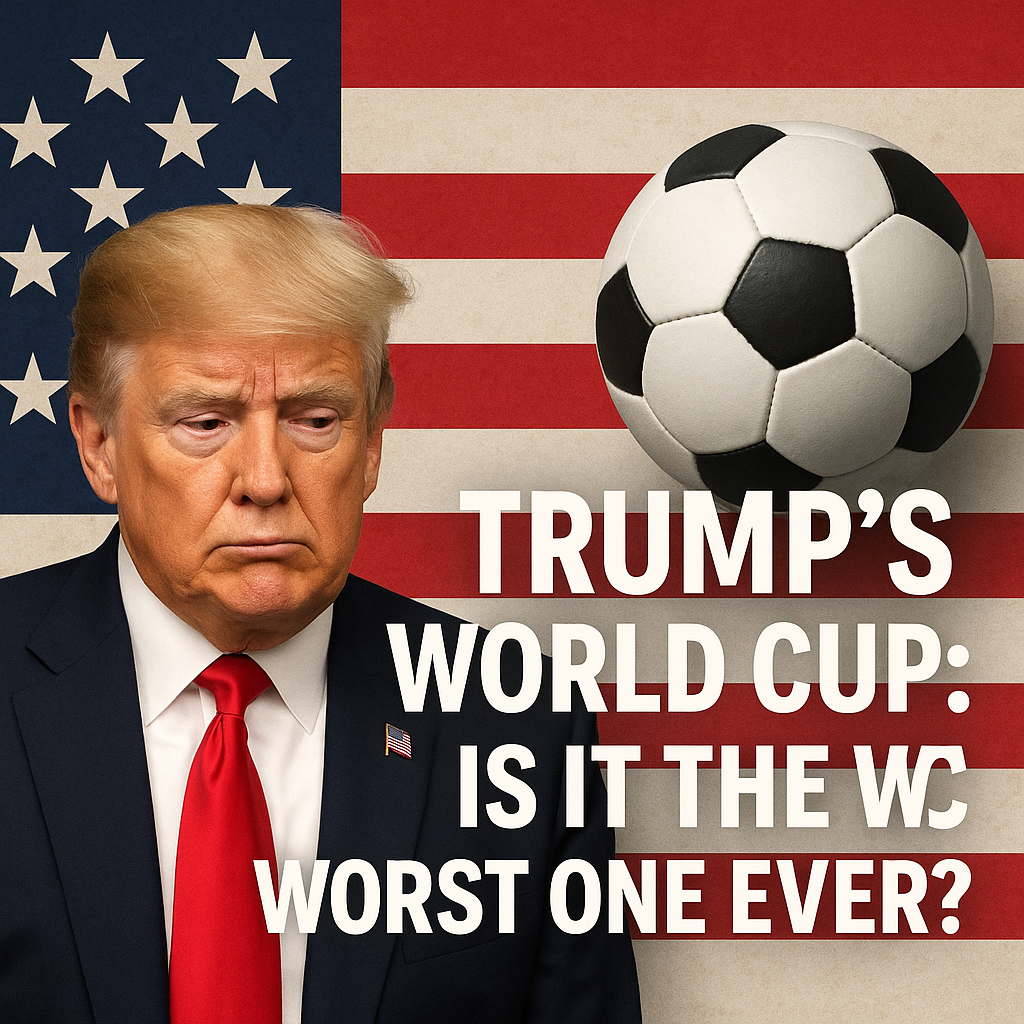
Trump’s World Cup: Is It the Worst One Ever?
Trump’s World Cup: Examining the Controversies
In recent discussions, many are questioning whether the ongoing World Cup is indeed the worst ever, particularly with the shadow of Donald Trump’s administration looming over it. Various news outlets have reported differing perspectives on this contentious issue, revealing a divide that speaks not just to the event’s organization but also to the political climate surrounding it.

The Controversy Behind the Tournament
One of the primary criticisms aimed at this World Cup revolves around its tumultuous organization. Critics argue that the quality of governance and planning has been poorly executed, leading to a less-than-optimal experience for players and fans alike. Sky News highlights various logistical problems that have plagued the tournament, including inadequate infrastructure and abrupt scheduling changes. These issues have prompted comparisons to previous World Cups, stirring an ongoing debate about whether the current event holds the title of “worst World Cup ever.”

Conversely, Al Jazeera takes a broader view, suggesting that the debates over the tournament may be symptomatic of deeper social and political issues. According to their analysis, Trump’s influence extends beyond mere tournament organization; it encapsulates a wider cultural battle over nationalism, identity, and the representation of diverse communities in sports. This perspective implies that criticisms of the World Cup may not stem solely from logistical failures, but also from an underlying discontent with Trump’s tenure and its ramifications on international events.

Mixed Reactions from Fans and Players
Fan engagement with the World Cup has been polarized. Supporters of Trump’s policies argue that the tournament serves as a symbol of national pride, showcasing the United States’ ability to host large-scale international events successfully. They cite the positive aspects of cultural exchange and global sporting spirit as critical components that transcend controversy.
On the other hand, detractors note significant attendance declines and protests against the regime’s policies, which have become a constant backdrop to the matches. RT reports on how these elements have affected the atmosphere at games, making the viewer experience less enjoyable for many. Players, too, have expressed mixed feelings; while some relish the opportunity to compete on a grand stage, others have voiced concerns about political pressures that could overshadow sporting achievements.
The Bigger Picture: Politics and Sports
The intertwining of politics and sports is not a new phenomenon; however, Trump’s imprint has made this correlation particularly pronounced during the current World Cup. While some believe that the sporting event should remain an apolitical arena, others argue that such a perspective is naive given the realities of today’s socio-political environment. As noted in various articles, the players’ activism on social issues has highlighted this intersection, with many using their platforms to speak out against injustices while competing.
Additionally, the International Federation of Association Football (FIFA) is facing scrutiny over its governance in light of these political tensions. Critics posit that FIFA’s autonomy has been compromised by political agendas, making it harder for the sport to be seen as truly global and inclusive. This has led to a fractious relationship between fans, athletes, and organizing bodies, further fueling the debate over the current tournament.
Conclusion: A Complex Legacy
Labeling Trump’s World Cup outright as the “worst ever” may lack nuance, given the myriad factors at play. While logistical concerns are indeed valid and should be addressed, they are intertwined with deeper discussions about identity, culture, and the role of governance in sports. As the tournament continues, it seems the conversations surrounding it will evolve, reflecting both the outcomes on the field and the vivid political landscape off it.
As it stands, the legacy of this World Cup is still being formed, and whether it will be remembered as the worst or simply as a complicated chapter in sporting history remains to be seen. In a world where politics and sports are increasingly interlinked, understanding the nuances of this tournament will require us to listen to diverse perspectives and engage with the complexities inherent in such a significant event.















