Italian PM Denies ‘Begging’ Trump for G7 Photo

Italian PM Denies ‘Begging’ Trump for G7 Photo
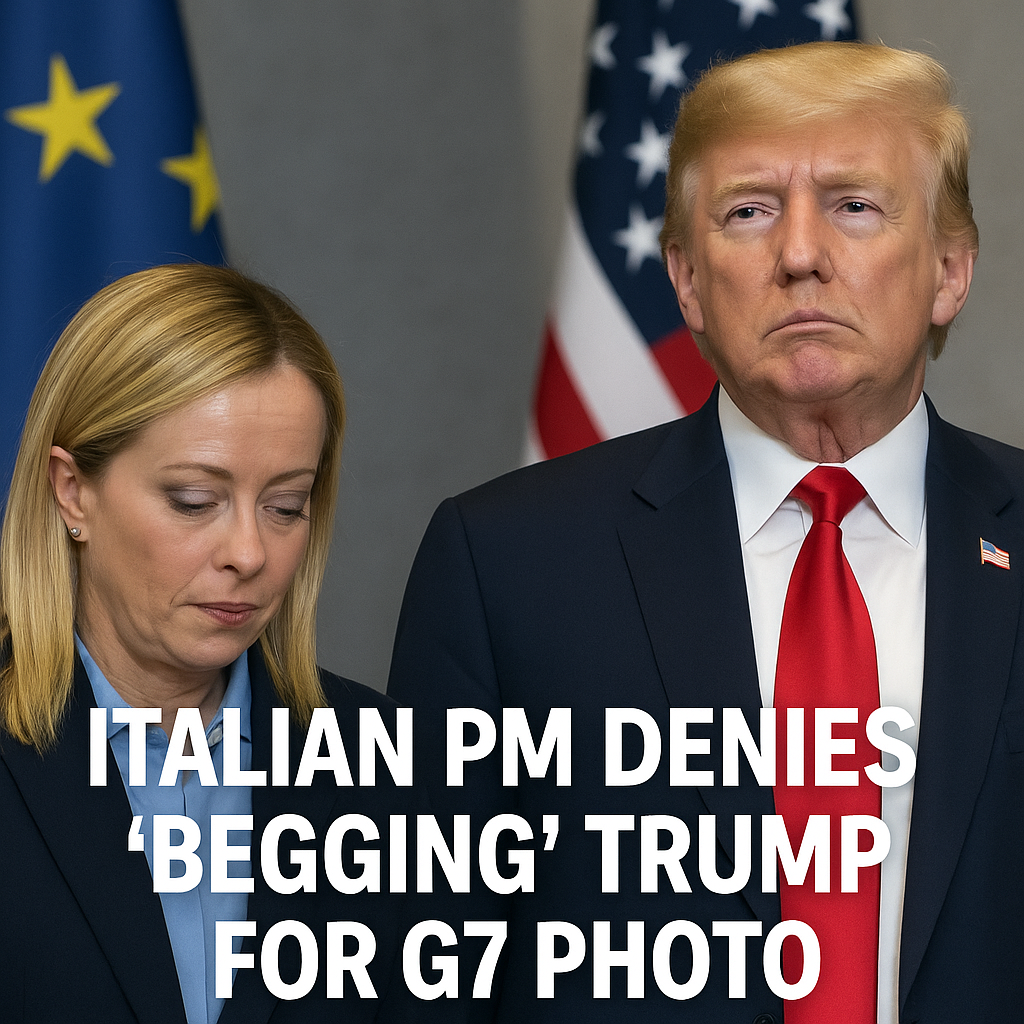
In the arena of international diplomacy, optics often carry as much weight as the policies being discussed. Recently, Italian Prime Minister Giorgia Meloni found herself at the center of a media whirlwind when she was accused of pleading with former President Donald Trump for a photograph during the G7 summit. This claim, which stirred debate and captured public attention, raised questions not just about the interaction itself, but also about the broader implications of such diplomatic gestures.

The Context of the Allegation
The incident reportedly occurred during the G7 summit held in Hiroshima, Japan, where leaders from the world’s most advanced economies convened to address pressing global issues. The context for the alleged “begging” appeared to stem from a casual exchange caught on camera, leading to mixed interpretations regarding its significance.


Meloni has since addressed the claim, firmly denying any suggestion of a desperate plea for a photograph. In a public statement, she emphasized that such portrayals distort the nature of diplomatic engagements, asserting, “I would never beg anyone for a photo.” She contextualized the moment, stating it was a light-hearted interaction rather than a reflection of her government’s stances or urgencies.


This spin on a seemingly innocuous event highlights the complexities of political narratives. While some commentary pointed to the need for imagery in modern politics—where visual engagement can significantly enhance a leader’s public persona—others warned of how these trivial matters might overshadow substantive discussions.
Public Perception and Media Spotlight
The media response to this incident varies dramatically across different platforms. Outlets such as Al Jazeera report on the denial of the allegations, which Meloni categorically rejected, focusing on the potential ramifications of such narratives in shaping political images. They emphasize the need for responsible journalism, particularly when it comes to interpreting seemingly light-hearted exchanges between world leaders.
Conversely, avenues like RT have taken a more skeptical approach, suggesting that the incident reflects deeper insecurities within Meloni’s administration. By framing her denial as a reaction to adverse publicity, they argue that the incident could sow distrust among her domestic and international audience.
The contrasting viewpoints not only underline the media’s role in shaping political stories but also illustrate how messages can be interpreted. On one side, Meloni’s defense seeks to reinforce her authority and autonomy as a leader, while the critical lens from other sources raises questions about her standing on the world stage and the way Italy is perceived in global politics.
The Broader Implications of Political Imagery
The G7 incident raises broader discussions about the use of imagery in politics today. In an age where social media amplifies every moment, images carry tremendous power, shaping narratives that may bear little relation to the events that transpired. A photograph can transform a fleeting interaction into a cherished moment or a controversial claim, often with ramifications that extend beyond the immediate context.
1. The Role of Social Media: In the digital landscape, the immediacy of social media means that events can be dissected within moments. Politicians and leaders are now evaluated not just by their policies but by how they present themselves visually. The G7 photograph was not simply about capturing a moment; it was about crafting an image that would resonate with voters back home and across the international community.
2. Public Relations Strategies: For leaders like Meloni, managing public perception becomes an ongoing task. Employing deft public relations strategies to navigate through such incidents can help maintain an image of strength and confidence. Nonetheless, overly dramatizing or downplaying incidents may backfire, prompting scrutiny and mixed reactions.
Conclusion: Navigating the Fine Line
The fracas surrounding Giorgia Meloni’s encounter with Donald Trump during the G7 summit serves as a potent reminder of the intertwined relationship between diplomacy, media representation, and public perception. While Meloni’s fervent denial of “begging” for a photograph underscores her desire for a strong and independent image, the circumstances surrounding the exchange reflect the often precarious balance leaders must strike in the face of media scrutiny.
As we continue to observe the evolving dynamics in international relations, the importance of context, transparency, and accurate representation cannot be overstated. The G7 incident may seem trivial on the surface, but beneath it lies a complex web of political narratives and the ceaseless efforts of leaders to shape their legacies in an ever-watchful world.