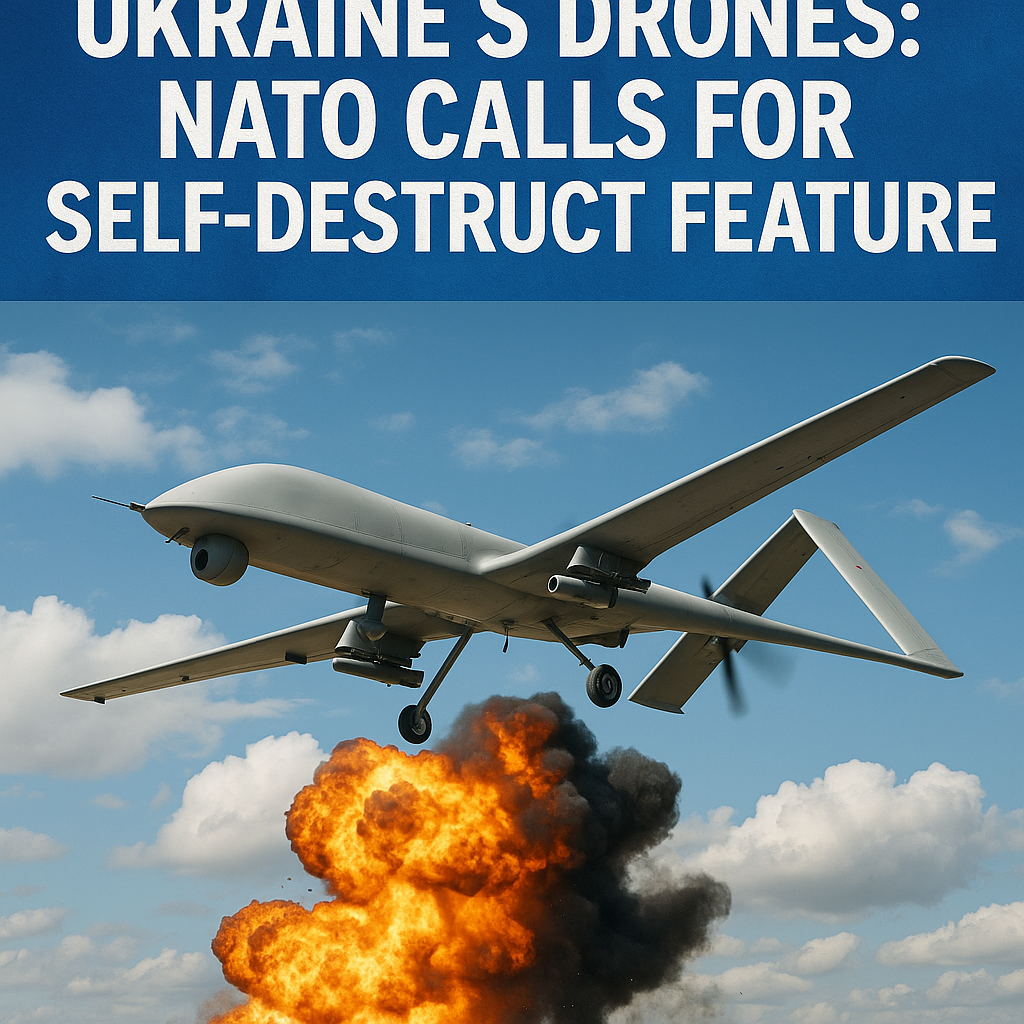
Ukraine’s Drones: NATO Calls for Self-Destruct Feature
Ukraine’s Drones: NATO Calls for Self-Destruct Feature
In the current landscape of military diplomacy and technological warfare, the discussions surrounding Ukraine’s drones have taken a compelling turn, with NATO advocating for the implementation of a self-destruct feature on these unmanned aerial vehicles (UAVs). This call reflects a growing acknowledgment of the ethical, strategic, and operational complexities inherent in modern warfare.

The Necessity of Self-Destruct Mechanisms
The principle behind incorporating a self-destruct feature is rooted in the need to mitigate risks associated with drone technology. As Ukraine continues to utilize drones for both surveillance and offensive operations against Russian forces, the potential for these devices to fall into enemy hands poses significant security concerns. Reports from sources such as RT highlight the strategic importance of ensuring that drones can be neutralized if they veer off course or are captured.

– Security and Control: The self-destruct mechanism would serve as a safeguard, allowing operators to maintain greater control over the drones and preventing potential intelligence leaks or the weaponization of the captured technology by adversaries.

– Ethical Implications: The use of drones in warfare has raised numerous ethical questions. Critics argue that the ability to remotely execute attacks depersonalizes warfare, while proponents assert that technological advances can lead to fewer civilian casualties. By incorporating a self-destruct feature, NATO aims to address some of these ethical concerns, ensuring that drones can be neutralized rather than misused.
However, implementing such technology is not without its challenges. Skeptics within certain military circles express unease regarding the reliability of self-destruct systems. They worry about the possibility of technical malfunctions and the implications of rendering costly equipment useless before fulfilling its mission. The potential for negative propaganda effect should these systems fail—not to mention the collateral damage caused by an errant explosion—adds another layer of complexity to the debate.
Diverging Opinions on Operational Effectiveness
Opinions about the successive integration of self-destruct features into Ukraine’s drone warfare strategy vary significantly among military experts and political analysts.
From an operational standpoint, proponents argue that equipping drones with a self-destruct option can expedite decision-making processes in high-stakes situations. As described in various analyses from outlets like Al Jazeera, the immediacy of response is crucial in conflict zones, where delaying drone neutralization can have dire consequences.
In contrast, some military analysts caution against potential over-reliance on such technologies. They believe that placing too much trust in automated self-destruct features might lead to complacency among operators. This could result in less vigilance and, ultimately, misguided tactical decisions. The nuances of battlefield leadership and human judgment could diminish as reliance on technical failsafes increases.
Moreover, while NATO’s insistence on self-destruct mechanisms is well-founded, it is essential to realize that these measures should complement broader strategies of command and control rather than serve as replacements. Successful drone operations require a multifaceted approach that includes robust intelligence gathering, precise mission planning, and thorough training.
Conclusion: A Balancing Act Between Technology and Warfare
The conversation surrounding the implementation of self-destruct features in Ukraine’s drone warfare highlights the broader themes of risk management, technology, and ethics in combat operations. As nations consider the ramifications of advanced military technologies, it is clear that the potential benefits must be weighed carefully against their unintended consequences.
While NATO’s call for a self-destruct option is grounded in sound reasoning aimed at enhancing security and operational efficacy, it invokes a broader discussion on the shifting landscape of warfare. Ultimately, the successful integration of such innovations requires a nuanced understanding of military ethics, potential operational setbacks, and the imperative of human oversight in an increasingly automated battlefield. The path ahead is fraught with challenges but also ripe with opportunities for responsible technological advancement in warfare.