
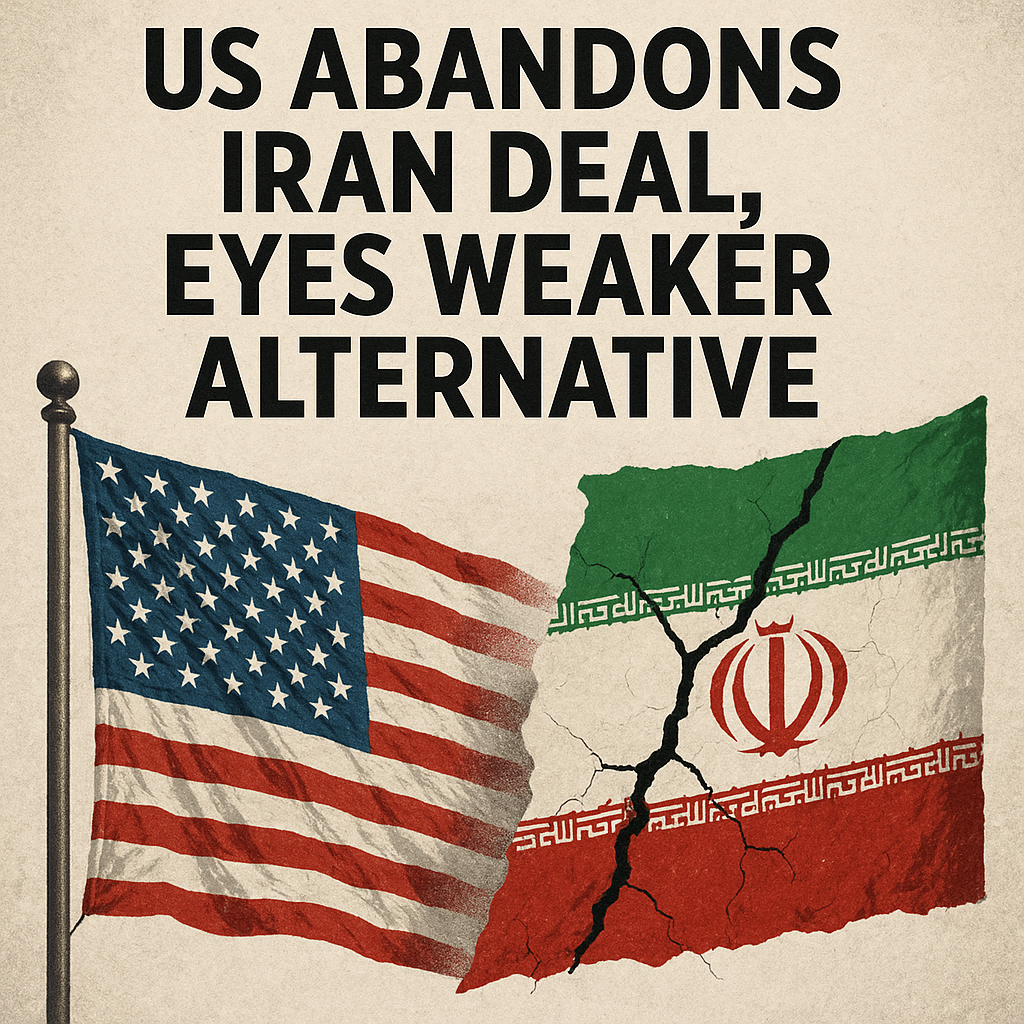
US Abandons Iran Deal, Eyes Weaker Alternative
The recent shifts in U.S. foreign policy regarding Iran have stirred considerable debate among policymakers, experts, and the media. The U.S. has moved away from the original Iran nuclear deal known as the Joint Comprehensive Plan of Action (JCPOA), opting instead for a potentially weaker, alternative agreement. This decision raises questions about the efficacy and long-term implications of U.S. strategy in the Middle East.

The Shift from JCPOA
The JCPOA, which was signed in 2015 between Iran and six world powers, was hailed as a significant diplomatic achievement aimed at curbing Iran’s nuclear ambitions. However, following the U.S. withdrawal from the agreement in 2018 under President Donald Trump, tensions escalated significantly. The Biden administration’s initial approach seemed to be a return to the negotiating table, aiming to salvage the JCPOA. Yet, recent reports indicate a pivot toward pursuing a less formal arrangement.

Sources such as Al Jazeera emphasize that the Biden administration is now focusing on “managed competition” with Iran. This change seeks to limit Iran’s influence in the region without reinstating the original deal. As a result, U.S. officials are exploring ways to constrict Iran’s nuclear capabilities through a series of smaller, less comprehensive agreements. Critics argue this shift reflects a significant downgrade in U.S. diplomatic goals and may lead to greater instability in the region.

Rethinking Diplomatic Strategy
The re-evaluation of the diplomatic strategy towards Iran also highlights varying opinions among experts and stakeholders. Some analysts see the abandonment of the JCPOA as a necessary step, citing Iran’s failure to comply fully with the agreed terms following the U.S. exit. For instance, an article from RT outlines that Iran’s increased uranium enrichment activities could justify the need for a more rigid framework or alternative tactics. This viewpoint underscores a belief that U.S. measures should adapt to the evolving realities on the ground.
Conversely, others caution against the consequences of a less robust agreement. Critics, including diplomatic experts, argue that a weaker accord may embolden Iran’s aggression and lead to heightened tensions with neighboring countries and U.S. allies in the region. They warn that this strategy could reward Iran for its nuclear advancements rather than contain them, potentially allowing Tehran to further develop its capabilities under the guise of negotiations.
Concerns Over Regional Stability
Moreover, the implications of an altered U.S.-Iran approach extend beyond the nuclear debate. Regional stability is inextricably linked to U.S.-Iran relations, which impact various geopolitical dynamics including Israel’s security and the ongoing conflicts in Syria and Yemen. As noted by Sky News, a weaker U.S. stance might embolden Iran’s proxies throughout the Middle East, which could destabilize the region further and complicate U.S. relationships with allies.
The challenge lies in balancing intervention with respect for regional autonomy. The U.S. must navigate complex alliances carefully, as a move perceived as a retreat could embolden adversaries and create a vacuum that might be filled by rival powers, including Russia or China. This delicate situation calls for a nuanced approach that incorporates diplomatic engagement while ensuring stringent oversight of Iran’s nuclear program.
Conclusion: A Path Forward Amid Uncertainties
The ongoing reconsideration of U.S. policy toward Iran showcases the intricate web of diplomacy, security interests, and regional dynamics at play. While the current inclination towards a weaker alternative to the JCPOA might serve an immediate political strategy, it raises fundamental questions about long-term consequences and the potential for increased instability in the Middle East.
As voices from various sectors weigh in, the clear consensus remains elusive. Stakeholders must approach the situation with caution, constantly adapting strategies to reflect evolving realities while considering both immediate and far-reaching effects on regional and global security. Keeping diplomatic channels open, maintaining robust oversight, and engaging regional partners will be essential in navigating the complexities of U.S.-Iran relations in the years to come.















