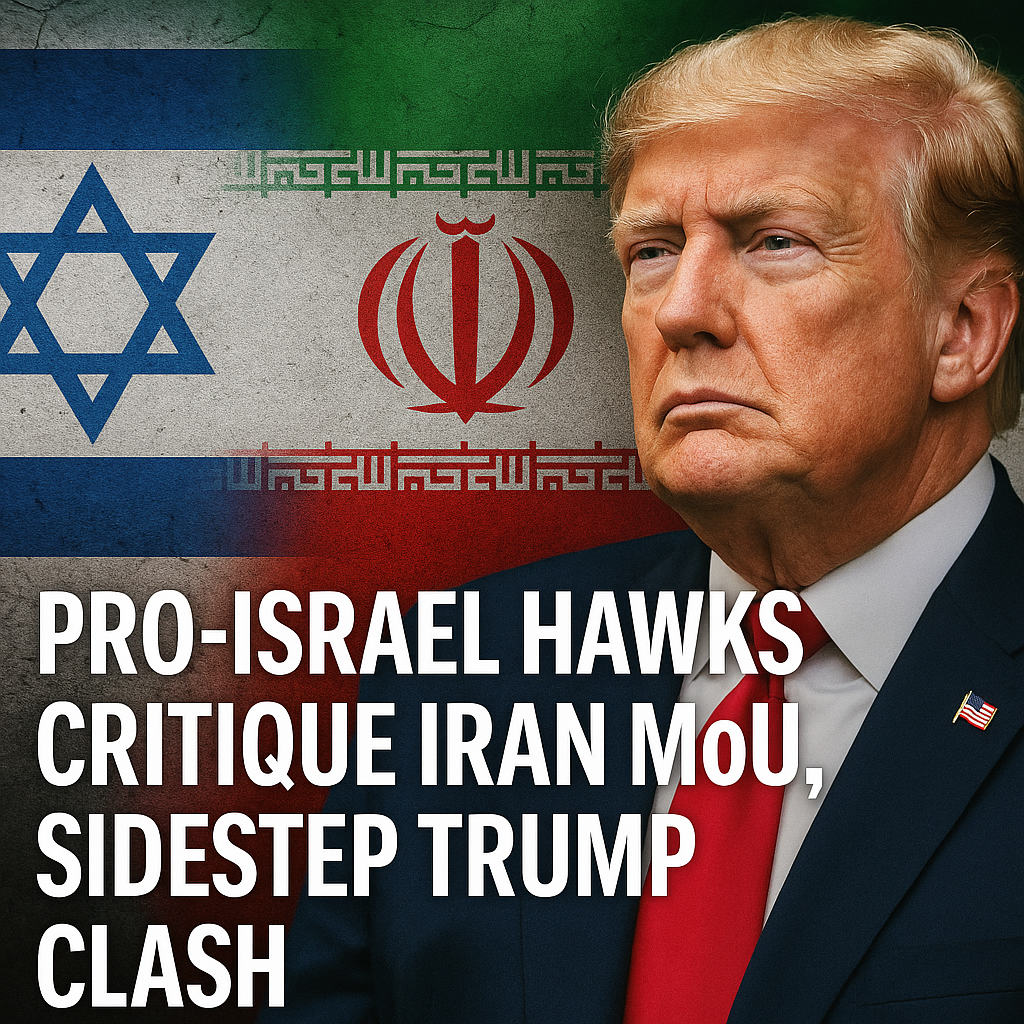
Pro-Israel Hawks Critique Iran MoU, Sidestep Trump Clash

In recent discussions surrounding the geopolitical climate, pro-Israel hawks in the United States have voiced their critique of the Memorandum of Understanding (MoU) regarding Iran, illustrating a complex landscape of foreign policy debates. This critique comes amidst a backdrop of varied opinions, and notably, a strategic avoidance of direct confrontation with former President Donald Trump’s policies on Iran.

Understanding the Critique
The MoU, aimed at standardizing nuclear oversight and diplomatic engagement with Iran, has sparked significant discontent among pro-Israel factions, who argue that it undermines regional security. Prominent voices in the pro-Israel community, including influential organizations and political figures, emphasize the risk posed by Iran’s nuclear ambitions. They argue that any agreement that does not comprehensively address Iran’s ballistic missile program and support for regional proxy groups fails to guarantee Israel’s safety and that of its allies in the Middle East.


Critics assert that the MoU reflects a broader pattern of what they perceive as appeasement strategies by the Biden administration, reminiscent of past negotiations that led to the Joint Comprehensive Plan of Action in 2015. Members of this faction contend that a renewed focus on diplomatic engagement without stringent safeguards only emboldens Iran’s aggressive posture. Moreover, recent statements from key pro-Israel organizations have underscored the sentiment that any diplomatic overture which lacks a clear deterrence strategy is inadvisable.


Voices from Both Sides
While pro-Israel hawks unequivocally criticize the MoU, some analysts adopt a more tempered view, suggesting that engagement does not inherently equate to capitulation. They argue that establishing a framework for dialogue could potentially mitigate hostilities and foster conditions for greater stability. Supporters of the MoU posit that inclusive diplomacy could lead to a more fortified alliance among regional partners, leveraging ongoing negotiations as a platform for broader discussions on security.
Moreover, voices from within the Biden administration maintain that the MoU is a critical step toward addressing the nuclear threat while providing a structure to verify Iran’s compliance. They emphasize that the approach seeks to build a coalition with European and Middle Eastern allies, a perspective that pro-Israel hawks often overlook in their immediate assessments.
The Trump Factor
Interestingly, amidst the critique of the MoU, pro-Israel hawks have largely steered clear of confronting Trump’s legacy in reshaping U.S.-Iran relations. His administration’s withdrawal from the JCPOA in 2018 marked a significant pivot, one that is occasionally referenced in pro-Israel arguments but rarely critiqued head-on. This tactical avoidance could indicate a pragmatic political choice, as these factions aim to maintain the support of Trump’s conservative base while advocating for policies they believe align better with U.S. interests in the Middle East.
Moreover, Trump’s characterization of Iran as a primary adversary resonated deeply with pro-Israel advocates, creating a sense of shared interest that complicates direct opposition to his past strategies. As political winds shift, some hawks may seek to navigate this terrain delicately, balancing their critiques of current policies while acknowledging the foundations laid during Trump’s presidency.
Conclusion: A Divided Perspective
The discourse surrounding the Iran MoU underscores the myriad complexities of U.S. foreign policy in the Middle East. Pro-Israel hawks’ objections provide a robust examination of the perceived risks involved in engagement with Iran, while contrasting viewpoints advocate for the merits of dialogue and negotiation. The decision by these hawks to sidestep direct confrontations with Trump’s policies reflects the intricate interplay of political allegiance and strategic advocacy in a landscape fraught with uncertainty.
As discussions advance, it remains critical to evaluate these perspectives critically, recognizing that an effective U.S. strategy must address both the immediate threats posed by Iran and the broader implications for regional stability. The ongoing critique is not just about a single agreement but reflects deeper questions about national security, diplomacy, and the role of the U.S. in a rapidly evolving geopolitical environment. As such, while pro-Israel voices feel compelled to express their dissent, the path forward remains laden with challenges and opportunities for diplomatic engagement.