
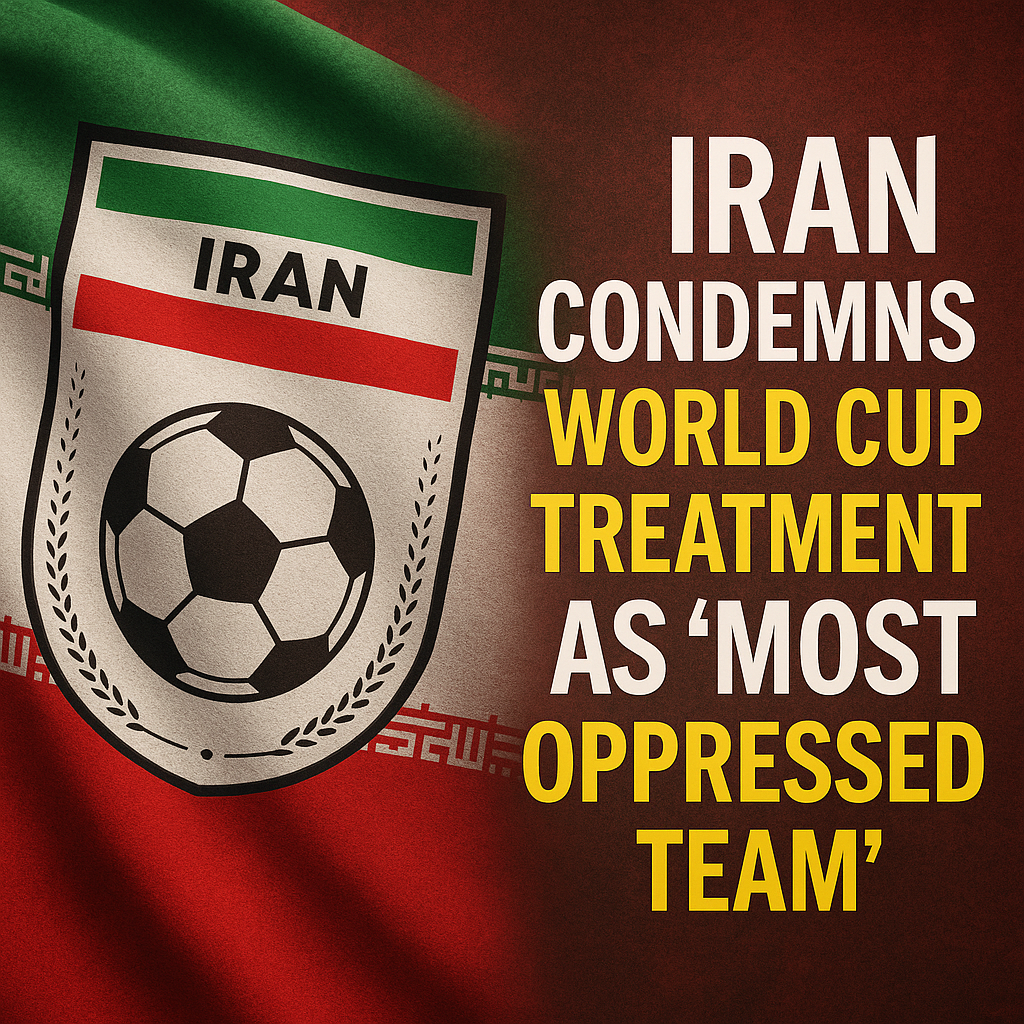
Iran Condemns World Cup Treatment as ‘Most Oppressed Team’
Iran Condemns World Cup Treatment as ‘Most Oppressed Team’
In recent discussions surrounding the FIFA World Cup, Iran has emerged as a vocal critic of how its football team has been treated, labeling them the “most oppressed team” in the tournament’s history. This sentiment reflects a complex interplay of sports, politics, and national pride, igniting debates over the intersection of athletic performance and socio-political issues.

The Context of the Criticism
Iran’s national football team faced considerable challenges leading up to and during the World Cup. Despite their appearances and performance on the field, Iranian players have been enmeshed in a politically charged atmosphere. Reports indicate that players experienced both external pressures from their government and significant scrutiny from international observers. Notably, Iranian officials have asserted that their team’s struggles must be viewed through the lens of an oppressive regime, which complicates the landscape of athletics and national representation.

As reported by RT, the Iranian Football Federation has stated, “Our players are not just players; they are under constant pressure.” This delves deeper than performance metrics; it highlights how political dynamics can directly impact athletes. The Iranian players’ reluctance to align fully with government narratives, particularly regarding geopolitical tensions and domestic protests, further underscores the gravity of their situation.

Balancing Perspectives
While the Iranian government casts its players as victims of oppression, other viewpoints complicate this narrative. Sources such as Al Jazeera emphasize the players’ agency and choices, suggesting that many athletes are capable of expressing dissent through their platform. This juxtaposition creates a complex picture; it raises essential questions about whether the athletes are mere pawns in a larger political game or active participants in shaping their destiny amidst societal upheaval.
The divide manifests vividly in the domestic responses from fans and athletes alike. For some Iranians, football serves as a symbol of resistance, a way to display national pride in the face of adversity. Others criticize the government’s exploitation of sports for propaganda, arguing that players should focus on representing their country without political interference. This dichotomy proves that while the players experience systemic pressures, there is also a robust dialogue around the roles athletes play within and outside national frameworks.
International Reactions and Implications
The situation has drawn attention not just from within Iran, but globally. International reactions, particularly from human rights advocates, have dubbed the Iranian national team as representatives of a regime that suppresses expressions of freedom both at home and in international forums. The juxtaposition of performances on the world stage against the backdrop of civil liberties raises questions about the adequacy of sports as a platform for political discourse.
As highlighted in various reports, the implications of such pressure can have enduring effects on athletes’ mental health and performance. Neglecting these aspects undermines the essence of competition, which should ideally focus on talent and skill rather than political liability. The perception of Iranian players as “oppressed” may resonate with some audiences, while for others, it presents an uncomfortable narrative that conflates sports with political discourse.
A Path Forward
Navigating this complex terrain requires recognizing the dual role of sports in shaping societal views and reflecting political realities. The Iranian football team’s experience mirrors that of athletes in other regions facing similar oppression. Moving forward, it is crucial to foster an environment that emphasizes transparency and support for athletes, allowing them to perform uninhibited while also engaging in dialogue about sociopolitical issues that affect their lives.
In conclusion, as the Iranian national football team continues to navigate the tumultuous waters of international sports amidst national strife, their situation exemplifies a significant challenge of modern athletics. Balancing pride, oppression, and performance not only enhances our understanding of the World Cup atmosphere but also serves as a stark reminder of the power of sport as a universal language interwoven with complex societal narratives.















