
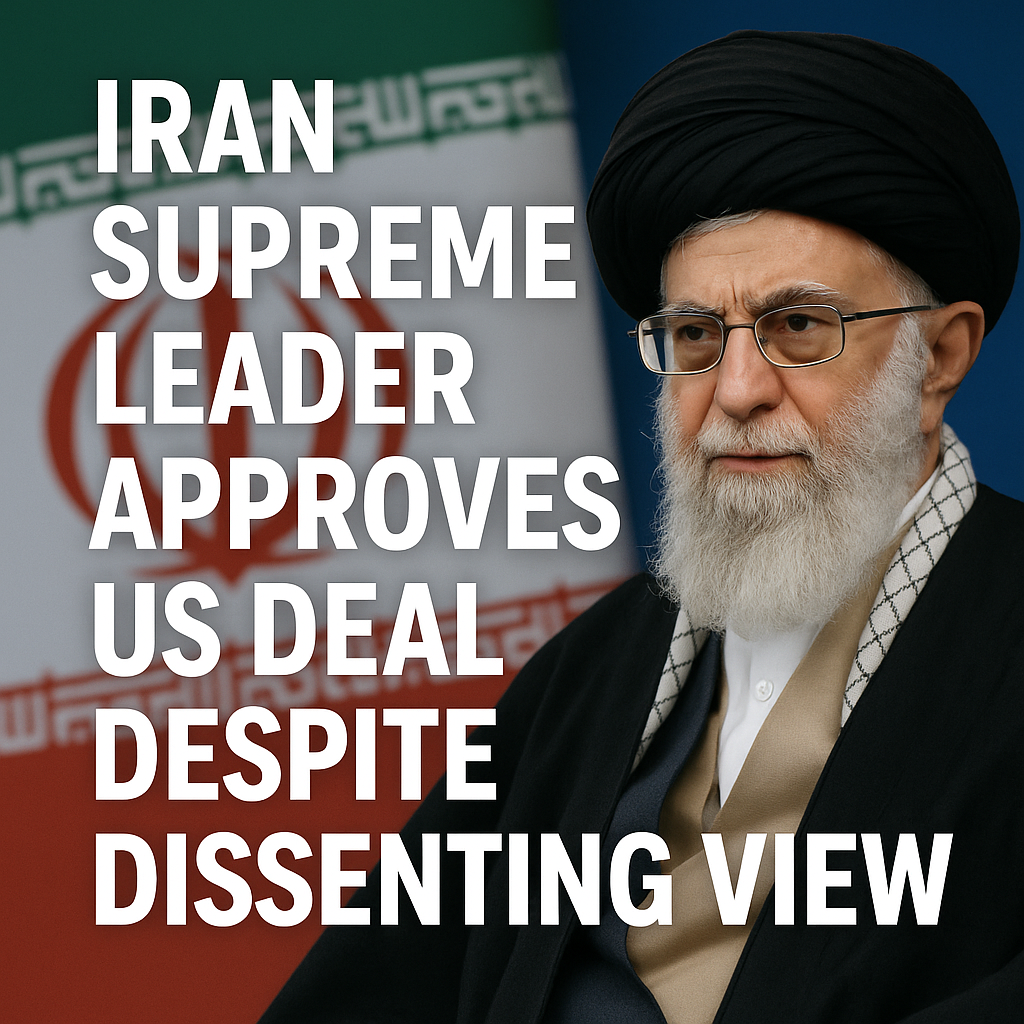
Iran Supreme Leader Approves US Deal Despite Dissenting View
Iran Supreme Leader Approves US Deal Despite Dissenting View
In a surprising turn of events, Iran’s Supreme Leader Ayatollah Ali Khamenei has approved a controversial deal with the United States, even while acknowledging significant internal dissent regarding its implications. This approval not only marks a pivotal moment in U.S.-Iran relations but also signals the complex dynamics within Iran itself, where varying perspectives often lead to substantial debate on national strategy.

The Context of the Approval
As a backdrop to this historic decision, it’s essential to recognize the tumultuous history between Iran and the United States. For decades, relations have been fraught with tension, stemming from earlier political upheavals, economic sanctions, and military confrontations. The deal in question pertains to negotiations surrounding Iran’s nuclear program and aims to alleviate some of the economic pressures on the country while ensuring compliance with international nuclear regulations.

In his recent address, Khamenei stated that while he personally had reservations about the agreement, he believes it is in the best interest of Iran at this juncture. This duality—supporting an agreement while expressing dissenting views—reflects a broader debate among Iranian leaders and policymakers. Some view the deal as a necessary step to revive the economy, while others are concerned about compromising Iran’s sovereignty and long-term security interests.

Divergent Views Within Iran
The internal debate about the U.S. deal highlights significant ideological divides within Iran. Proponents of the agreement argue that it could lead to economic stability and improved international relations, potentially opening doors for foreign investment and alleviating the crippling effects of sanctions.
– Supporting Perspective:
– Economic relief: Advocates stress that the deal could generate essential economic benefits, such as the influx of foreign capital.
– Diplomacy over conflict: Supporters argue that engaging diplomatically with the U.S. may help reduce tensions and avoid further military confrontations.
– Dissenting Perspective:
– Security concerns: Critics fear that aligning with the U.S. may endanger Iran’s national security and assertive regional influence.
– Domestic backlash: With a sizeable faction within Iranian politics opposing closer ties to the West, any perceived concession to the U.S. might provoke unrest among hardliners and nationalist elements.
Reports indicate that members of the Islamic Revolutionary Guard Corps (IRGC) remain particularly skeptical. They argue that historical concessions have only resulted in greater demands from the West, a sentiment echoed by independent analysts who caution against placing too much faith in negotiations based on previous experiences.
The Global Reaction
International reactions to Khamenei’s approval of the U.S. deal have also been mixed. While some Western nations express cautious optimism, hoping this will lead to further negotiations and an eventual thaw in relations, others remain skeptical about Iran’s commitment to remain compliant with any agreements.
– Positive Outlook: Nations closer to Iran, such as Russia and China, have welcomed the decision. They perceive it as a stabilization effort that could lead to a multipolar approach in international politics, undermining U.S. dominance.
– Skeptical Viewpoint: Conversely, the U.S. administration remains wary, stressing that tangible steps must be taken to ensure Iran’s nuclear program does not pose a threat to global security. Expectations for long-term compliance may dampen the initial enthusiasm surrounding the deal.
Looking Ahead
As the landscape of U.S.-Iran relations continues to evolve, the implications of Khamenei’s approval will unfold in complex ways. On one hand, the deal could provide essential economic relief for Iran, but it poses significant risks in terms of internal stability and national security perceptions. On the other hand, the resistance from hardliners may complicate the Iranian administration’s ability to implement the agreement effectively.
A cautious path lies ahead, necessitating careful navigation by Iranian leadership. The interplay between internal dissent and the need for international engagement will significantly shape Iran’s strategy moving forward. As the situation develops, the global community watches closely, keenly aware that the ramifications of this decision extend beyond Iran’s borders.
In conclusion, Khamenei’s endorsement of the U.S. deal, despite personal reservations, encapsulates a broader narrative of compromise and conflict within Iranian politics. The coming weeks and months will be critical as Iran balances its domestic agendas against international expectations, preparing for potential outcomes that could redefine its role on the world stage.















