
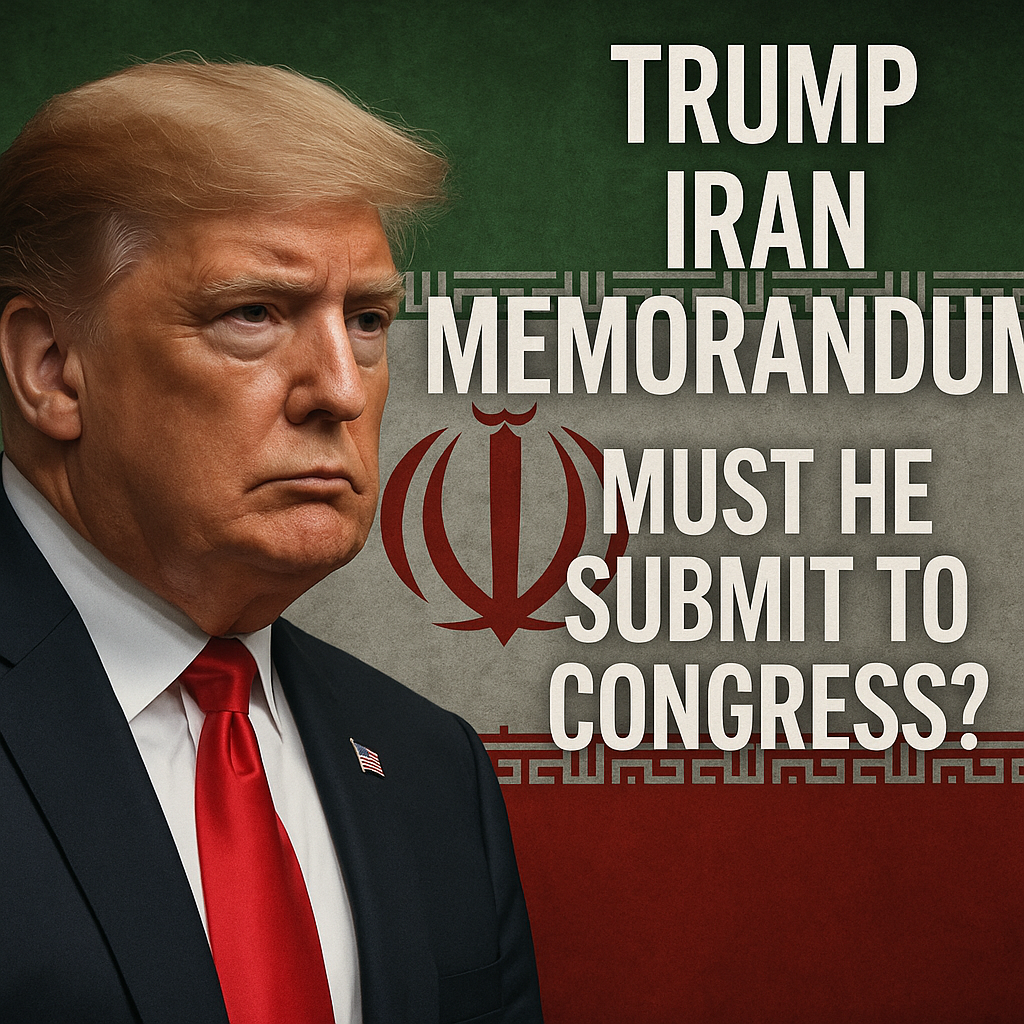
Trump Iran Memorandum: Must He Submit to Congress?
Trump Iran Memorandum: Must He Submit to Congress?

The question of whether former President Donald Trump must submit the Iran memorandum of understanding to Congress has sparked significant debate among legal experts and political analysts. This inquiry touches upon the intricate balance of power delineated by the U.S. Constitution, particularly concerning foreign policy and executive authority.

The Legal Framework
At the center of the discussion is the War Powers Resolution of 1973, which aims to ensure that Congress remains in control of decisions involving military action. Experts argue that any significant military agreement, including a memorandum with Iran, may necessitate congressional approval. According to Nathan Sales, a former State Department official quoted in Al Jazeera, “If this memorandum commits the United States to substantial obligations, it should go to Congress.”

In contrast, proponents of executive authority, including some current and former government officials, maintain that the president can act unilaterally in foreign policy matters, especially when national security is at stake. An opinion piece from RT suggests that the president has broad power to negotiate agreements without needing Congress’s immediate involvement, positing that operations like the memorandum fall under executive prerogatives.
Diverging Views on Congressional Oversight
The debate becomes even more nuanced when considering previous instances for comparison. Historical precedents suggest that Congress has often been sidelined in foreign policy decisions. The 2015 nuclear deal with Iran, an agreement made during the Obama administration, was initially met with resistance but eventually allowed a unique framework for oversight by Congress.
Furthermore, some observers note that Congress has not always exercised its authority effectively. As reported by Sky News, the ongoing political polarization may hinder a coherent legislative response, complicating discussions on whether the Iran memorandum even requires congressional submission. This reflects a broader trend of executive action in an increasingly divided Congress, leading to questions about the effectiveness and durability of such agreements.
Potential Political Consequences
Negotiating the Iran memorandum not only raises legal questions but also potential political outcomes. There are fears that a lack of congressional oversight could lead to future administrations taking unilateral actions that bypass legislative checks, impacting U.S. foreign policy for years to come. Such ramifications could resonate beyond Iran, influencing how the U.S. interacts with other nations, especially those in volatile regions.
Critics warn that failing to involve Congress means missing out on a vital opportunity for democratic discourse. As one commentator from Al Jazeera states, “Relying solely on executive discretion risks eroding public trust in government, particularly in matters as significant as international agreements.” This suggests that bipartisanship may be essential in ensuring that any forthcoming U.S. foreign policy decisions reflect a collective national will.
Conclusion: Navigating Uncertainty
As the discussions on the Iran memorandum continue, it becomes apparent that the intersection of law and politics will ultimately shape whether Trump is required to submit the memorandum to Congress. While the Constitution grants the president considerable power, the legal nuances surrounding treaties and executive agreements may dictate a different course, requiring legislative scrutiny.
Ultimately, the conversation surrounding Trump’s Iran memorandum highlights the complexities inherent in U.S. governance. With a clear dichotomy between those advocating for strong executive power and those urging for congressional involvement, the future will decide how these tensions evolve. The debate may not yield a simple answer; rather, it points to an ongoing struggle for power that’s reflective of broader themes in American politics today.















