
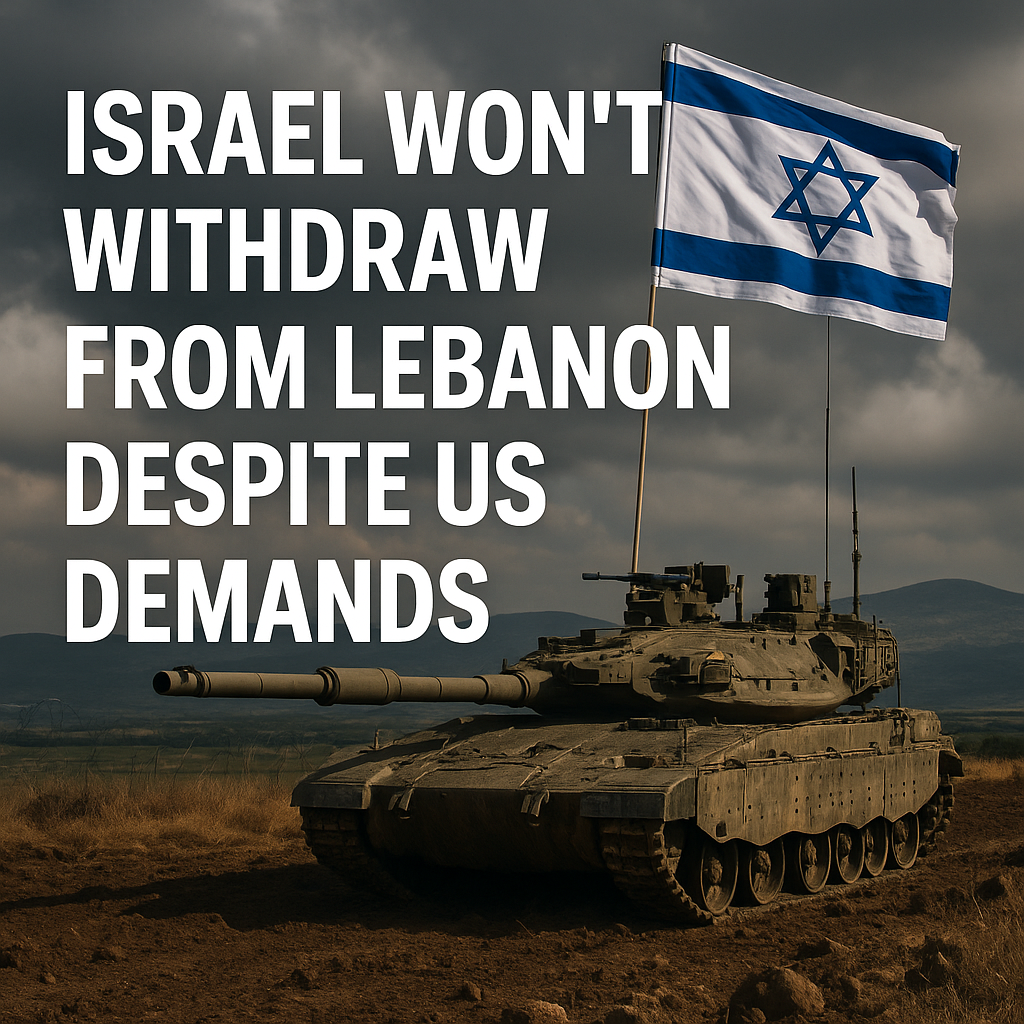
Israel Won’t Withdraw from Lebanon Despite US Demands
Israel’s Stance on Withdrawal from Lebanon: A Complex Landscape
Israel’s refusal to withdraw its troops from Lebanon, despite repeated demands from the United States, has reignited debates over regional stability and international diplomacy. This decision is rooted in a tangle of historical grievances, strategic considerations, and shifting geopolitical alignments.

Historical Context of the Conflict
The long-standing tension between Israel and Lebanon can be traced back to the establishment of the state of Israel in 1948 and subsequent conflicts. One of the pivotal moments was the 2006 Lebanon War, which resulted in ongoing hostilities, especially between Israel and Hezbollah, the Lebanese militant group. Following this conflict, Israel maintained a military presence in southern Lebanon, citing security concerns about Hezbollah’s activities.

In recent years, the United States has sought to leverage its influence in the region, urging Israel to withdraw in the name of peace. Advocates of withdrawal argue that reducing military presence could lead to greater stability and foster better relations with Lebanon. However, Israeli officials largely view this demand through a different lens. They stress that the security environment has not improved and that Hezbollah remains an active threat, supported by Iran.

Strategic Reasons Behind Israel’s Decision
Israeli officials cite several strategic reasons for their stance. They argue that withdrawing troops could embolden Hezbollah, potentially leading to increased attacks against Israel. The group has maintained significant military capabilities and, in the view of Israeli leaders, remains willing and able to launch cross-border operations.
Moreover, Israel’s strategic calculations are compounded by shifting dynamics in the Middle East. With the U.S. pivoting focus to other global hotspots, including Asia, Israeli leaders feel a sense of urgency to secure their national interests independently. Former Israeli Prime Minister Benjamin Netanyahu emphasized that “the threats we face are not diminishing; they are increasing.” This statement not only reflects Israel’s perception of immediate dangers but also reveals a broader skepticism towards U.S. influence in guaranteeing Israeli security.
US Pressure and Its Implications
The ongoing diplomatic pressure from the U.S. underscores a growing rift in perspectives. The Biden administration has argued that withdrawing from Lebanon could serve as a catalyst for negotiations on multiple fronts, including the U.S.-brokered normalization of relations between Israel and Arab states.
Despite this rationale, skepticism remains. Some experts note that past U.S. diplomatic efforts in the region have often fallen short of achieving lasting peace. As such, Israeli officials express concerns that without a robust commitment to ensuring their security, any withdrawal could lead to chaos. The result could potentially destabilize not just Israel but the entire Levant region.
Diverging Perspectives and Potential Outcomes
The issue of withdrawal garners opinions from various actors in the region. Supporters of Lebanese sovereignty highlight the need for Israel to respect international norms regarding territorial occupation. They contend that maintaining a military presence is a violation of Lebanon’s sovereignty and an impediment to peace.
Conversely, many Israelis believe that security should take precedence over diplomatic niceties. Public sentiment among Israelis often reflects a reluctance to trust regional adversaries, and many argue that the legitimacy of Israeli security concerns must not be dismissed lightly.
In this context, the insistence on withdrawal reflects deeper complexities in Middle Eastern geopolitics, where historical grievances and contemporary realities interweave. While experts on both sides might offer paths toward negotiation, the deeply entrenched views on security and sovereignty make any consensus difficult.
Conclusion: An Ongoing Challenge
As Israel stands firm on its decision not to withdraw from Lebanon despite U.S. demands, the implications resonate well beyond national borders. The juxtaposition of Israeli security concerns against U.S. diplomatic initiatives illustrates the intricate balance of interests in a region often fraught with conflict.
While the call for withdrawal continues, it remains to be seen whether diplomatic pressures will ultimately shift the current trajectory. In the meantime, both nations must navigate their histories and present realities while seeking a durable peace—a challenging prospect in an already complicated landscape.















