
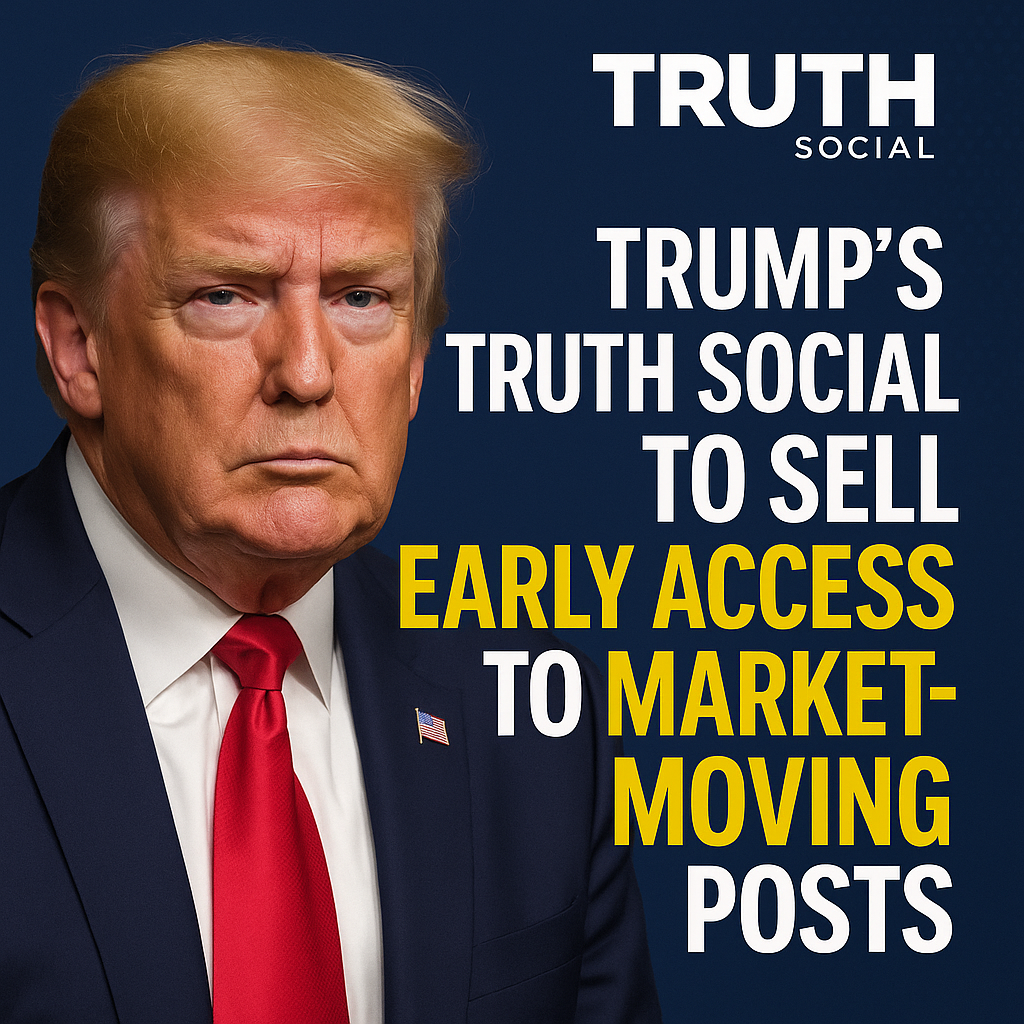
Trump’s Truth Social to Sell Early Access to Market-Moving Posts
Understanding the Implications of Trump’s Truth Social Selling Early Access to Market-Moving Posts
Donald Trump’s Truth Social platform has recently announced an innovative, albeit controversial, move to sell early access to certain posts, specifically those that could influence stock market behavior. This decision raises critical questions about the intersections of social media, financial markets, and political influence, making it a topic ripe for exploration.

The Mechanics Behind Truth Social’s New Strategy
Truth Social, which positions itself as a competitor to established social media giants like Twitter and Facebook, aims to leverage its user base’s enthusiasm in a way that directly monetizes engagement. By offering early access to posts that might impact stock movements, the platform is tapping into a lucrative niche. However, this strategy walks a fine line between transparency and potential market manipulation.

1. The Premise of Early Access: Subscribers willing to pay for early access will be privy to messages that could affect shares of public companies or even spark viral trends. The idea is that by receiving this insider information, they can make informed investment decisions prior to the broader market reaction.

2. Potential Financial Upsides and Downsides: Proponents argue this model empowers users and creates a unique revenue stream for the platform. Conversely, critics warn it could foster an environment ripe for abuse, making predictions and decisions based on partisan viewpoints rather than sound financial analysis.
A Divide in Public Opinion
Reactions to Truth Social’s decision to monetize early access posts showcase a polarized landscape.
Supporters Highlight User Empowerment
Supporters suggest that the additional revenue could help bolster Truth Social’s operations while giving users a unique opportunity to engage with content in a timely manner. Some see this as a form of democratization in a landscape often perceived to be dominated by elite financial analysts and hedge fund managers.
– User Engagement: The excitement around exclusive content can drive higher user interactions on the platform, potentially enlarging its user base.
– Alternative Information Sources: As media trust erodes, platforms like Truth Social provide an alternative for those seeking diverse viewpoints, including financial insights.
Critics Point to Ethical Concerns
Critics encompass a range of voices—from financial experts and ethicists to political commentators—who argue that this strategy could have negative consequences. The specter of market manipulation looms large, as early access to potentially market-moving information may not be transparently regulated.
– Market Manipulation Risks: The ethical implications of monetizing information that could influence stock prices are significant, as it raises questions about who benefits from this access and who gets left behind.
– Pressures on Regulatory Frameworks: Financial regulators may need to adapt to these new digital ecosystems where political figures can directly influence stock movements through social media.
Legal and Regulatory Dimensions
As Truth Social navigates this new landscape, legal ramifications may manifest further down the line. Historically, lawmakers have struggled to keep pace with tech innovations, which raises the question: Is the financial industry prepared for a new wave of social media influence?
The concept of “insider information” is tightly regulated in stock markets. Selling early access to posts that may affect market behavior could blur these lines and encourage regulatory scrutiny. While Truth Social claims full compliance with applicable regulations, the precedent set by this initiative could invite more intense examination from financial watchdogs and lawmakers.
Conclusion: A Complex Landscape Ahead
Trump’s Truth Social venture into selling early access to posts that might impact the financial market encapsulates a wider cultural and economic discourse. The application’s potential to shift the balance of information power is compelling, yet the risks associated with market manipulation and ethical concerns cannot be overlooked.
The balance between innovation, regulation, and ethical transparency remains delicate. As this landscape evolves, ongoing dialogue among stakeholders—users, investors, regulators, and social media entities—will be essential for navigating these complexities. Whether Truth Social’s bold gambit pays off or backfires will depend not only on user engagement but also on the resilience of legal frameworks designed to protect the integrity of financial markets.















