
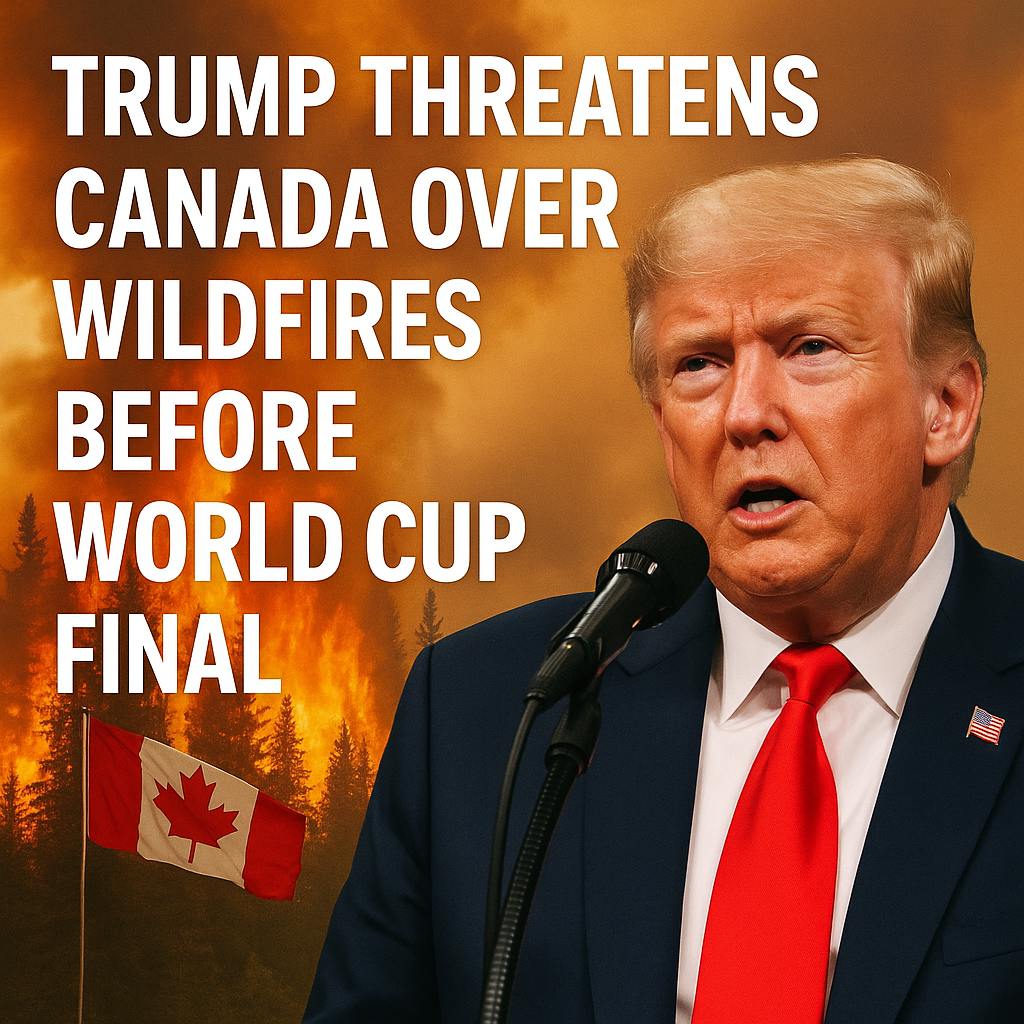
Trump Threatens Canada Over Wildfires Before World Cup Final
Trump Threatens Canada Over Wildfires Before World Cup Final
In recent days, the ongoing wildfires in Canada have escalated tensions involving U.S. politics, as former President Donald Trump issued strong remarks that have drawn international attention. The wildfires, which have consumed vast areas of land and severely impacted air quality across North America, have sparked discussions about environmental management and regional cooperation.

The Context of the Wildfires
Canada is currently grappling with some of the most severe wildfires in its history, resulting in haze and dangerous air quality reaching across the U.S. border. Reports indicate that climate conditions, including unusually dry weather and recent heat waves, have exacerbated the situation. While wildfires are not uncommon in the region, the scale and intensity witnessed this year has raised alarms among Canadian officials and environmental experts alike.

As the nation battles the blazes, the implications stretch beyond just environmental concerns. With the FIFA Women’s World Cup nearing its final match, the smoke and fire have cast a shadow over Canada’s hosting duties. Events on the field are intertwined with the realities off the pitch, highlighting how natural disasters can intersect with major international events.

Trump’s Remarks and Their Implications
Trump’s comments concerning the Canadian wildfires, whereby he suggested potential repercussions for Canada’s approach to wildfire management, have stirred significant backlash. Emphasizing the need for accountability, Trump appeared to connect the wildfires with broader themes of U.S.-Canada relations. Critics quickly pointed out that such rhetoric can fuel division rather than help foster collaborative solutions to environmental challenges.
On one side, Trump’s supporters argue that his statements are intended to emphasize the urgency for countries to take ownership of their environmental practices. They believe that by holding Canada accountable, it could lead to stronger environmental policies across the board. However, this perspective oversimplifies the issue and overlooks the complex nature of wildfire management which involves various factors, including climate change, forestry management, and community readiness.
Conversely, many analysts argue that Trump’s comments could undermine efforts to combat climate change collaboratively. Environmental organizations assert that cooperation between the U.S. and Canada is crucial, especially given the shared ecosystems and the transboundary nature of air pollution and other environmental issues. This viewpoint emphasizes a need for solidarity amid crisis rather than casting blame.
The Bigger Picture
The wildfires in Canada and the political tensions that accompany them illustrate the pressing need for stronger international cooperation on environmental issues. Climate change knows no borders; both the United States and Canada will face increased risks if they do not work together. The situation calls for leaders who prioritize collective action over divisive rhetoric.
Balancing Perspectives
While Trump’s comments have ignited discussions on environmental accountability, there is palpable concern about the lack of collaborative discourse. It showcases the complexity of managing environmental crises, especially when media narratives and political agendas intersect. Notably, such wildfires are driven by ecological factors that local governments have limited ability to control, and shifting the narrative towards accountability without addressing root causes may lead to misguided policy approaches.
Moreover, as climate conditions worsen, wildfires are becoming a predictable threat. This evolution requires comprehensive strategies that include federal, state, and provincial collaboration, as well as indigenous voices, often at the forefront of land stewardship.
Conclusion
The current wildfires and the associated geopolitical implications offer a potent reminder of the interconnectedness of environmental disasters and politics. As Trump and others weigh in on the situation, it is vital to center discussions around cooperation rather than blame. The stakes are high—not just for Canada or the U.S., but for global climate stability. Only through unity and understanding can nations hope to tackle the daunting challenges posed by climate change and environmental degradation.















