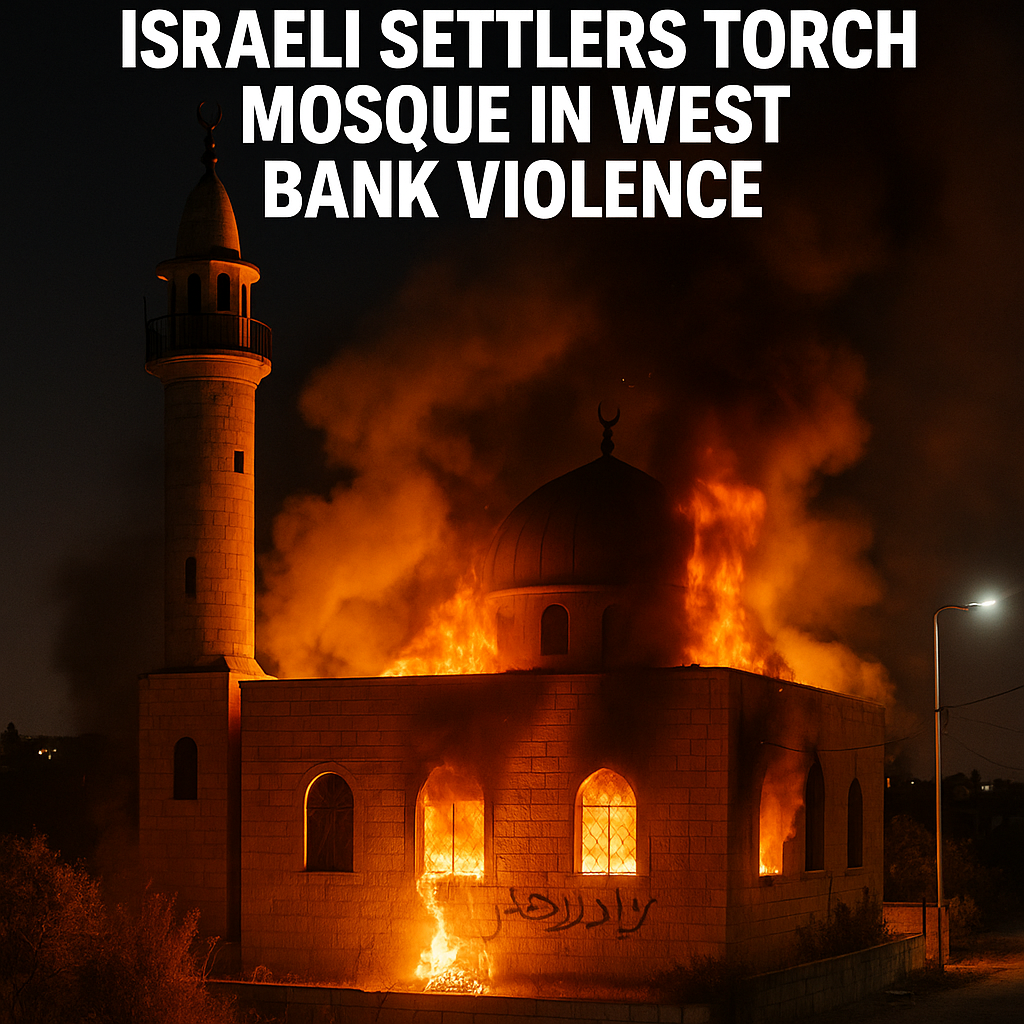
Israeli Settlers Torch Mosques in West Bank Violence

Rising Tensions in the West Bank: Israeli Settlers Torch Mosques
The recent violence involving Israeli settlers torching mosques in the West Bank has escalated tensions in an already fraught region. These incidents not only inflict damage on physical structures but also exacerbate the age-old conflict between Israelis and Palestinians, raising questions about accountability, the role of the government, and the broader implications for peace in the region.

Context and Recent Events
The reported arson attacks have drawn widespread condemnation from various quarters, including Palestinian officials, human rights organizations, and international observers. An article from RT notes that such actions are part of a troubling pattern of violence against Palestinian property and people. Eyewitness accounts describe settlers gathering in groups and attacking religious sites, which they perceive as symbols of Palestinian identity and resistance.


Al Jazeera highlighted a specific incident where a mosque was set ablaze in a village near Nablus. This attack was reportedly part of a larger campaign by settlers who have been increasingly aggressive in their bid to claim territory in the West Bank. Local eyewitnesses recounted that the settlers shouted nationalist slogans while executing these attacks, which have often gone unpunished by the Israeli authorities, further aggravating the sense of injustice felt by Palestinian communities.

Government Response and International Impact
The Israeli government’s response to these acts of violence has been met with criticism. While some officials have condemned the actions of the settlers, critics argue that words alone are insufficient. Reports indicate that law enforcement has often been slow to act against settlers involved in violent incidents, leading to rising frustration among Palestinians and human rights advocates.
Many believe that this leniency stems from the political backing settlers receive within certain segments of the Israeli government, complicating any potential for accountability. An article from Sky News pointed out that the Israeli leadership has a vested interest in maintaining the support of far-right factions within its coalition, which often express sympathy for the settlers’ actions. This complicity can be viewed as a means of staving off political backlash but ultimately fuels the continuation of violence in the region.
The Broader Implications for Peace
As violence escalates, the prospects for a peaceful resolution to the Israeli-Palestinian conflict grow dimmer. Both sides have entrenched narratives that frame the other as the aggressor, hindering meaningful dialogue. The repeated destruction of religious sites serves not only as a physical act of violence but also as a deeply emotional affront, laying waste to the very fabric of coexistence that any peace process requires.
Palestinian communities, already under significant strain, face heightened anxiety as their places of worship are targeted. This violence plays into the larger geopolitical landscape, with various international bodies calling for intervention and a reassessment of policies that have historically favored one side over the other.
While there are voices advocating for dialogue and understanding, the growing cycle of violence makes it increasingly difficult for moderate voices to be heard above the din of conflict. The international community’s reaction will likely be crucial in either promoting a path toward reconciliation or allowing further escalation that could lead to more severe unrest.
Conclusions and Uncertainties
In conclusion, the spate of mosque burnings by Israeli settlers has severely impacted the already strained relations in the West Bank. The pattern of violence and the lack of accountability highlight a complex interplay of religious, political, and nationalistic sentiments that often overshadow the quest for peace.
While there are calls from various factions for an end to the violence and a return to dialogue, the social and political landscape suggests that progress may remain elusive. The silence or minimal response from the Israeli government only adds layers to the uncertainty surrounding the future of peace negotiations. As tensions continue to rise, it remains essential to watch how these events unfold and their implications for both Israeli and Palestinian communities.