Lindsey Graham’s Iran War Push: Unreleased Footage Revealed

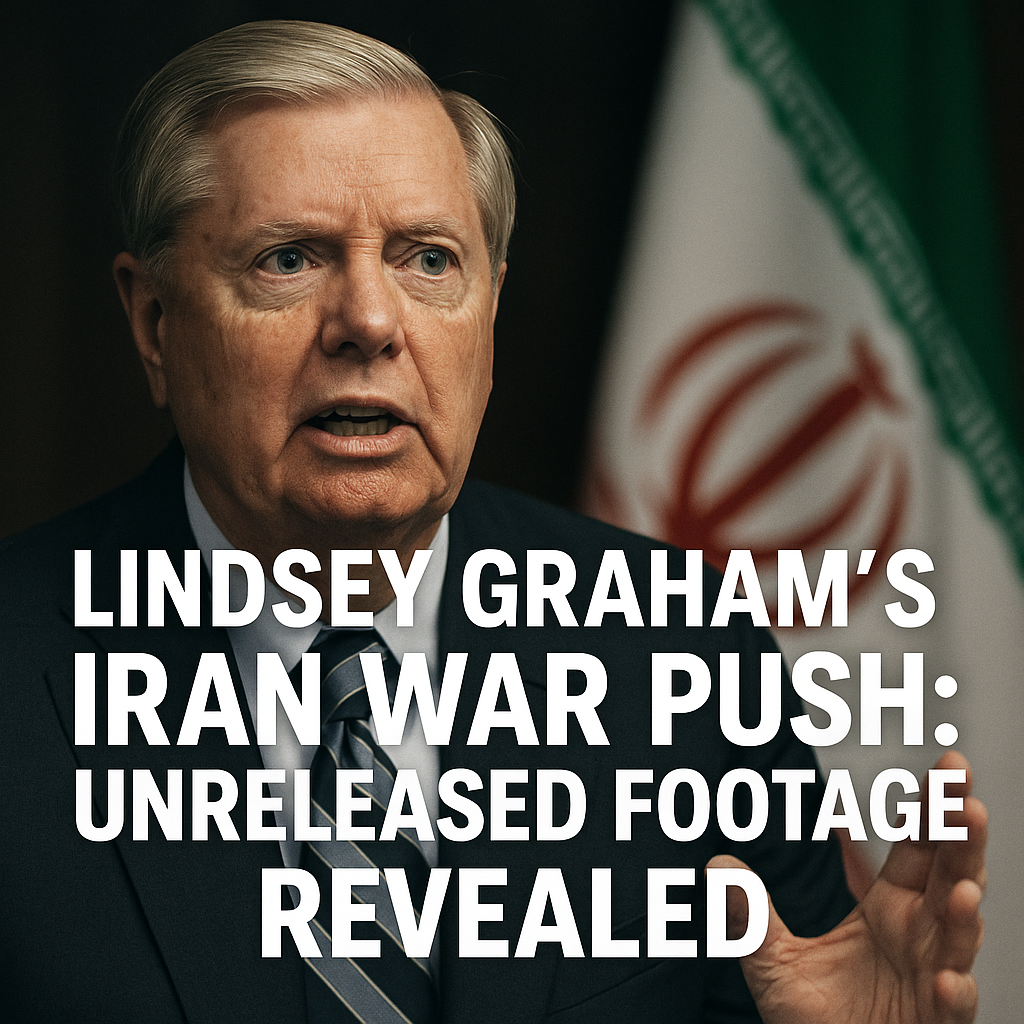
Lindsey Graham’s Push for War Against Iran: Unreleased Footage Revealed
Recent developments have shed light on Senator Lindsey Graham’s ardent advocacy for military action against Iran, bringing forth unreleased footage that captures his views. This revelation has ignited debates surrounding U.S. foreign policy in the Middle East, prompting an examination of the nuanced and often conflicting perspectives on such a course of action.

Unpacking the Footage
According to an exclusive report by Al Jazeera, the unreleased footage showcases Graham expressing his support for a more aggressive stance towards Iran. He argues for military intervention as a necessary step to counter perceived threats emanating from the Iranian regime. In the footage, Graham states that “every day we do not strike Iran, they get stronger,” underscoring his belief that proactive measures are needed to curtail Iran’s influence in the region.


The senator’s remarks mirror a long-standing narrative among certain U.S. policymakers—one that posits military intervention as necessary for national security. However, this view is met with skepticism and opposition from various quarters. Critics argue that military action could exacerbate tensions, destabilize the region, and lead to unintended consequences.

Diverse Perspectives on Military Action
The notion of military intervention in Iran is not universally endorsed. For example, a report from RT presents a contrasting perspective, highlighting voices that warn against a rush to war. Analysts emphasize the historical miscalculations of military engagement and the enduring instability that follows such actions. They postulate that diplomacy, rather than military might, should take precedence in dealing with Iran.
Moreover, public sentiment, as reflected in various polls, indicates a war-weary population. Many Americans advocating for a more restrained foreign policy express concerns over the substantial human and financial costs associated with military conflict. A recent survey revealed that a significant majority of respondents favor diplomatic efforts over military intervention as a strategy to manage U.S.-Iran relations.
Weighing the Evidence
The conflicting viewpoints surrounding Graham’s push for military action against Iran showcase a complex interplay between national security concerns and diplomatic outcomes. Proponents of intervention argue that failing to act could embolden adversaries and jeopardize U.S. interests in the region. They assert that a strong military posture is essential for maintaining geopolitical stability.
In contrast, oppositional voices converge around the belief that a strike against Iran could ignite a broader conflict, draw in international partners, and destabilize existing alliances. Furthermore, there is a consensus among some experts that a comprehensive approach—one that includes sanctions, closed-door negotiations, and multilateral discussion—is essential to achieve sustainable results.
The Uncertain Path Forward
What remains evident in the discourse surrounding Graham’s advocacy for military action is the ambiguity of the situation. Whether military action is warranted, or if a diplomatic approach can yield viable results, continues to elicit divergent opinions. The stakes are profoundly high, and how the U.S. navigates its relationship with Iran could have far-reaching impacts extending beyond national borders.
As public interest grows regarding these developments, and as new information continues to emerge, it becomes crucial for policymakers to engage with a broad spectrum of views. Understanding the complexities involved in such discussions will not only enhance policymaking efforts but serve to better inform the public discourse surrounding U.S. involvement in Iran.
In conclusion, Lindsey Graham’s push for military action against Iran, as captured in the newly unveiled footage, invites scrutiny and debate. As the nation treads this uncertain path, weighing the intricacies of military versus diplomatic strategies will be pivotal in shaping the future of U.S.-Iran relations. The outcomes of these discussions will significantly influence not only bilateral relations but the broader geopolitical landscape.