
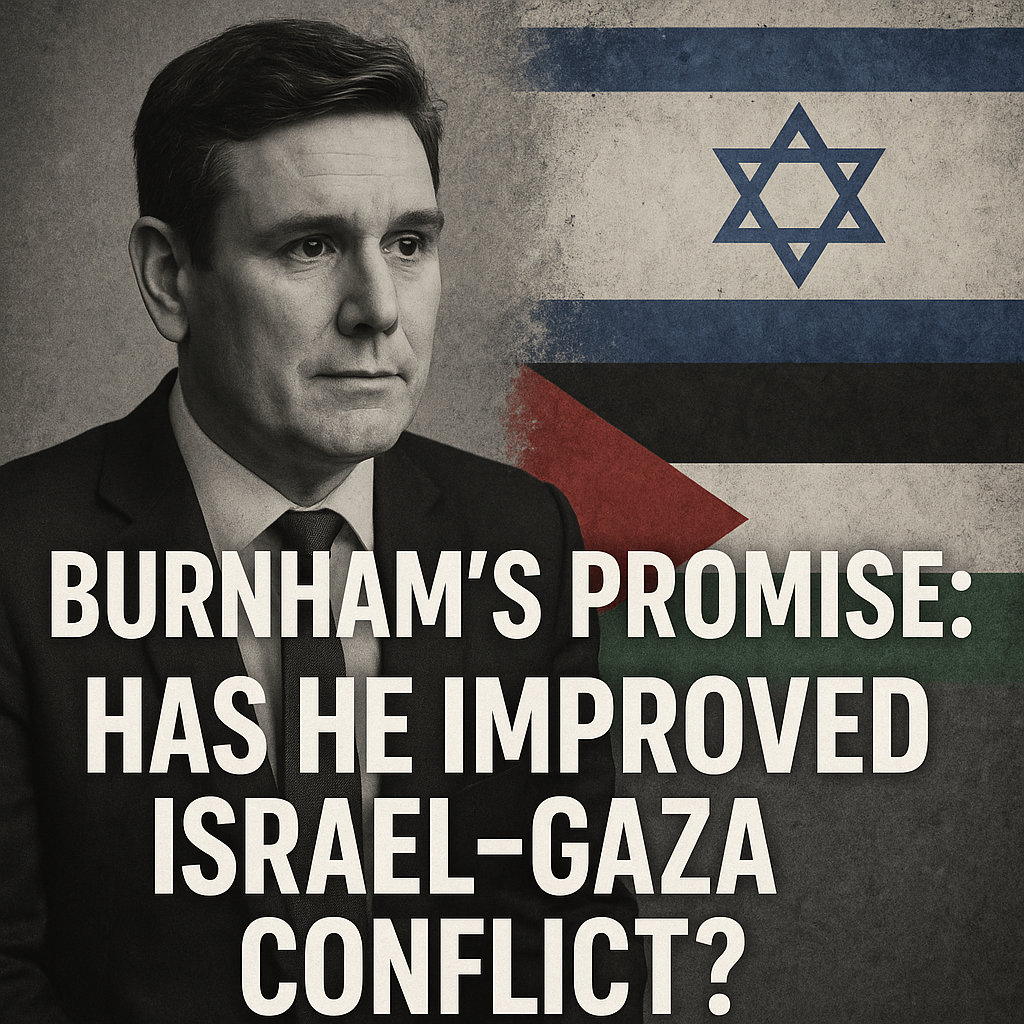
Burnham’s Promise: Has He Improved Israel-Gaza Conflict?
Burnham’s Promise: Has He Improved the Israel-Gaza Conflict?
The ongoing Israel-Gaza conflict has long been marked by cycles of violence, humanitarian crises, and international scrutiny. Recently, discussions have emerged regarding Burnham’s influence and whether his policies represent genuine progress towards resolution or simply perpetuate existing tensions.

A Landscape of Promises and Policies
From his tenure as a political leader, Burnham’s commitment to addressing the Israel-Gaza situation has been met with both hope and skepticism. Citing a need to foster dialogue and alleviate suffering, Burnham’s administration has attempted to promote initiatives designed to mitigate civilian casualties and encourage peace talks.

However, contrasting viewpoints illustrate the complexity of evaluating his impact. For instance, a report from Al Jazeera highlights that while there have been efforts to improve humanitarian access in Gaza, many argue that these measures have not substantially altered the day-to-day realities of residents. The ongoing blockade, which restricts essential goods and services, remains a point of contention, suggesting that while rhetoric may have softened, the situation on the ground has experienced little tangible change.

Moreover, RT has argued that Burnham’s diplomatic outreach could be seen as a facade, asserting that despite promises of change, military actions continue unabated. The network noted that increased military support to Israel from certain allied nations under Burnham’s oversight might contradict his claims of prioritizing peace. This raises critical questions about the effectiveness of his administration’s approach.
Ambivalence on the Ground: The Humanitarian Perspective
The humanitarian situation in Gaza is dire, with multiple sources reporting significant casualties and extensive destruction during recent conflicts. Critics contend that any improvements promised under Burnham’s leadership have primarily benefited those in power without addressing the dire needs of civilians. Sky News reported firsthand accounts from Gaza, where families struggle with inadequate access to basic necessities and live in constant fear of airstrikes. The disparity between diplomatic efforts and lived experience fuels frustration and disillusionment among many within the region.
Supporters of Burnham, however, emphasize that establishing a diplomatic framework is essential for a long-term solution. They argue that previous leaders have failed to even initiate dialogue. By creating forums for discussion, even amidst ongoing conflicts, Burnham may be fostering conditions that could eventually lead to a ceasefire. This perspective encourages a hopeful outlook, suggesting that sustained pressure from a committed administration could pave the way for future negotiations.
The Fragile Path Ahead
As discussions about Burnham’s impact continue, it is important to critically assess both the intentions behind his policies and the realities in the field. Burnham’s government has indeed sought to position itself in favor of peace and has cooperated with international bodies to deliver humanitarian aid. However, the geopolitical landscape remains precarious, with shifts in alliances and ongoing tensions complicating efforts for substantive change.
Despite some diplomatic overtures, the persistence of violence indicates that deeper structural issues still need addressing. Critics remain on alert for what they perceive as insufficient commitments to enhancing security for civilians in Gaza. They assert that without substantial changes to the policies governing access to resources and protection against military actions, promises of improvement may ring hollow.
In summary, the effectiveness of Burnham’s initiatives concerning the Israel-Gaza conflict is hotly debated. While his administration promotes a vision of peace and humanitarian aid, skepticism about whether these efforts amount to real progress remains prevalent. As debates evolve and the situation fluctuates, it is essential to keep an eye on both humanitarian conditions and diplomatic undertakings. The complexities inherent in this conflict highlight how difficult it is to transform promises into lasting peace, ensuring that the people of the region receive not just words, but real actions that yield genuine improvement in their daily lives.















