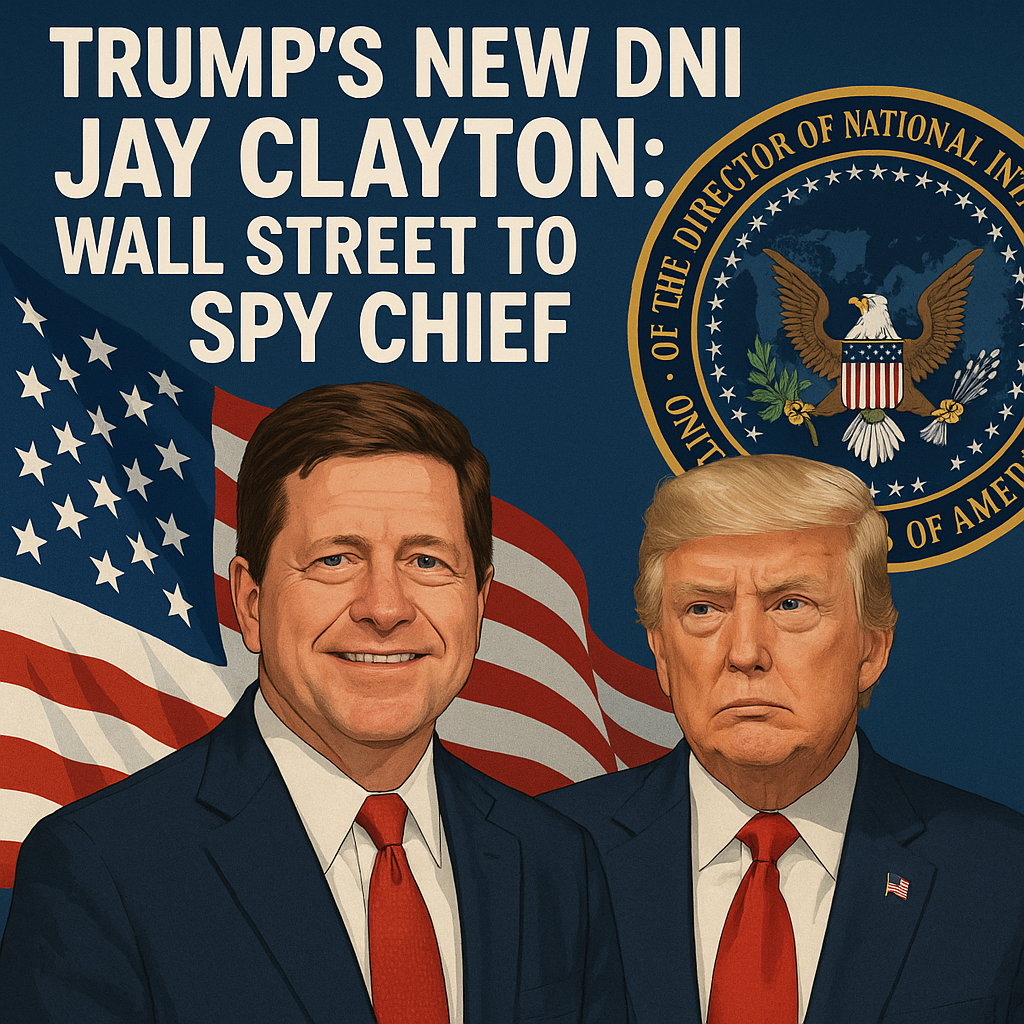
Trump’s New DNI Jay Clayton: Wall Street to Spy Chief
Trump’s New DNI Jay Clayton: Wall Street to Spy Chief
In a surprising move that has captured significant attention, former President Donald Trump appointed Jay Clayton as the new Director of National Intelligence (DNI). This appointment draws a fascinating line between Wall Street and the intelligence community, igniting discussions about the implications of having a finance executive at the helm of U.S. intelligence agencies.

The Shift from Finance to Intelligence
Clayton’s background primarily stems from his tenure as the chairman of the U.S. Securities and Exchange Commission (SEC). He is best known for his regulatory role during a tumultuous period in financial markets, dealing with the implications of corporate governance and investment integrity. His appointment as DNI signifies a dramatic paradigm shift; a seasoned corporate leader is now responsible for the nation’s intelligence reporting and national security strategies.

Critics of the appointment raise concerns about Clayton’s lack of traditional intelligence experience. As articulated in various sources, including RT and Al Jazeera, there are fears that his financial expertise might overshadow the nuanced skills required to navigate international espionage and geopolitics effectively. Prominent voices in the media have suggested that Clayton may prioritize economic and financial intelligence over the subtler aspects of national security.

In contrast, supporters assert that Clayton’s background may bring a fresh perspective to the intelligence community. As financial markets become increasingly intertwined with global politics, the ability to analyze economic threats is vital. His understanding of market dynamics may not only enhance economic intelligence but also help in understanding foreign powers’ strategies that rely on economic manipulation.
Navigating the Complex Landscape of National Security
The primary duty of the DNI is to serve as the principal advisor to the president and the head of the intelligence community, which comprises 18 agencies, including the CIA and NSA. As Clayton steps into this multifaceted role, he must bridge the gap between diverse intelligence streams while ensuring the cohesive functioning of agencies often characterized by secrecy and vast bureaucracies.
The potential benefits of having a financier in this role could lie in enhanced interagency cooperation concerning economic threats. For example, with the global rise of cyber threats and economic espionage, Clayton’s ability to apply his knowledge of financial systems could lead to a more effective countermeasure strategy. Moreover, his connections in the financial sector could facilitate smoother information-sharing between governmental and private entities critical for addressing cybersecurity threats.
However, the challenge remains: can someone accustomed to Wall Street navigate the labyrinthine world of global intelligence effectively? The traditional intelligence community is steeped in protocols and approaches that differ significantly from the fast-paced financial industry.
Balancing Competing Interests
One of the most pressing issues that arise from Clayton’s appointment is the potential conflict of interest between national security objectives and the interests of Wall Street. Critics worry that his financial background could lead to prioritizing certain economic data over critical national security assessments. Such a bias could skew intelligence reports, potentially endangering national security in favor of economic forecasts beneficial to particular sectors on Wall Street.
Moreover, Clayton’s ties to various corporations may draw scrutiny and could raise questions regarding loyalty and objectivity. Various opinion pieces have called for increased transparency and accountability to mitigate any risks associated with perceived conflicts of interest.
The sentiment among some experts suggests there must be a deliberative separation of Clayton’s previous engagements and his current responsibilities to ensure that financial interests do not oversimplify complex geopolitical issues. The intelligence community thrives on nuanced understanding, an area where Clayton’s corporate experience may lack.
Conclusion
Jay Clayton’s ascension to the position of DNI marks a significant shift in how the U.S. approaches intelligence leadership. As the boundaries between economics and national security continue to blur, whether Clayton can successfully merge these domains into a coherent strategy remains to be seen.
Balancing the intricate dance of competing interests while fostering a culture of cooperation among diverse intelligence agencies will be vital for his success. As of now, the ambiguity surrounding the effectiveness of his appointment underscores the evolving nature of intelligence in the 21st century, where financial acumen is as crucial as traditional espionage skills. The implications of this shift will undoubtedly continue to unfold in the coming months, leaving many to ponder: can a Wall Street financier truly lead the complex world of U.S. intelligence?