When AI Starts Fighting AI: The New Cybersecurity Battle Has Already Begun
AI is transforming cybersecurity as defenders use it to detect unusual activity, analyze data, prioritize alerts, and respond to threats. Attackers can also use AI to automate reconnaissance, adapt tactics, and scale operations, increasing the importance of rapid detection and response.
Greater automation introduces risks, including false decisions, missed attacks, and excessive alerts. Effective security will require human oversight, reliable testing, secure system design, continuous monitoring, and coordinated protection of cloud platforms, software supply chains, connected devices, and automated systems.
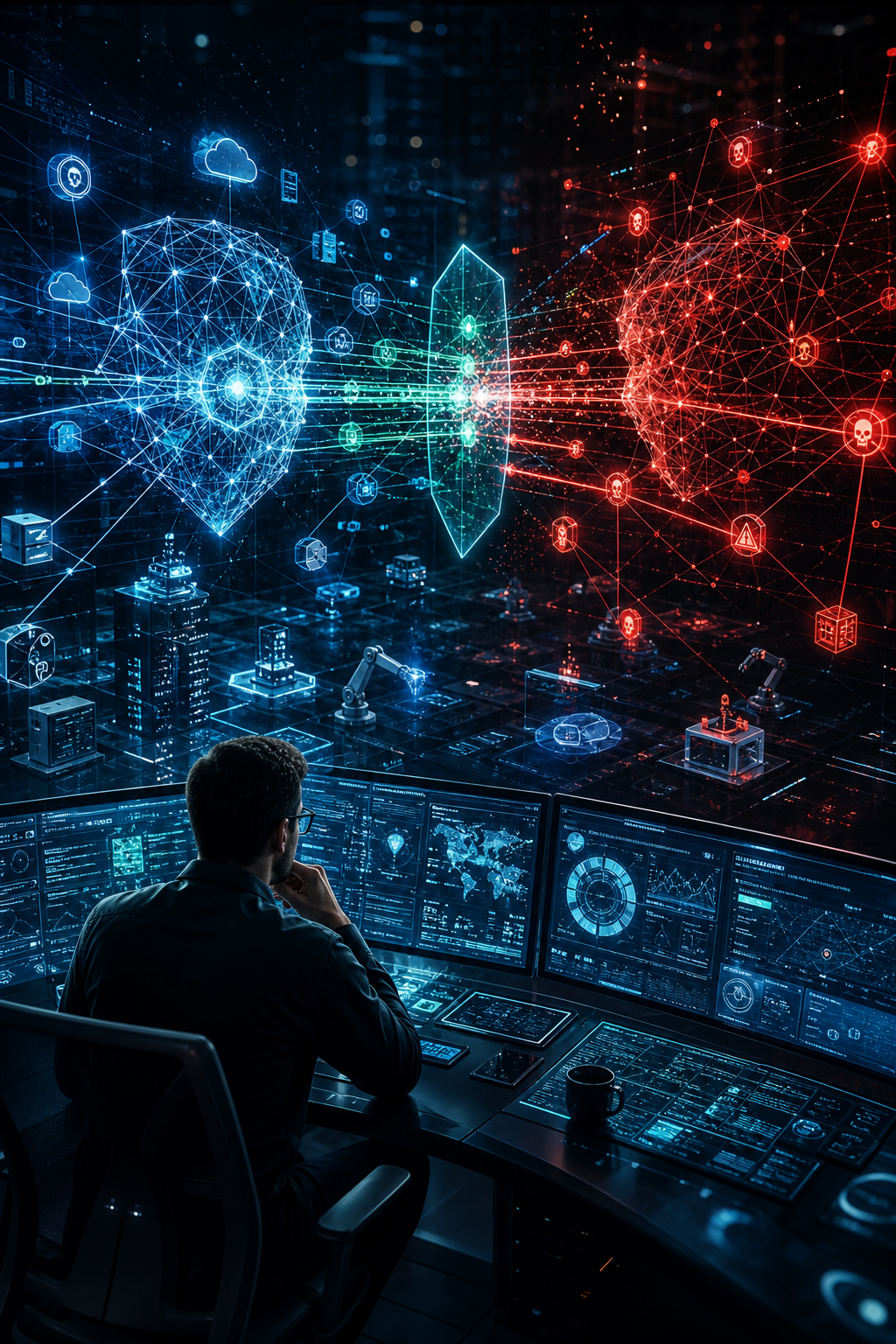
AI is changing cybersecurity on both sides of the fight. Security teams are using intelligent systems to detect suspicious activity, analyze large amounts of data, and respond to threats faster. At the same time, attackers are beginning to use AI to automate parts of their operations, creating a race in which machines increasingly defend against machines.

One of the biggest changes is speed. Traditional cyberattacks often require significant human effort to identify targets, write malicious code, and adapt when defenses change. AI can potentially automate many of these steps, allowing attackers to analyze information and modify their tactics much faster than before. This makes the time between detecting a threat and responding to it increasingly important.

The same technology is giving defenders new capabilities. AI systems can examine network activity, identify unusual behavior, connect signals from different security tools, and help analysts investigate incidents. Instead of waiting for a human to examine every alert, organizations can use AI to prioritize the events that appear most dangerous.

However, greater automation also creates new risks. An AI system that makes an incorrect decision could block legitimate users, overlook a sophisticated attack, or generate unnecessary alerts. Organizations therefore need strong human oversight, clear security controls, and reliable testing before allowing automated systems to make critical decisions.
The competition is also moving beyond individual attacks toward the infrastructure that supports them. Cloud platforms, software supply chains, connected devices, and automated business systems can all become targets in an environment where AI enables attacks to operate at greater scale. This means cybersecurity is increasingly becoming an ongoing process rather than a defense that can simply be installed and forgotten.
The emerging AI-versus-AI security battle will not be decided by automation alone. The strongest defenses will likely combine machine speed with human judgment, secure system design, continuous monitoring, and responsible use of AI. As intelligent systems become more deeply integrated into the digital economy, cybersecurity will increasingly depend on whether organizations can make their own AI work faster, safer, and more reliably than the systems attempting to exploit them.