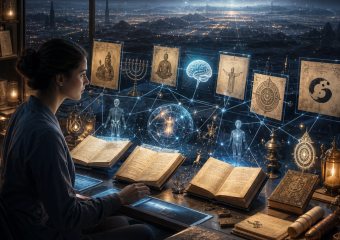

How AI Is Transforming the Future of Work and Career Skills
Artificial intelligence is changing workplaces by improving productivity, automating routine tasks, analyzing information, and supporting decision-making across industries such as healthcare, finance, education, marketing, and technology.
Its growth is creating demand for skills in AI, data, automation, cybersecurity, and digital tools while altering some traditional career paths. Continuous learning remains important, as human abilities such as creativity, critical thinking, communication, leadership, and emotional intelligence complement AI.
Artificial intelligence is moving beyond a technology trend and becoming a powerful force shaping the future of work. Businesses across industries are increasingly adopting AI to improve productivity, automate routine processes, analyze information, and create faster and smarter solutions.

From healthcare and finance to education, marketing, and technology, AI-powered tools are changing how professionals complete their daily tasks. Instead of spending hours on repetitive work, employees can use AI to process information, generate ideas, communicate with customers, and support important business decisions.

At the same time, the rapid growth of AI is creating demand for new skills and career opportunities. Professionals who understand artificial intelligence, data, automation, cybersecurity, and digital technologies may find themselves better prepared for the changing workplace. Learning how to use AI effectively is becoming an increasingly valuable professional skill.

But the transformation also brings challenges. Some repetitive and entry-level tasks may become increasingly automated, potentially changing traditional career paths. This makes continuous learning and professional development more important, particularly for young workers entering the job market.
The future may not be about humans competing against AI, but about humans working alongside it. Creativity, critical thinking, communication, leadership, and emotional intelligence remain uniquely valuable, while AI can provide speed, automation, and powerful data analysis.
As artificial intelligence continues to evolve, one thing is becoming clear: the future of work is changing now. Businesses and professionals that learn how to adapt, innovate, and use AI responsibly could be better positioned to succeed in the next generation of the digital economy.